I. Introduction
The restaurant environment is changing faster than ever. Today’s customers want speed, personalization, and smooth interaction throughout the entire restaurant experience—from menu to payment. Traditional manual processes are increasingly failing to meet these expectations.
This transformation has spawned the concept of smart restaurant technology, an ecosystem of interconnected digital products that are designed to modernize how restaurants operate and improve the guest experience while dining. Instead of individual upgrades, smart solutions are integrated to improve efficiency, precision, and engagement.
At the center of this change is Nento, which provides intelligent restaurant solutions that combine digital menus, intelligent signage, and connected systems into a single platform. This guide discusses the development of smart restaurant menu ordering systems and connected digital solutions as the key to competitive, efficient, and profitable modern restaurants.
The smartest restaurants aren’t just faster—they’re more connected.
II. The Rise of the Smart Restaurant
Defining the Smart Restaurant System
An intelligent restaurant system is not just digitization. It is a networked ecosystem with menus, ordering, payments, screens, and back-end operations communicating in a seamless environment with each other. It is not only automation but intelligent systems that update, learn, and optimize on the fly.
Essentially, a smart restaurant aims at achieving three goals, namely improving the guest experience, facilitating operations, and boosting revenue. All the digital touchpoints will be aimed at facilitating these goals at the same time.
What’s Driving Adoption?
There are a number of forces that are driving adoption. Contactless and self-service have now become the norm. and labor shortages have seen restaurants push to streamline the work process. Meanwhile, the operators become more dependent on the use of data-driven decision-making and customized service as the means of competition in the saturated markets.
III. Core Component: The Smart Restaurant Menu Ordering System
Beyond the Static Menu
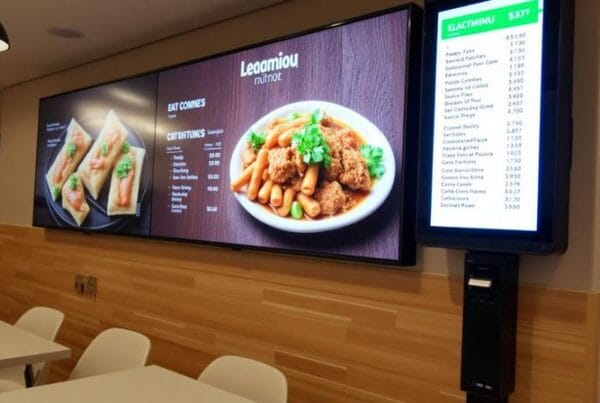
The smart restaurant menu ordering system substitutes the traditional menus with dynamic, interactive, and intelligent menu ordering systems. Menus are no longer just lists: they are dynamic selling mechanisms that are sensitive to time, inventory, and customer behavior.
Key Features and Benefits
An intelligent menu is helpful in upselling and providing promotions by identifying specials, packages, and products with high margins at the appropriate time. Real-time updates enable immediate changes when items sell out or the menu changes to a different menu, such as lunch or dinner.
Another characteristic is personalization. Smart restaurant menus have the ability to save preferences, offer suggestions, or even suggest add-ons depending on previous orders. With direct communication with the system by the guests, the accuracy of the order increases substantially, which decreases the miscommunication between the staff and the kitchen.
Connection to kitchen systems means that orders are sent to prep stations, which makes the service faster and reduces bottlenecks during peak hours.
Flexible Deployment Options
Such systems are available in various forms: tableside smart devices for restaurant management, self-service restaurant digital signage kiosks at counters, or even mobile-based experiences that will enable customers to order using their own smartphones.
The menu is no longer a document—it’s a decision engine.
IV. The Intelligent Digital Canvas: Restaurant Screens and Signage
Intelligent Restaurant Digital Signage
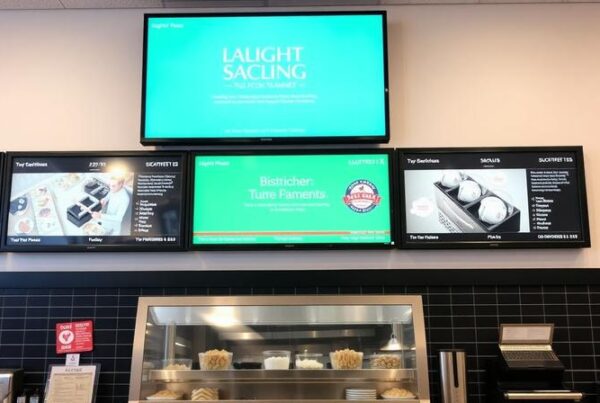
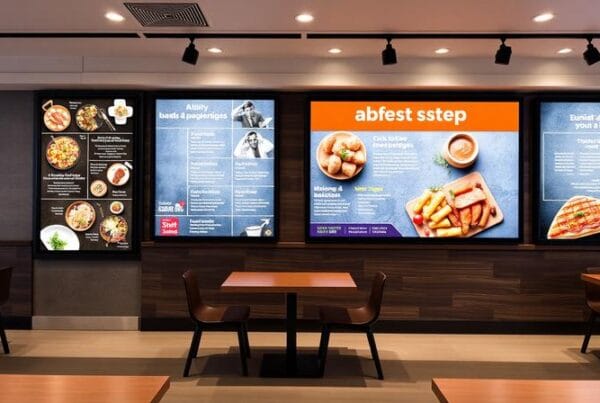
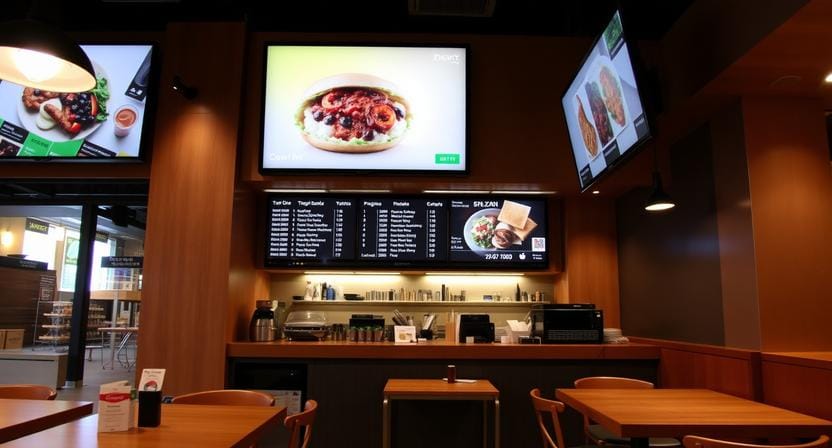
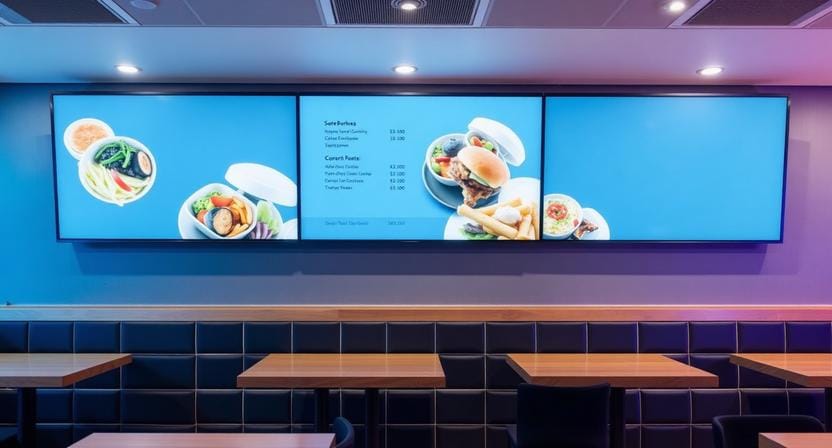
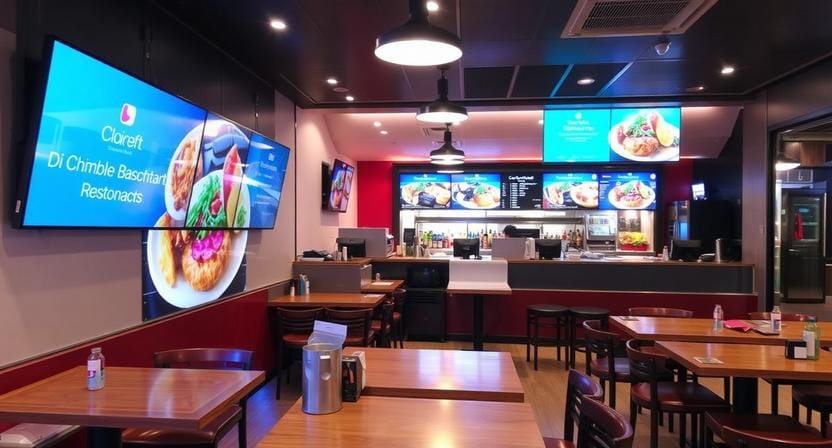
The digital signage of intelligent restaurants performs the role of the visual nervous system of a smart restaurant. Menus, promotions, wait times, and brand stories are displayed in a coordinated, real-time fashion through screens throughout the venue.
Types and Uses of Restaurant Screens
The outside window display draws customers through colorful images and live offers. Digital menu boards in lobbies and bars inside are used instead of the traditional signage, which allows them to be updated at any moment and displayed dynamically.
Overhead screens and televisions are used to improve the dining environment and present brand stories or estimated wait times. Back-of-house, kitchen screens streamline communication and make sure that there is proper fulfillment of orders.
The Nento Advantage
Nento also centralizes all the restaurant screens into one dashboard. Through a single interface, operators have the ability to add and modify content, promote, and manage performance across all displays—regardless of location.
V. Integrating the Ecosystem: Complete Smart Restaurant Solutions
Connecting the Digital Dining System
The intelligent restaurant menu will be really valuable when it is combined with other systems. There is the synchronization of pricing and transactions that are made through POS and payment platforms, and the automatic menu update made by inventory systems. CRM and loyalty programs enable personalization of promotions, and display systems in the kitchen keep the operations moving on.
The outcome is an inclusive digital dining system that offers a 360-degree perspective of the operations as well as customer interaction.
Case Study Snapshot
A multi-location restaurant with the Nento ecosystem reduced wait times significantly and increased the average check size by using automated upsell and real-time menu optimization, showing that directly interconnected systems can directly affect performance.
Integration turns isolated tools into a single, intelligent operation.
VI. Benefits Summary: Why Smart Technology Is Non-Negotiable
Benefits for Guests
Visitors get faster service, fewer mistakes, customized recommendations, and higher convenience. The experience is contemporary, user-friendly, and customized.
Benefits for Restaurants and Staff
To the operators, smart restaurant technology will make operations more efficient, eliminate workload, and boost sales with smarter promotions. Information and knowledge aid in making improved decisions, whereas a digital presence and the use of modern technologies enhance brand image and make staff management easier.
VII. Implementing Your Smart Solution: A Roadmap with Nento
The first step involves the assessment, which entails the identification of pain points, which include slow service, incorrect orders, or not being able to recommend an upsell. Nento then creates a customized smart restaurant system, which is a combination of menus, kiosks, and signage according to your idea and objectives.
A smooth integration and rollout would guarantee the least amount of disruption with the help of Nento professional onboarding. Continuous management and optimization enable restaurants to improve the menus, promotions, and workflow based on actual performance data.
Ready to transform your restaurant? Schedule a free, no-obligation consultation with a Nento solutions expert and see a live demo tailored to your restaurant type.
VIII. Frequently Asked Questions (FAQs)
Is a smart restaurant ordering system difficult for older customers to use?
No. Nento systems are made with easy layouts, oversized buttons, and easy-to-read screens. Ease of use matters for all age groups.
How does digital signage integrate with my existing POS?
Nento relies on open APIs and established integrations to maintain real-time integration of menu items, prices, and availability with the majority of leading POS systems.
What’s the typical return on investment (ROI)?
The results of ROI are labor savings, an increase in order accuracy, an increase in average check size, and reduced waste. Most clients achieve full ROI within 12–18 months.
Can I manage promotions and menu changes myself?
Yes. The cloud dashboard of Nento enables you to update menus and promotions with any internet-capable device within minutes.
Are Nento’s smart devices secure and reliable?
Absolutely. Nento focuses on business-level security, quality hardware, and reliable performance in high-demand restaurant environments.
IX. Conclusion
Smart restaurant technology is no longer futuristic—it is a present-day necessity. Interactive smart restaurant menu ordering systems and dynamic digital signage now form the backbone of efficient, customer-centric dining.
Investing in a single digital dining platform is investing in customer satisfaction, operational efficiency, and sustainable profitability.
Don’t let your restaurant fall behind. Contact Nento today to request a personalized demo and discover how our smart restaurant solutions can work for you.