Introduction
The visual space is no longer defined by one screen on a wall. Today, brands communicate through interconnected screen networks that span buildings, cities, and even nations. The issue is no longer whether to use digital signage, but whether your communication strategy can keep up at this scale.
Multi screen digital signage is not merely a technical solution that will involve several screens. It is a tactical methodology that involves hardware, computer programs, and content planning to control digital signage across numerous screens as a unified mechanism. When properly implemented, it enables organizations to be in control, consistent, and effective in all their locations.
When you scale from one screen to fifty, your biggest challenge isn’t content—it’s control.
The dilemma that most organizations have is quite obvious: how can you keep the brand consistent, local, and efficient in operating the displays in various locations? The solution is an organized, computer-based solution that is engineered with the right multi screen digital signage software.
See Multi-Screen Signage in Action. Get a Nento Video Demo
I. Beyond the Single Screen: What is Multi-Screen Digital Signage?
Multi screen digital signage tends to be confused with the mere installation of more screens or a video wall. As a matter of fact, it is a much larger ecosystem that is meant to work as a single network but not single exhibitions.
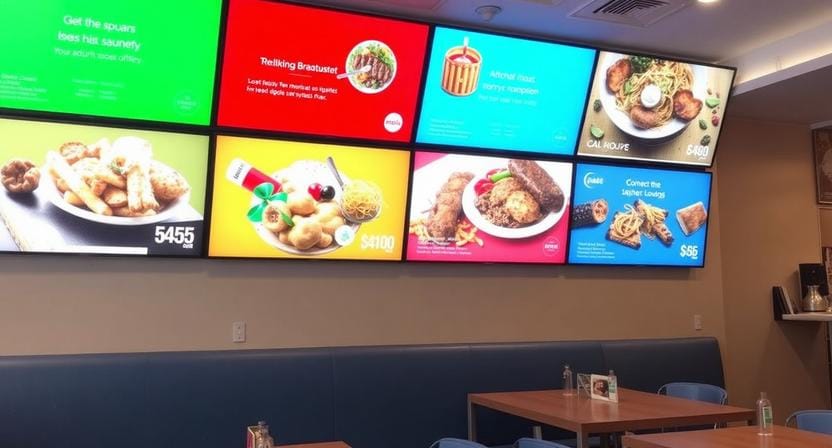
This strategy incorporates coordinated displays in a single place, which are in the form of lobbies, storefronts, and corridors, and synchronized networks across the multi-location digital signage space, like retail stores, corporate campuses, and restaurant chains. It also expands to bigger video walls and outdoor networks, which work under the centralized control.
The process of changing the individual displays into intelligent networked systems has revolutionized digital signage into a scalable communication medium. Organizations are no longer operating screens one by one; rather, they are operating entire visual ecologies under one control point.
II. The Driving Need: Why Organizations Are Investing in Multi-Screen Networks
A. The Multi-Location Imperative
With growing organizations, brand consistency will be more challenging to maintain across the locations. Local teams must be flexible, and headquarters requires control. In the absence of a centralized system, it is inefficient and prone to errors to update content on hundreds of displays in a short time.
Multi-screen signage is the answer to this dilemma because it enables a business to rebrand signage across several locations at once, providing consistency without sacrificing the ability to customize signs to a local area where it is required.
Consistency builds trust, but local relevance drives action—multi-location signage must deliver both.
B. Enhanced Audience Engagement
Multi-screen spaces enable brands to stop being one-dimensional in their messaging and develop more immersive, storytelling experiences. Sequential messaging across screens, synchronized imagery, and full-size video walls provide a way of navigating people through physical spaces in a natural way.
This effect is further enhanced by multi-screen outdoor digital signage, which is more effective in high-traffic areas where the visibility and movement of the message are highly enhanced in recall.
The digital display of motion has always drawn much more attention to the industry than the display of a static sign, and thus multi-screen storytelling is not a design trend but a functional benefit.
C. Data-Driven Communication
Having various screens that can be used in various ways, organizations are able to customize the content to a particular audience, location, or data. Social walls, dashboards, and live information feeds can be utilized within the same network, with each screen having a specified purpose in the larger communication approach.
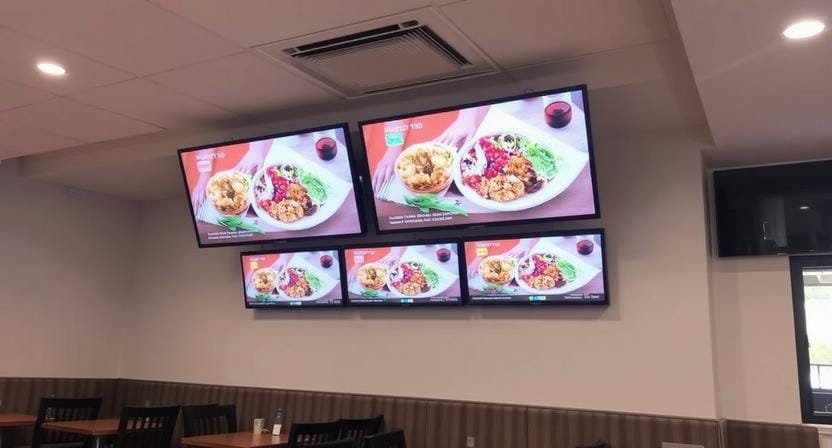
III. Core Components of a Multi-Screen Digital Signage System
A. The Software: The Central Brain
Software is an absolute at scale. The intensive multi-screen digital signage software serves as the management hub for scheduling, monitoring, permissions, and content control throughout the whole network.
Multi-tenancy digital signage architecture that provides control hierarchy is a major requirement. Brand assets can be controlled by headquarters, campaigns can be planned by regional teams, and approved content can be updated by local managers without affecting the consistency.
If hardware is the canvas, software is the operating system that makes scale possible.
B. The Hardware: A Reliable Canvas
Hardware reliability is essential because it means that content will be read properly and will be the same everywhere. Commercial-grade displays are constructed to be used over a prolonged period, and outdoor screens are made to resist the environment.
Media players should be able to accommodate complicated designs, high-resolution playback, and 24/7 availability. It all relies on a sound network infrastructure, which enables remote monitoring and delivery of content without failure.
C. The Content & Strategy: The Compelling Message
The content that is created to be displayed on more than one digital signage must consider scale. The use of zoning, consistency in layout, and motion hierarchy is necessary to provide a level of clarity in different screen sizes and orientations.
The content calendar should be thought through so that the size of the network is put to strategic use instead of being aesthetically disordered.
IV. Key Applications and Use Cases
The use of multi-screen signage solutions has become popular in industries because they are flexible and can be expanded.
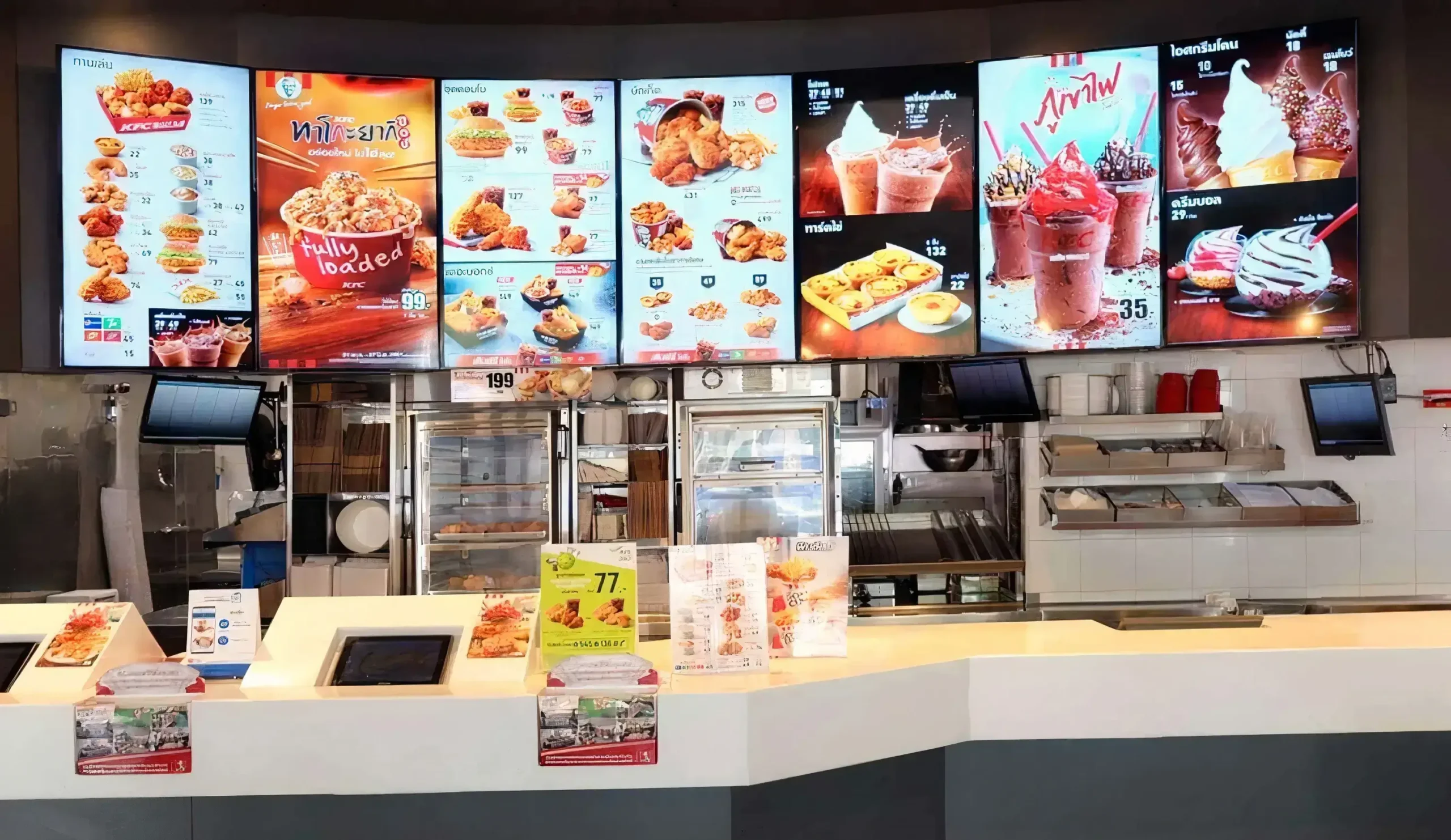
Lobby video walls, desk-zone screens, and cafeteria screens are all synchronized within the corporate environment to ensure that communication flows smoothly across departments. Retailers and franchises use centrally controlled window displays, in-aisle promotions, and digital menus to keep the consistency and promote local offers.
Wayfinding, event schedules, and advertising at scale are delivered using multi-screen advertisement platforms by hospitality venues and public spaces. Campuses use network display boards for directories, announcements, and emergency messages in various buildings.
V. Choosing the Right Multi-Screen Signage Solution: A Buyer’s Checklist
To choose the appropriate solution, it is necessary to do more than a comparison of the number of screens. It must have true centralized control whereby the whole network can be operated through one dashboard. Role-based permissions should be able to serve the interests of several stakeholders without introducing bottlenecks in operations.
Video walls and mixed-orientation environments require layout and zoning flexibility. Active monitoring should be used to make sure that offline screens are detected before they affect visibility or playback. It should be easily scalable whether it’s ten screens or one thousand screens.
A good checklist prevents expensive surprises—especially when your network grows beyond one building.
Get Your Free Multi-Screen Readiness Checklist from Nento.
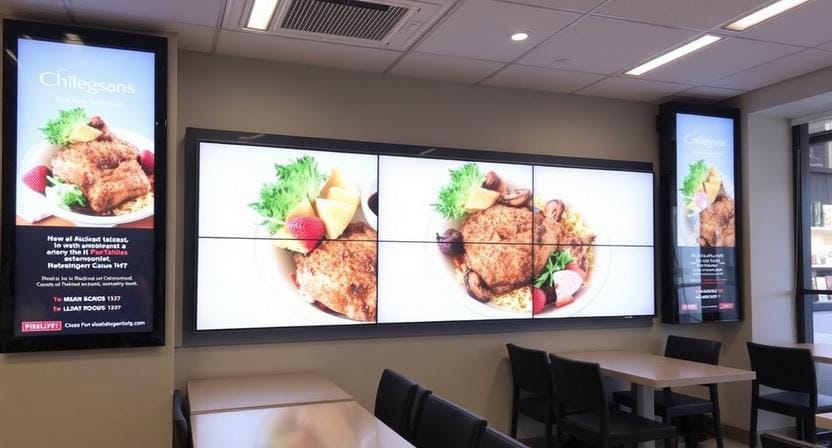
VI. Frequently Asked Questions (FAQs)
What’s the difference between multi-screen digital signage and having multiple digital signs?
There are numerous digital signs that are frequently separated. Multi-screen digital signage links displays into a centrally controlled network where content, timing, and design can be coordinated across all screens.
How difficult is it to rebrand across an entire signage network?
It is easy with the right platform. Brand changes can be applied to master templates and pushed to all locations at once.
Can different content run on different screen groups?
Yes. State-of-the-art multi-screen signage software allows screens to be grouped by location, department, or function within one system.
Can the platform generate advertising revenue?
Absolutely. Many systems support multi-screen advertising with campaign scheduling, approvals, and performance monitoring.
Can outdoor screens be managed alongside indoor displays?
Yes. Major platforms manage multi-screen outdoor digital signage alongside indoor displays, including brightness control and environmental monitoring.
Conclusion
Multi-screen digital signage is the ideal solution for organizations that need to communicate at scale without losing control. Businesses turn isolated screens into strategic assets by converting them into centrally controlled networks.
A crucial success factor is choosing a partner who provides not only robust technology but also the expertise to implement it well.
At scale, the winning strategy is simple: centralize control, standardize design, and localize messaging.
Ready to Scale Your Visual Impact?