Introduction
Today’s hotel guest is used to communication that is seamless, visual, and real-time. They want to know where to go, what is going on, and what is available but don’t want to call the front desk or search for printed flyers. If information is readily available, the entire stay feels more luxurious and organized.
“In hospitality, clarity is part of the experience—not just an operational detail.”
The static bulletin board, print flyers, and lobby signs don’t get the message. Event schedules are always subject to change, restaurant promotions rotate, and services are updated every day. If your message is stale, guests assume the service is too.
Digital signage for hospitality is therefore the central point for communicating with guests in today’s properties. It assists hotels and resorts in displaying uniform marketing information to the guests and simplifies staff communication, as well as promotes the services that enhance the profit. Nento can help with this transformation by offering digital signage hotel solutions that are simple to control, yet powerful to use.
It explains the most important use cases: wayfinding, promotions, events, staff communication, and emergency messaging and which platform to use to ensure it all works perfectly.
See how Nento’s platform works—request a free demo.
Why the Hospitality Industry Needs Digital Signage Now
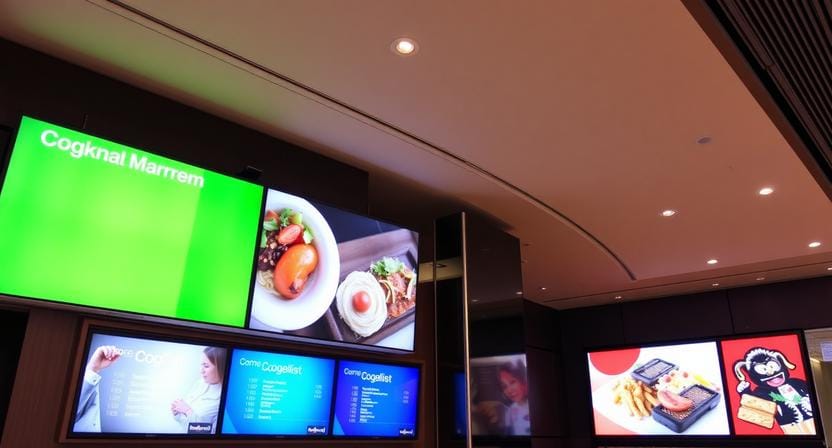
The bar has been raised for guests’ expectations. More travelers want to access information, get updates and messages without having to touch anything, and want it to be relevant to what’s happening in real time. When lobby signage doesn’t match what’s happening, the experience feels out of sync.
Hotels are also structurally challenged because even for a single hotel, there are multiple zones (lobby, elevator hall, hallways, restaurants, pools, and meeting rooms). When you’re operating multiple properties, you have an added challenge: how do you maintain a consistent brand message and keep local teams updated with relevant information?
Digital signage offers a solution to both. It can be centrally managed, scheduled by time and location, and changed in minutes. This saves your staff time since they will not be printing, laminating, and changing posters every time.
“Visuals increase message retention by 65%.”
Key Applications of Digital Signage for Hotels & Resorts
Hotel Lobby Impact
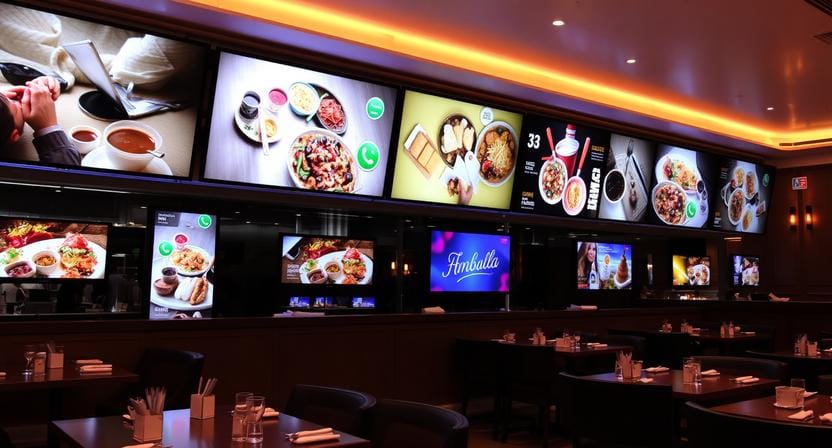
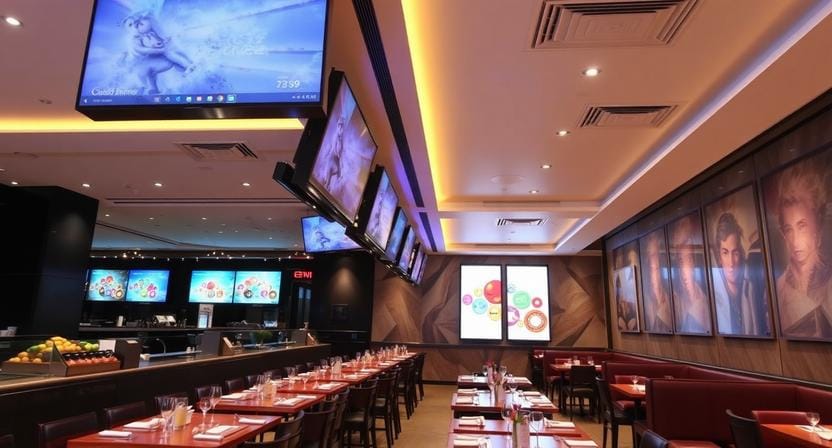
The lobby is where guests form opinions fastest, which is why digital signage hotel lobby deployments often deliver immediate value. Welcome messaging, weather, local attractions, shuttle times, and daily highlights eliminate repetitive questions at the front desk and help the property feel more ‘in control.’
A well-designed and simple lobby loop also gives guests a sense of luxury: they get a clear view, a unified look, and useful information without having to ask. That is when hotel digital signage is not just about information; it’s about experience.
“The best lobby screens answer questions before guests ask them.”
Wayfinding & Events
Wayfinding is a huge advantage to meeting-heavy properties and resorts. Conference room directions, event schedules, wedding agendas, and sponsor messaging are constantly changing—printed signs go out of date very quickly. Digital signage for resorts enables the ability to update event information instantly and show the correct content in the correct zone.
This minimizes confusion, cuts down staff interruptions, and helps guests navigate the property with confidence. Any kind of minor enhancements in wayfinding minimize frustration and increase satisfaction.
F&B Promotions
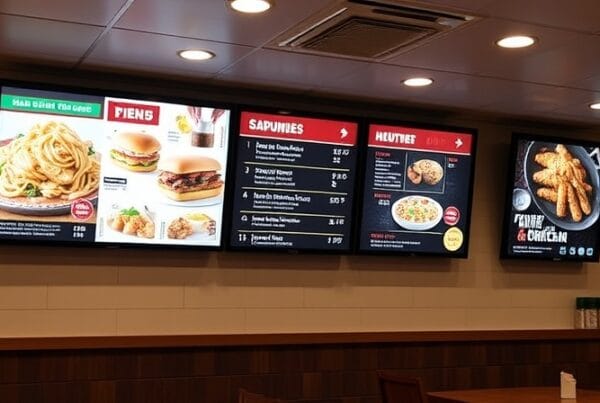
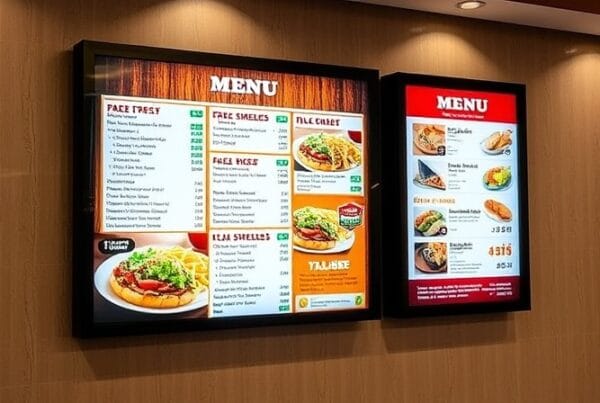
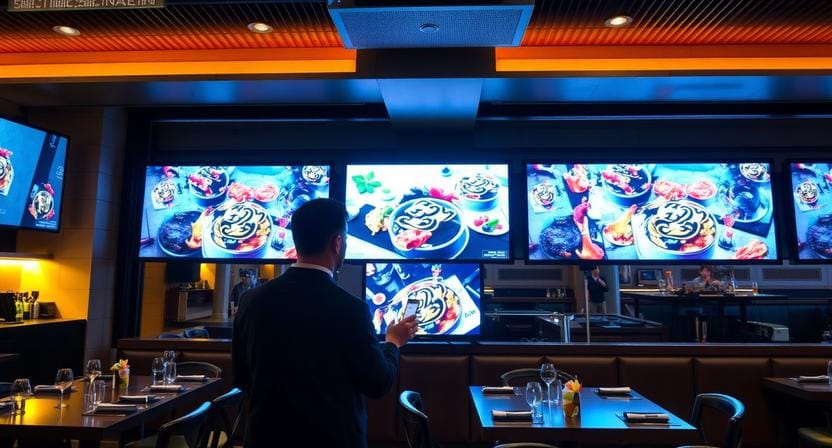
One of the quickest revenue wins is in the food & beverage segment. Digital menu boards, happy hour timing, chef specials that rotate, and time-based promotions (breakfast, lunch, and dinner) can be programmed ahead of time and changed in real time.
It’s also the place where digital signage for hotels can be a steady upselling machine: In elevators, lobbies, and other places where guests have a lot of attention to pay, they can be shown room service promotions, restaurant features, and special time-limited deals.
Housekeeping & Ops
Guest facing is not the only form of hospitality. Housekeeping KPIs, occupancy status, room readiness goals, and cleaning schedules can be displayed on operational screens. This helps minimize back-and-forth messaging and helps teams stay in sync, particularly when it comes to check-in/check-out periods.
If staff are aware of the same priorities in real-time, execution becomes more consistent without having to cross-reference on WhatsApp threads and/or recheck in with the supervisor.
Emergency Alerts
One of the key use cases is real-time safety notifications. Digital signage can instantly send out alerts on screens when there is a change in weather, evacuation, or security message.
In the hospitality industry, speed is important, as guests may not know what to do in an unfamiliar building. Clear communication minimizes risk and builds guest confidence.
Nento feature highlight: Drag-and-drop scheduling for all zones
Scheduling is the essential part of these applications. Nento has drag-and-drop scheduling for properties to schedule dayparts, event windows, promos, and internal ops messaging without complex workflows.
How Nento’s Digital Signage Hotel Solutions Stand Out
Easy integration with POS
When hospitality’s message aligns with operational systems, it gets stronger. The outline highlights POS integration as one of the differentiators, as it ensures consistency of guest-facing information with actual schedules and property operations.
Cloud-based management for 1 or 100 screens
Whether it’s a small property or a large hotel group, cloud control is a factor. Cloud publishing can be used to update one lobby screen or a network of screens installed across departments and is quick and consistent. This is how digital signage hospitality industry deployments remain manageable without an internal IT burden.
Templates built for hotel workflows
Hotels require certain content types such as room service promos, loyalty club offers, event signage, wayfinding, and service announcements. Nento’s templates for hotels ease the design process and enable staff to publish faster while maintaining brand consistency.
“Boutique hotel increased spa bookings by 40%.”
Scalability from hostels to luxury resorts
One of the main advantages of hotel digital signage solutions is that they are scalable. A small lobby should be the same platform that can be deployed throughout the multi-zone resort on pools, spas, restaurants, and event floors. Nento is in the outline in support of that full range.
Ready to upgrade your guest communication? Start a 14-day free trial with Nento.
Choosing the Right Hotel Digital Signage Software
Hotel digital signage software should be a business decision and not a “screen” decision. The software you choose determines whether your displays stay up to date, consistent, and manageable over time.
What to look for
A hospitality-ready platform should include the following:
- A user-friendly content editor for non-technical teams
- Real-time updates that don’t require an IT team
- Analytics that show what guests engage with
- 24/7 support (because hospitality runs beyond office hours)
Why Nento fits these requirements
Nento stands out with auto-playlists and AI-driven scheduling. The key benefit is that automation saves time day to day while keeping each zone consistent.
Avoid the “TV + USB stick” trap
Although they may seem less expensive initially, generic solutions can also create operating costs, such as staff time required to update content, errors being frequent, and inconsistencies between departments. Those costs are reduced by a professional signage platform that provides centralized control and makes updates routine.
Real-World Use Cases: From Lobby to Poolside
Resort poolside schedules
Resorts can display the daily activities around the pool, such as classes, kids’ activities, kitchen pop-ups, and entertainment in the evening. In leisure areas, visitors are always looking for “what’s happening today,” and this is one of the cleanest digital signage for resorts wins.
Conference hotels with live meeting changes
Digital room signage is ideal for meeting-oriented properties, because it can automatically adjust to real-time session changes. Guests are able to view current directions without staff reprinting signs or taping paper signs to doors.
Casino hotels with promotions and jackpot alerts
Signage is used in casino environments for promotion, time-sensitive offers, and operational information. Screens are best used when the content is planned and location-based so that guests can view relevant messages on the screen where they stop.
Spa & gym communication
Class schedules, wellness tips, and soothing visuals are provided in the spa and gym areas to complement the atmosphere. When the message fits the environment, it informs; it doesn’t interrupt the experience.
Weather-triggered content
Weather-triggered content can show practical offers, such as umbrellas for sale when it rains. This is a practical case in point of how to use digital signage in hospitality to relate context to revenue—without needing to remember to switch the messaging.
Measuring ROI of Digital Signage Hospitality Investments
In the hospitality industry, the ROI of digital signage usually comes from both revenue growth and operational cost savings.
Revenue-side metrics
- Upsell conversions (Spa packages, F&B promotions, loyalty offers)
- Ad revenue (if you sell screen space to partners)
- Lift in bookings for facilities (classes, events, paid experiences)
Cost and time savings
- Printing and laminating costs decrease
- Staff time saved (no more manual changes to posters)
- Fewer front-desk questions due to clear answers being shown
Nento measurement tools
The screen performance and engagement heatmaps are displayed on Nento’s dashboard. That’s important, as it helps teams optimize content based on what works, not what they think will.
“If you can see what performs, you can optimize what earns attention.”
Frequently Asked Questions (FAQs)
What is digital signage for hospitality, and how is it different from regular TVs?
An on-demand messaging system that’s managed centrally. It can display live occupancy, weather, promotions, and emergency notices—all remotely programmed—unlike a regular TV. Nento’s digital signage hotel solutions seamlessly connect with your PMS.
Can I use Nento for multiple hotel properties?
Yes. With Nento’s cloud platform, you can control digital signage across multiple hotel locations from a single dashboard. Send the same content across properties or different content to each lobby.
What’s the average cost of hotel digital signage software?
It’s dependent on the number of screens and functionality. Nento’s plans are flexible, with pricing varying by screen count and features. Typically, most hotels pay back for their printing savings in 3-6 months.
Do I need special hardware for hospitality digital signage?
Nento is compatible with many Android TV devices, Fire TV devices, Raspberry Pi setups, and professional media players. We can also set up the hardware for you if you request it.
Can guests interact with the screens?
Yes. Maps can be pushed to phones via optional touch functionality, for example, as a way to search, make a dining reservation, or scan a QR code. Nento can be used in both interactive and non-interactive modes.
Is Nento suitable for small B&Bs or only large resorts?
Both. Whether it’s a single screen in a small inn or 100+ screens in a casino resort, Nento’s hotel digital signage works with any number of screens.
Overcoming Common Implementation Challenges
Fear of complexity
The outline notes that Nento takes care of this by providing 1-hour onboarding, which minimizes rollout friction among hotel teams.
Content creation bottlenecks
Teams can publish faster without having to start from scratch each time with built-in templates and Canva integration.
Wi-Fi dependence
The offline playback mode ensures that content continues to play when the network is down, preventing guest screens from going dark.
Staff adoption and governance
Role-based access makes it easy for teams to work together safely: Front-desk staff can post specials, and managers can approve them. This helps avoid message confusion while keeping updates fast.
“Adoption improves when responsibility is clear and permissions are controlled.”
Conclusion
Digital signage for hospitality helps deliver timely, visible, and consistent information, which leads to an improved guest experience, higher ancillary revenue, and reduced operational friction. Where posters go stale, you have a living communication system, from a lobby screen to a full resort network.
Nento provides enterprise-level reliability, cloud management, hotel industry-designed templates, and hospitality-focused support for all-in-one digital signage hotel solutions.