
Introduction: The Digital Dining Revolution
The food and beverage industry is very dynamic, and there are many restaurants that are still stuck with the old-fashioned menus and printed signs that cannot match the daily changes, offers, or customer preferences. In a world where restaurants have gotten accustomed to live updates and visual displays, a lack of flexibility for diners can be discouraging and restrict income potential.
This is where food and beverage digital signage is necessary. In small cafes and fast food chains around the world, digital signage is no longer a luxury; it has become one of the main operational and marketing tools. Whether it is fast food digital signage in the drive-thru or a refined menu board in full-service dining, it has a direct effect on speed, accuracy, and sales.
Nento assists restaurants in overcoming stagnant communication by providing a linked digital signage system that was designed to address food and beverage settings.
Today’s diners expect menus to be as dynamic as the food itself.
Section 1: The Unmatched Benefits of Digital Signage in Food & Drink
Why Every Modern Restaurant Needs This Tool
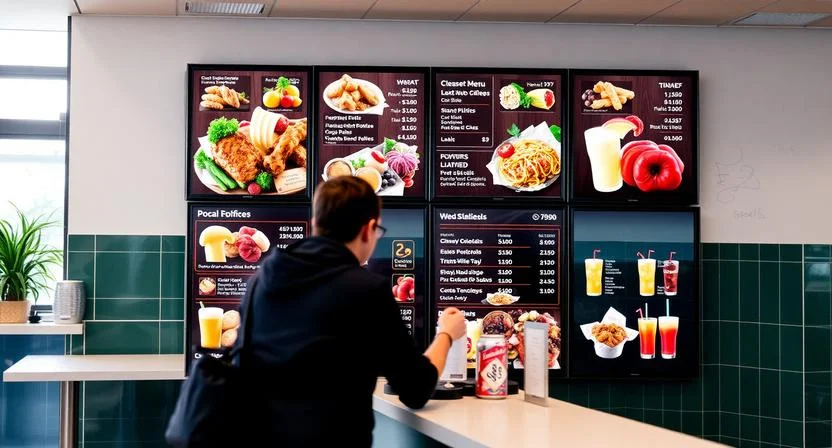
Digital signage in food and beverage spaces is changing the way restaurants interact with their clients and conduct business internally.
A better customer experience is one of the most direct returns. Perceived wait times can be minimized by using engaging images, like food videos, promotions, and social proof, because these keep guests entertained as they make decisions. This works particularly well in a busy setting, such as quick-service restaurants.
Food digital signage is a sales driver for revenue. The visual emphasis on high-margin items, limited-time offers, and combo meals helps to promote upselling but does not place pressure on the staff. Average order value in restaurants is often higher when the promotions are posted dynamically compared to when they are announced orally.
Another significant benefit is operational agility. Menus have the ability to be updated in real time at multiple locations, giving restaurants the ability to react to price fluctuations, sold-out products, or seasonal promotional events. This kind of control just cannot be provided with printed menus.
Restaurants using digital menu boards often see smoother peak-hour operations and fewer ordering disputes.
Section 2: Key Applications & Solutions for Every Venue
2.1 Front-of-House Excellence: Restaurant Digital Signage
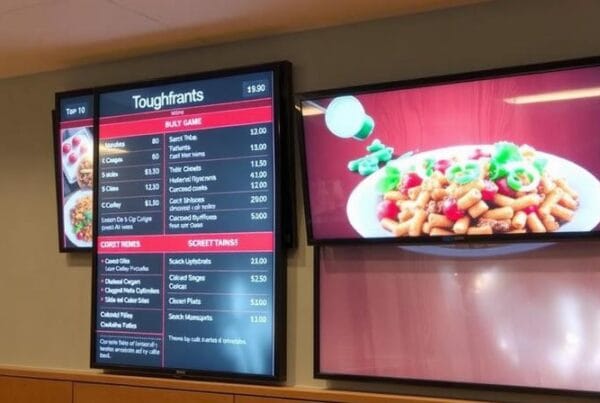
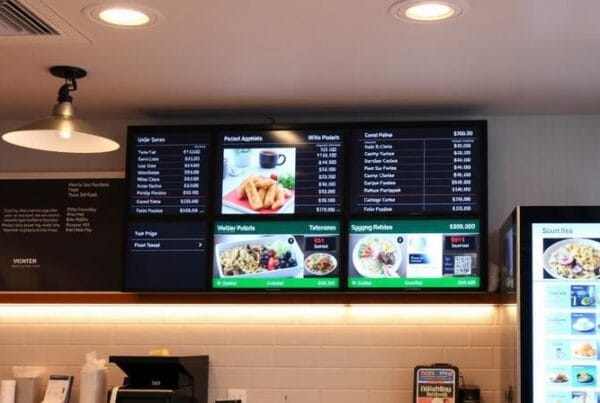
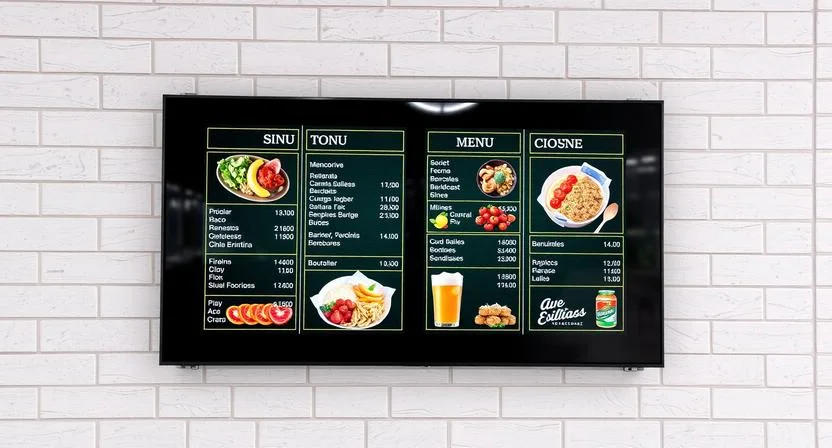
Restaurant digital signage serves as the visual point of reference of the dining experience in the front of house. Ordering is assisted by digital menu boards that clarify prices and reduce confusion, but the mood is set, and add-ons such as drinks, desserts, or happy-hour specials are encouraged by bar and waiting-area displays.
The foundation of modern digital signage systems in dining establishments is these screens, which balance both beauty and technology.
2.2 The Fast-Food & QSR Game-Changer
In fast food restaurants, digital signage requires speed and precision as top priorities for quick-service brands. Online menu boards make the ordering process easier, and real-time updates make the menu boards consistent across the locations.
Specialized drive-thru digital signage software is an advantage to drive-thrus in particular. Dual-facing menu screens, confirm order screens, and context-based promotions (e.g., weather-based promotions) minimize errors and maximize throughput in rush times.
Many QSRs report higher order accuracy and faster service after upgrading drive-thru digital signage.
2.3 The Integrated Kitchen & Operations
Digital signage does not only apply to customer-facing screens. Digital screens at the back of house food processing enhance the communication between the ordering points and the kitchen. Real-time order visibility eliminates errors, minimizes preparation time, and keeps staff focused during peak times.
2.4 The Power of Connection: POS Integration for Digital Signage
Connectivity is the key to efficiency. Digital signage is POS-integrated, which means that menu prices, availability, and promotions are automatically updated based on the point-of-sale system.
This not only removes manual menu updates but also avoids discrepancies between POS and display prices and also supports more complex use cases, such as promotions based on inventory or live order status.
POS-connected digital signage turns menus into real-time operational tools, not just displays.
Section 3: Implementing Your Digital Signage Strategy
What to Look For in a Long-Term Solution
An effective rollout begins with the correct foundation. It must be cloud-based, and it should be possible to update from anywhere without having to visit the site. Easy-to-use content creation tools will mean that the staff can make changes fast without needing design knowledge.
In food service settings where the working hours are long or 24/7, reliability is not negotiable. The stability of hardware and the uptime of software, as well as responsive support, are critical in the daily functioning.
Scalability is also significant. Growth of a single site to a multi-site brand should be supported by the right platform without making it more complex.
Section 4: Why Nento Is the Ideal Partner for Food & Beverage Digital Signage
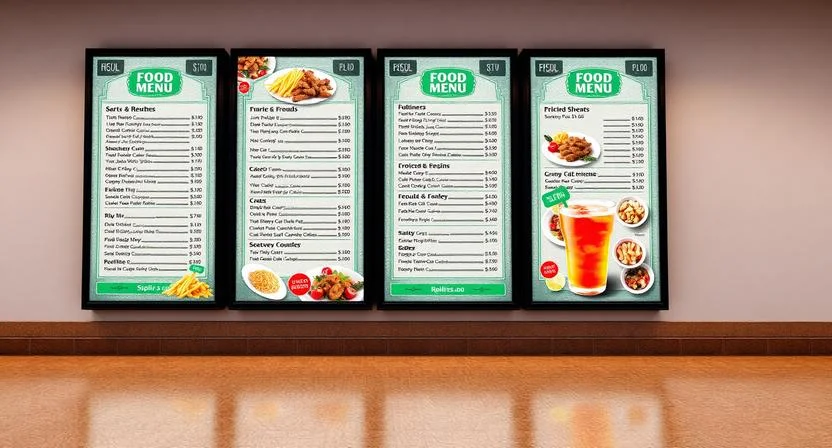
Nento is designed to meet the needs of digital signage in the food and beverage space. Its platform enables both fast-moving drive-thru menus and high-end dining presentations, and all these are operated on the same platform.
Nento has powerful POS integrations, hardware compatibility, and restaurant-specific onboarding, enabling operators to work on service and sales rather than on system maintenance. The proven outcomes in QSRs and full-service restaurants indicate strong ROI by increasing sales, speed of service, and reduced operational friction.
Nento doesn’t just display menus—it helps restaurants operate smarter.
Transform your communication and your bottom line. Get your free, customized proposal from Nento’s experts today.
Frequently Asked Questions
How difficult is it to update content on digital signage for restaurants?
Updates become easy with a cloud-based platform. All menus, prices, and promotions can be updated in a few minutes across all screens with a single dashboard.
Can digital signage really improve drive-thru performance?
Yes. Drive-thru digital signage software enhances the accuracy of orders and throughput and generally raises average ticket size by enhancing visual upselling.
What is POS integration, and why is it critical?
The POS integration links the signage to your point of sale system. This guarantees accuracy of menus in real time, automatic updates, and significant time savings.
Is this only for large fast-food chains?
No. Cafes, breweries, and full-service restaurants make use of digital menus, wine lists, specials, and event promotions in digital signage. Scalable solutions can be of any size.
Do we need a designer to manage content?
Not necessarily. The latest platforms are professionally designed with simple editors, and optional managed content services can be added.
What’s the typical ROI for food & beverage digital signage?
Increased sales, cutting of printing, and enhanced efficiency are the sources of ROI. A high number of restaurants recover their investment within 12–18 months.
Food and beverage digital signage is redefining how restaurants communicate, operate, and grow. With the right strategy and the right partner, digital screens become powerful profit drivers—not just displays.