Introduction
The days when you had to wait 10 minutes to get a waiter’s attention are long gone. Customers demand speed, clarity, and control—and when restaurants remove friction, they earn repeat business. That is why digital menu ordering is quickly becoming the norm of the modern diner.
Digital menu ordering means customers can browse the menu, customize items, and pay using digital touchpoints rather than using paper menus or manually ordering dishes. Most of the restaurants that have implemented digital ordering have reported increased average check sizes by 15–25% due to the constant presentation of upsells and the fact that the customer is more confident adding extras.
“When ordering becomes easier, customers buy more without feeling pushed.”
Nento is a digital signage provider that assists restaurants in updating their ordering processes with reliable hardware, user-friendly software, and support that prevents operations from collapsing during the busiest periods.
Ready to upgrade your restaurant? Explore Nento’s digital menu ordering solutions today.
What Is a Digital Menu Ordering System?
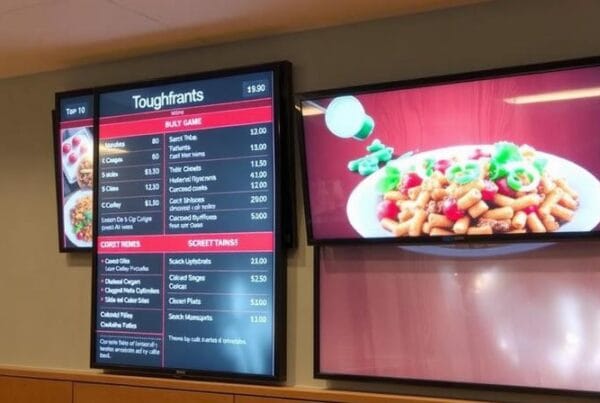
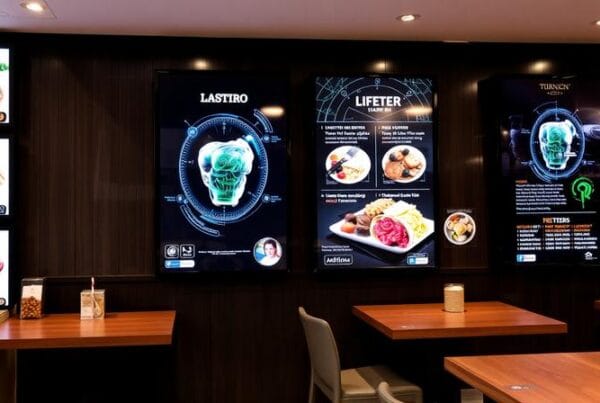
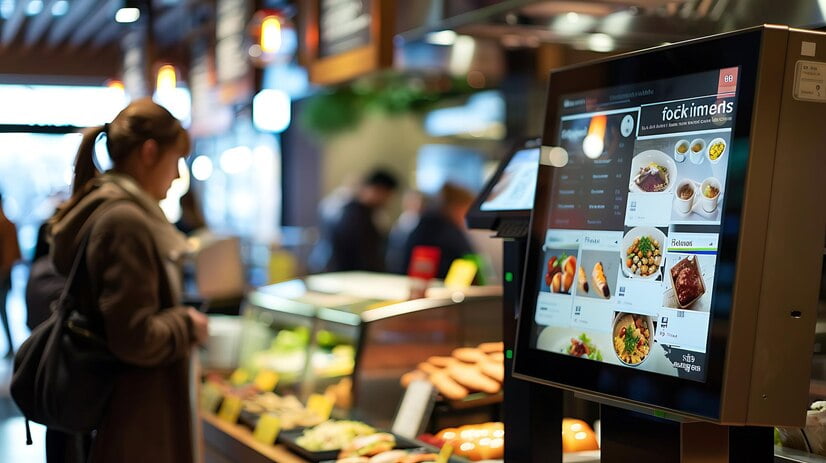
A digital menu ordering system combines software and hardware with which customers can browse the menu, customize items, and pay using digital screens. This may be a kiosk, a tablet, or a phone interface that is QR-based and sends orders straight to the kitchen.
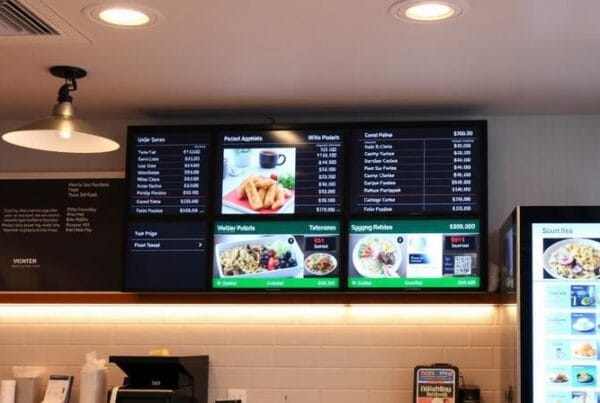
The key distinction between simple digital signage and a complete digital menu ordering system is interaction. Digital signage presents information; a digital menu ordering system captures customer selections, accepts payment, and forwards the structured orders to your production system.
Common options include self-service counter kiosks, table-side ordering with QR code scanning, and drive-thru built-in screens. Both methods ease ordering tension and enhance consistency, especially during busy periods.
“A display informs. A system sells and then executes.”
Core Components of a Restaurant Menu Ordering System
An effective restaurant menu ordering system is one where hardware, software, and integrations work together.
Touchscreen displays, tablets, payment terminals, and kitchen display systems (KDS) are often found as hardware. This is what the customers and staff deal with day in, day out, and therefore it is important that it is long-lasting and clear.
The experience is run in the background by software: live menu updates, inventory logic, order routing, and reporting. The most efficient platforms reduce manual work through menu editing that’s quick and immediate.
The ordering layer is linked to the systems that operate the business through integration. POS synchronization maintains the accuracy of pricing, and the delivery-platform integration enables standardizing dine-in, pickup, and third-party orders into one structured flow.
Nento provides end-to-end hardware and software integration. Book a free demo.
Key Types of Digital Ordering Systems
Electronic Menu Ordering System
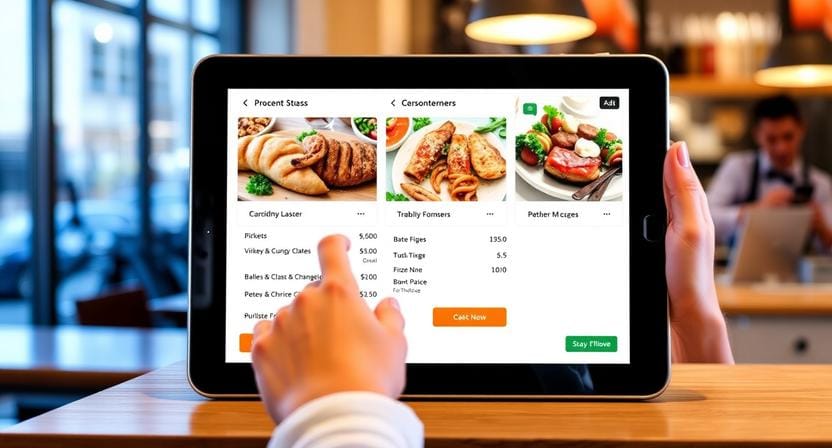
An electronic menu ordering system replaces paper menus, which are substituted with either tablets or large touch screens. This is used to enhance speed and clarity and give guests more control. It also allows immediate translation of languages, allergen filters, and calorie information, which enhance trust and reduce hesitation when ordering.
“Transparency reduces hesitation—and hesitation slows service.”
Digital Menu Ordering System Software
Depending on the preferences of operations, digital menu ordering system software can be either on-premise or cloud-based. Cloud solutions are often preferred for remote control, real-time updates/publishing as well as multi-location control. The major characteristics are real-time menu modifications, sales reports, and unified content publishing on devices.
Digital Ordering System for Restaurants
A restaurant digital ordering system can be set up as a counter-service or full-service restaurant. Kiosks reduce pressure on the line in counter-service and table-side ordering in full-service, respectively. One such case is a chain of burger restaurants who decreased the number of errors in their orders by 40 percent by shifting customizations to a structured online choice rather than verbal call-outs.
Digital Menu Service
Digital menu service can be sold either on a subscription basis or a one-time purchase with a support option. The subscription strategies usually involve continuous updates of content, technical support and enhancement of features. This would also be more suitable for restaurants that switch the menu often and prefer to have the monthly expenses predictable.
Smart Restaurant Menu Ordering System
The intelligent restaurant menu ordering system includes AI-based upselling and personalization. It may contain such recommendations as: Customers who purchased X also purchased Y or time-based suggestions which change with the time of the day; breakfast, lunch, and dinner. Predictive ordering can over time respond to weather, demand or local trends to boost average check value.
Restaurant Electronic Menu Ordering Payment System
An electronic menu ordering payment system is a system that is incorporated into a restaurant ordering system that lets customers pay during ordering. This is compatible with tap, chip, and mobile wallets, and may have split-bill capability and tipping screens. The operational effect is the increased turnover of tables and reduced employee time on payment processing.
Digital Menu Ordering System for Hotels
The hotel digital menu ordering system should serve multi-language guests and multi-location service. Digital ordering in hotels is applied in in-room dining (through QR), minibar integration and at the poolside or banquet areas. A hotel ready system must also have billing logic that cleanly associate orders with room numbers.
Digital Restaurant Ordering System
Omnichannel: kiosk + web + mobile + drive-thru. A digital restaurant ordering system usually implies that these channels are used together: kiosk + web + mobile + drive-thru. By combining loyalty programs, the customers will receive regular offers and will be able to order faster, increasing the number of purchases. The trick is to keep channels in sync to ensure that pricing, availability and menu structure remain the same across every channel.
The Digital Menu Ordering Project Plan
An online menu order project plan allows you to keep your rollout under control and quantifiable. The following is a blueprint to be followed step by step by the restaurant owners:
- Assessment: Determine areas of pain such as slow lines, order errors and labor costs.
- Vendor Selection: Select according to reliability, support and scalability- this is where the ROI is secured.
- Hardware Deployment: Plan device placement, network setup and payment terminal integration.
Don’t build your project plan alone. Download Nento’s free digital menu ordering implementation checklist.
Benefits of Digital Menu Ordering Systems
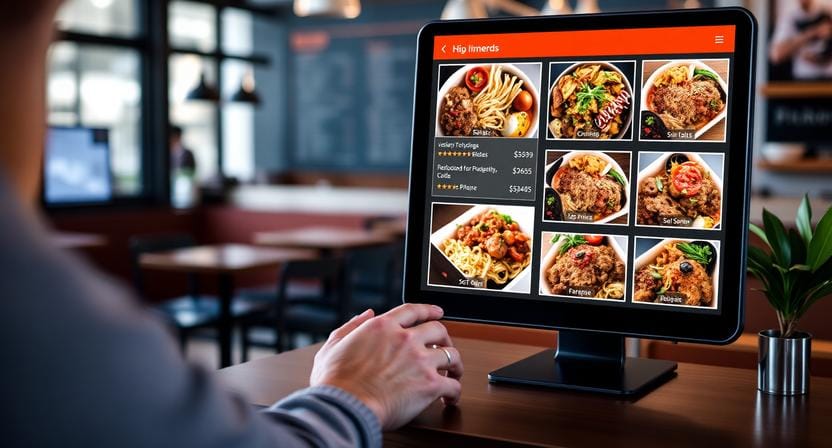
To the customers, online ordering will translate to reduced waiting time, increased accuracy, and quicker contactless payments. The freedom to tailor without being pressured is also a plus to the confidence, particularly when allergies are displayed.
To the owners, it can be seen to have the benefits of lower labor costs, high average order value due to the consistent upselling, and access to real-time sales data. In the case of kitchen employees, the effect of the improvement in operations is direct: there is no illegible handwriting and fewer misunderstood modifiers as orders are structured and understandable.
To market it, digital ordering allows dynamic upselling, limited-time offer promotion, and automated happy hour scheduling without reprinting and without relying on staff to remember all the details of the campaigns.
“Digital ordering turns promotions into a system, not a suggestion.”
Industries Beyond Restaurants
In-room dining, banquet ordering, and poolside service are some of the digital orderings used in hotels. Corporate campuses, hospitals, and universities have cafeterias that have faster service and easier ordering processes during the busiest meal times.
Fast food businesses are able to integrate drive-through digital menu ordering with kitchens in order to minimize errors and enhance throughput. Bars and breweries can also sponsor self-serve beer walls with digital tabs, which will simplify and manage ordering and payment.
Common Challenges & Solutions
High upfront cost
Many restaurants hesitate because of upfront hardware costs. Nento has solved this through flexible leasing terms to allow operators the ability to modernize without the pressures of a large upfront capital bill.
Staff resistance
Change may produce resistance, particularly when systems are perceived to be complex. The strategy of Nento is based on the intuitive interface and brief training to ensure that the teams can implement the system within the shortest possible time and without disrupting the work.
Technical downtime
Downtime at the rush hours is not acceptable. Nento offers 24/7 support and remote diagnostics to mitigate risk and keep systems running when volume is highest.
“Support matters most when your kitchen is busiest.”
Menu update delays
Delayed updates cause a discrepancy and frustration for the customer. The instant publishing via the cloud allows updating prices and availability within several minutes, so the menu is always correct on all devices.
| Challenge | Solution with Nento |
| High upfront cost | Flexible leasing options |
| Staff resistance | Intuitive UI, 1-hour training |
| Technical downtime | 24/7 support + remote diagnostics |
| Menu update delays | Cloud-based instant publishing |
Frequently Asked Questions (FAQ)
What is the difference between a digital menu board and a digital menu ordering system?
An electronic menu board simply shows things. A digital menu ordering system gives consumers the chance to make orders, customize, and pay on the screen.
How much does a restaurant menu ordering system cost?
Prices depend on the quantity of screens, functionalities within the software, and payment integration. Simple systems can start around $2,000 per kiosk; full-service setups can range from about $5,000 to $20,000.
Can a digital ordering system work offline?
The majority of cloud-based systems need an internet connection, but Nento has offline caching options, which save the orders and update them once the connection is restored.
Is an electronic menu ordering system secure for payments?
Yes, established systems have PCI-compliant payment gateways that are end-to-end encrypted. Nento collaborates with major payment processors.
How long does a digital menu ordering project plan take to implement?
An average one-location deployment requires 2-4 weeks between evaluation and deployment. The rollouts in multiple locations require 2-3 months.
Can I integrate my existing POS with a smart restaurant menu ordering system?
The majority of the modern systems, such as Nento, are connected with the key POS systems, such as Toast, Square, Clover, and Micros.
What happens if a tablet or kiosk breaks?
Nento provides next-business-day hardware replacement and loaner equipment when repairing.
Do hotels need a different digital menu ordering system for hotels?
Hotels enjoy the feature of multi-language menus and the integration of room numbers and minibar billing. All these are incorporated in the hotel-specific solution offered by Nento.
Conclusion
Digital menu ordering is no longer a luxury—it’s a competitive requirement. Higher revenue through the right digital menu ordering system software, fewer errors, and enhanced guest experience by eliminating the friction in browsing, customization, and payment.
Nento delivers the hardware, software, and support to ensure the transition process is seamless so that you can go live and maintain performance at scale.
Stop losing sales to long lines and outdated menus. Contact Nento today for a personalized quote and free site survey. Your customers are ready to order digitally—are you?
About Nento
Nento is a leading digital signage company specializing in smart restaurant menu ordering systems, digital menu ordering software, and end-to-end deployment for restaurants, hotels, and cafes. With 24/7 support and flexible pricing, Nento helps businesses serve faster and earn more.