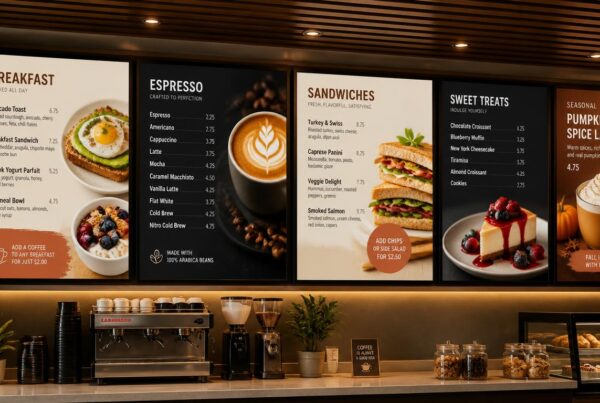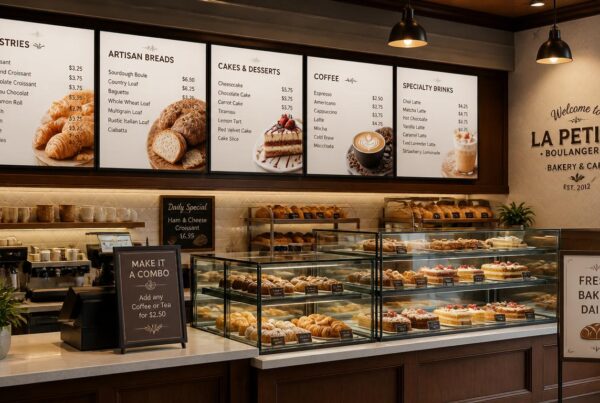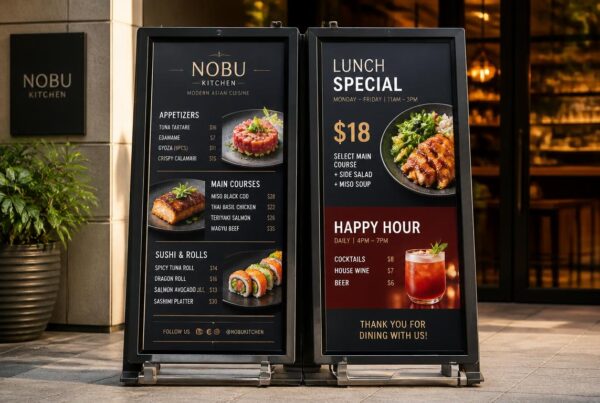
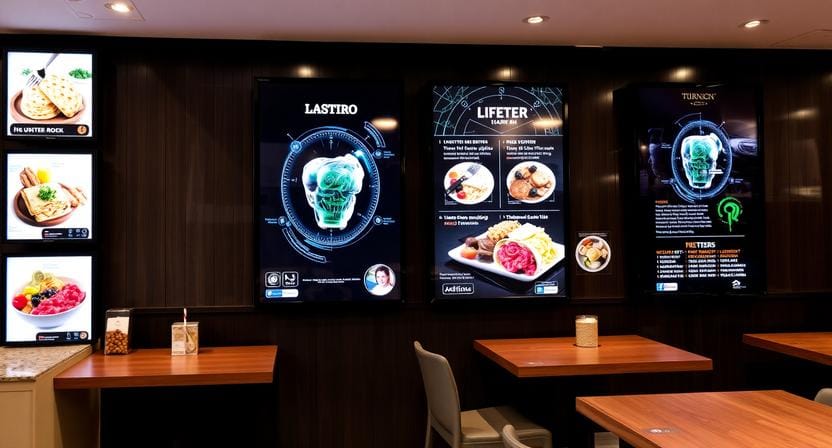
Enter any modern mall, hotel lobby, restaurant, or corporate office, and chances are, you’ll be greeted by gorgeous 4K displays in ideal positions. The hardware appears to be costly. The quality of the display is crisp. The space feels modern—at least for the first few seconds.
Then you look closer.
The display shows last year’s menu, a generic stock beach video, an old event announcement, or a looping promotion that has been running for months. It is the frozen screen issue: companies invest in digital signage but use it like a frozen poster.
The actual failure of conventional digital signage is not the display—it is the logic behind the screen. Most signage systems are merely broadcasting. They do not understand the customer, the surroundings, the time of day, the weather, the inventory, or the purpose of the individual who is standing in front of it.
That is changing. The era of static playlists is ending, and the era of AI digital signage is here.
AI is not simply making screens smarter. It is transforming them from costly decorations into active communication tools—almost a revenue-generating team member that knows when to speak, what to display, and why it matters.
Are your screens stuck in 2019? Here at Nento, we’re rebuilding that logic from the ground up. Let’s fix that.
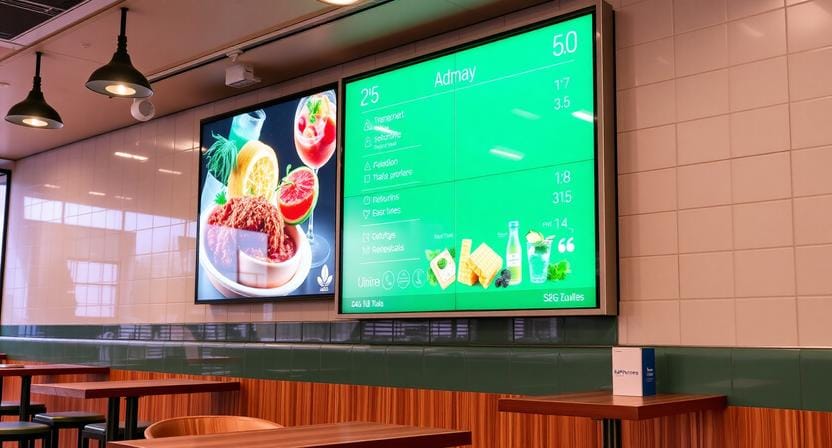
The Paradigm Shift: What is AI Digital Signage?
AI digital signage is not just signage with a chip inside. It is the combination of data, intelligence, and dynamic screen output. The system interprets environmental signals and modifies what is displayed on the screen rather than displaying the same information to all at all times.
The signals may be weather, time of the day, foot traffic, length of queues, inventory, customer demographics, or CRM. The display then responds with personalized visuals, smarter deals, and more pertinent messages.
Most definitions explain what AI signage is. The question that is more significant is why it matters to your bottom line. When your screen has the ability to display the correct message at the correct time, it can reduce wasted impressions, enhance engagement, and aid in making better sales decisions.
The Three Pillars of Intelligence
Perception means the screen can recognize the audience interacting with it at a broad level. As an illustration, it can identify general demographic trends or audience focus without identifying individuals.
Context: The system is aware of the context surrounding the screen. Is it daytime or night? Is the line increasing in length? Is there any rain outside? Is a product running low in stock?
“Action” refers to the content altering immediately in accordance with the moment. Instead of waiting for a manager to update a playlist, the signage can adjust automatically.
This is one of the largest efficiency gains that businesses can get today because it shifts businesses from manual scheduling to data-driven digital signage. It reduces management overhead and makes each screen more relevant.
“The future of signage is not more screens. There are smarter decisions behind every screen.”
The Engine Room: The AI-Enabled Digital Signage Player
A digital signage screen is the body. The player is the brain.
Many businesses focus on display size, resolution, and brightness. These details are important, but they alone do not make intelligence. Even a brilliant display paired with a weak processor cannot do much. It can show content, but it cannot think.
That is why the AI-enabled digital signage player matters. It works with data, rules, and signal interpretation and makes decisions about which content should be shown at a given time. That is, the player transforms passive display signage into active communication.
Why the Player Matters Most
A standard media player follows instructions. An AI-enabled player interprets conditions.
When you have your screen in a restaurant, the player can change menu highlights depending on the time, weather, or inventory. When you have a screen in a retail store, “it can highlight different products based on traffic. In a lobby, the screen can automatically shift between welcome messages, meeting updates, and emergency alerts.
What Makes Nento’s AI-Enabled Player Different?
Local processing: Split-second decisions cannot always rely on the cloud. Latency kills engagement. Local processing prevents the system from taking too long to respond when time is of the essence.
Sensor fusion: An intelligent player can integrate various signals, including cameras, Wi-Fi pings, POS, CRM segments, or environmental signals. The outcome is a deeper understanding of what should appear next.
Future-proofing: It is usually less expensive to upgrade your player rather than hiring more people to handle the content manually. The system takes care of repetitive decisions, instead of having to give your team more work.
The best AI screen digital signage solutions are nearly invisible. They merely show the right thing at the right time without requiring managers to keep recreating playlists.
The Magic Trick: Content Automation for Digital Signage
Most companies do not fail at digital signage because they lack screens. They struggle because they cannot produce enough fresh, relevant content to make such screens useful.
This is the content bottleneck. A marketing team can develop several campaigns, a few seasonal graphics, and maybe some videos. However, after a couple of weeks, the displays begin to repeat. Customers stop looking. Staff stop caring. The screens fade into the background.
This is where content automation for digital signage changes the game.
Enter the AI generator.
A few assets can be used to produce numerous relevant variations by an AI system. To illustrate, a restaurant can begin with five images of the products, some offers, and some simple branding rules. A digital signage generator based on AI can then generate variations for morning, lunch, dinner, rainy weather, slow hours, and high traffic.
The system can respond to audience mood, location, or business rules, and copy, layout, and messaging can be adapted with 500 different slides, rather than being manually designed. This does not replace strategy. It reduces repetitive production work to enable teams to focus on objectives.
The Real Meaning of “Set It and Forget It”
‘Set it and forget it’ should not imply not looking at the screens. It involves the establishment of smart rules and then letting the system optimize within the rules.
For example, a restaurant can modify menu content, depending on weather, using AI. Cold day? Promote soup, hot beverages, or comfort foods. Hot day? Emphasize iced beverages, salads, or frozen desserts.
That is not basic scheduling. That is a response.
The screen is not just asking, “What time is it?” It is asking, “What does this customer need right now?”
Ready to automate the art of persuasion? Nento’s platform turns content chaos into strategic clarity. See the generator in action.
The Profit Center: Digital Signage Viewer Engagement
Viewer attention is the new currency. Businesses are not just competing against other screens; they are competing against phones, notifications, conversations, and the speed of daily life.
This means businesses cannot measure digital signage viewer engagement by whether someone simply looks at a screen. Engagement is about the viewer halting, comprehending, interacting, scanning, buying, subscribing, making a reservation, or altering behavior.
Beyond Watching
Conventional signage asks, “Did people see it? AI-driven signage asks, “Did it move people to action?”
It could be scanning a QR code, ordering something that is being promoted in the store, walking into a store, making a service appointment, becoming a member of a loyalty program, or having fewer redundant questions at the check-in desk.
How AI Drives Action
Dwell time: The system can learn which visuals people look at longer and adjust future content.
Relevance: The same screen can show different offers to different audiences at different times. A younger audience segment might see sneakers or gaming products, while an older audience segment might see travel or wellness offers. A lunch crowd might see quick-service offers, while an evening crowd might see premium experiences.
Learning loop: The system learns from what did not perform. In case some of the messages are disregarded, it may lower their rate. When one offer is scanned or converted more, it may appear more frequently in such circumstances.
This is where AI-driven digital signage becomes valuable: the possibility to learn based on the behavior of the viewers and to enhance the future performance. It does not involve only content presentation. It streamlines communication.
“A smart screen does not just attract attention. It learns what attention is worth.”
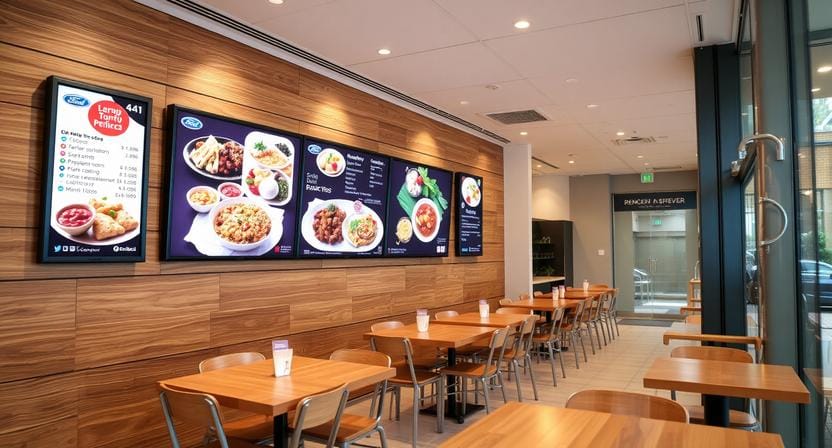
The Psychology of Choice: Why AI Feels Better
Personalization can be effective, but it must be managed carefully. The line between helpful and creepy is thin.
Relevant content, which seems useful, is usually valued by customers. When it feels invasive, they become less comfortable. This is why privacy, transparency, and trust should be the core principles of modern AI-based signage solutions.
Anonymous Analytics
Responsible AI signage can utilize anonymous analytics to learn about the overall audience behavior without collecting personal data. As an illustration, facial analysis can estimate broad emotion or attention signals without identifying an individual.
This is in contrast to facial recognition. Facial recognition attempts to identify a person. Anonymous analytics is concerned with the broad trends, like whether viewers seem to be engaged, how long people look at the screen, or if a message is effective in a specific setting.
Trust as a Feature
Trust is not an option. It forms a component of the product.
Companies that use AI digital signage software must be transparent in the utilization of the data and should not collect unnecessary personal data. The goal is not to track people. The purpose is to improve content relevance, decrease the noise, and design superior experiences.
When applied responsibly, AI feels less like surveillance and more like good service. The screen is responsive as it is sensitive to context, not because it knows private details about the viewer.
FAQs: The Questions We Get Asked Every Day
Is AI digital signage expensive to implement?
Hardware can be as affordable as standard digital signage players. The real ROI comes from enhanced content efficiency, enhanced engagement, and sales lift. Through Nento, companies have the option of flexible tiers such that they only pay for the level of intelligence that they require.
Do I need a data scientist to run this?
Absolutely not. Good AI digital signage software should feel simple to the user. In case you are able to use a social media scheduling tool, then you can use Nento. The AI does the heavy lifting, and you decide on the goals, approve the brand rules, and track outcomes.
Can this AI integrate with my existing POS or CRM?
Yes. That is where the real power begins. The AI-powered players of Nento are meant to pull data from your current stack to allow screens to react to inventory, audience segments, sales trends, time of day, or campaign priorities.
What happens if the internet goes down?
Edge computing helps solve this problem. The AI-based digital signage player has onboard processing and stored content and is able to run even when the external connection is not available. This helps prevent your screen from becoming useless or frozen.
How does this differ from trigger-based signage?
Trigger-based signage follows a simple rule: “If X happens, show Y.” AI goes further. It takes into account all of the variables simultaneously—weather, time, audience, inventory, past performance, and present business objectives—and then predicts which message combinations are most likely to work.
Simply put, trigger-based signage is reactive. AI is predictive and adaptive and learns.
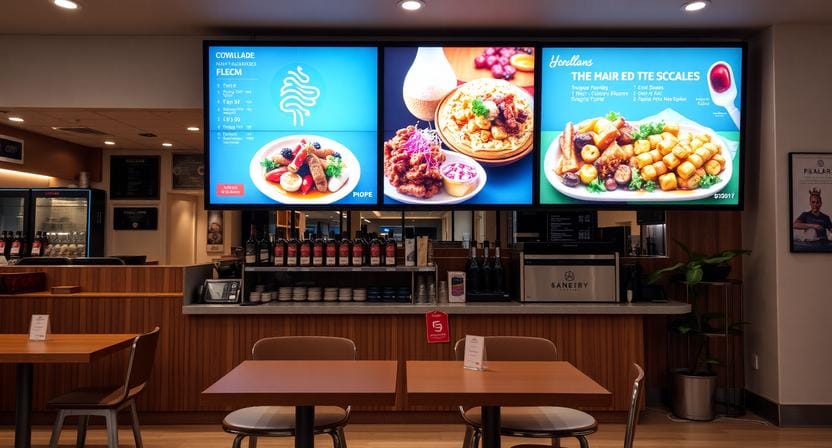
Conclusion: The Screen as a Salesperson
You have two choices. You can keep broadcasting and hoping, or you can start engaging and knowing.
The future of artificial intelligence in digital signage is not to replace human creativity. It is about giving screens context so they can make better decisions in the moment. The screen stops being just an electronic billboard. It becomes a responsive salesperson, service assistant, wayfinding guide, and brand storyteller.
AI digital signage brings empathy at scale. The screen is aware of the context of the viewer and reacts with something more beneficial than an ordinary loop.
It is time to stop managing screens and start orchestrating experiences.
Don’t just broadcast. Connect. Upgrade to Nento AI Digital Signage today and turn your displays into your most intelligent sales channel.