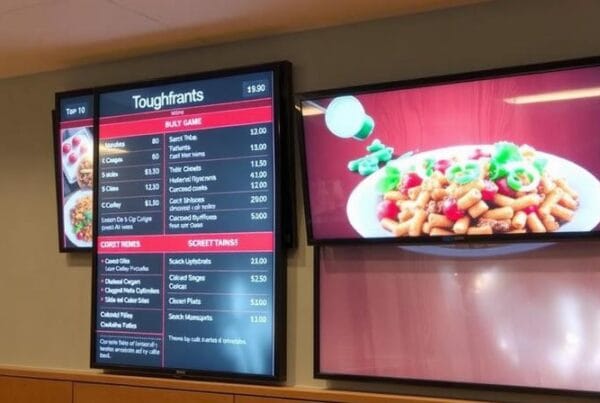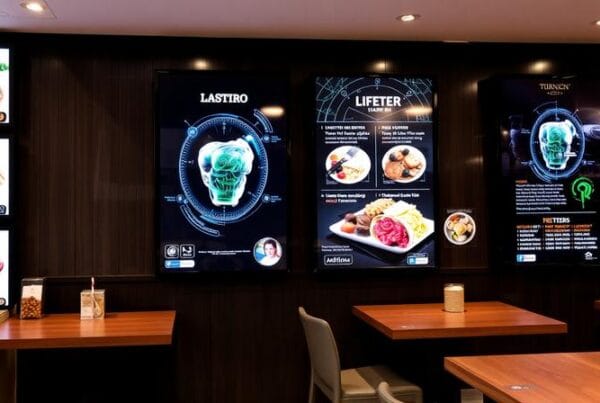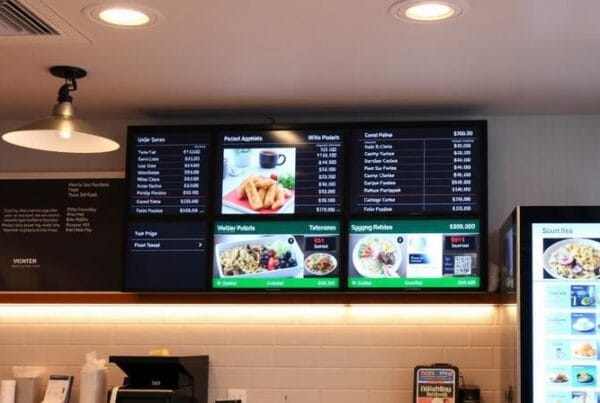
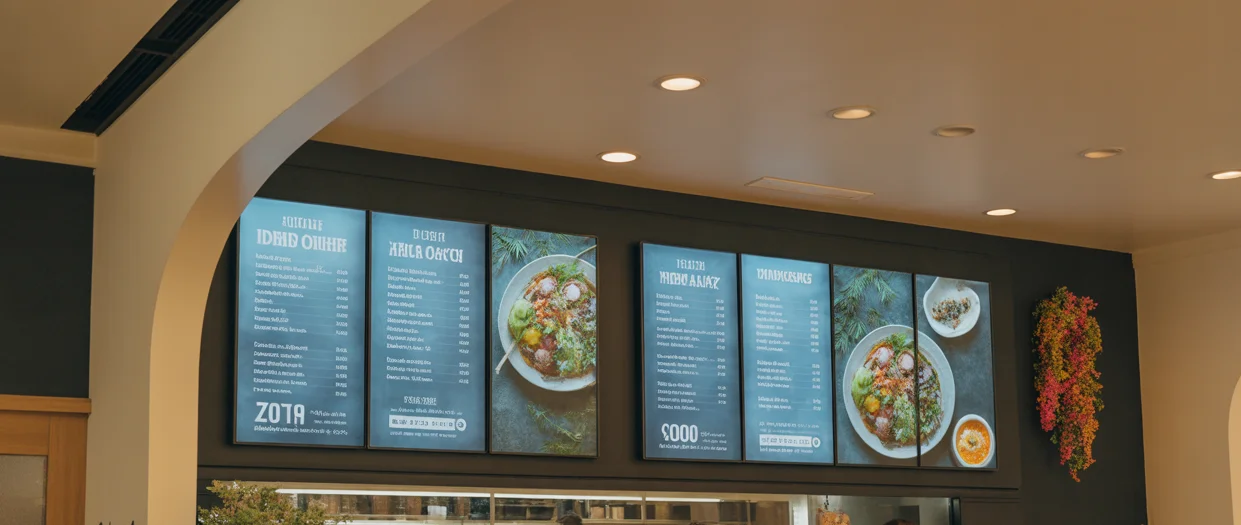
Digital signage has evolved beyond mere screen-based messaging to an intelligent communication layer integrated into contemporary businesses. Signage has turned into a means of strategic engagement, personalization, and performance measurement as organizations compete for attention in the ever-increasing physical and virtual arena.
Understanding digital signage trends in 2026 is no longer optional. The more businesses adhere to the trends of the digital signage industry, the more audiences they become relevant to, and the greater the ROI and ability to sustain operations. Nento is in the middle of this change, defining the future of scalable, data-driven signage ecosystems.
In 2026, digital signage is no longer about displaying content—it’s about responding to people.

I. Foundational Shift: The Driving Forces Behind Digital Signage Market Trends
A. The Demand for Hyper-Personalization and Data-Driven Content
The transition to hyper-personalized messaging is one of the trends in the digital signage market. The same content is no longer aired on screens for everyone. Instead, messages are tailored depending on location, time of day, audience behavior, and real-time data inputs.
Relevance is driven by data-driven content. Signage that is dynamically reacting to a situation is no longer passive but is active.
B. Integration with Broader Business Ecosystems
Digital signage is increasingly integrated with enterprise software like CRM, POS, ERP, and IoT environments. Such integration will allow signage to display dynamic inventory, price fluctuations, customer profiles, and operational status.
This coming together makes signage a component of the bigger digital infrastructure and not a separate channel.
C. Sustainability and Energy Efficiency as a Core Requirement
Digital signage technology is increasingly shaped by environmental responsibility. Companies are focusing on energy-efficient displays, smart power scheduling, and extended hardware life to lower environmental impact without compromising on performance.
D. Rising Expectations for Seamless, Interactive Experiences
Consumers increasingly expect signage to behave like their mobile devices—responsive, intuitive, and interactive. Their recent use of non-interactive screens is quickly becoming obsolete in a world where the expectation is to be engaged and immediate.
II. Key Digital Signage Technology Trends for 2026
A. AI Maturity: Beyond Basic Analytics
The future of digital signage is being shaped by artificial intelligence. By 2026, AI will go far beyond the dashboards and reports.
Predictive content optimization enables the system to automatically test variations, learn what works best, and make changes to messaging automatically. Advanced behavioral analytics interpret the dwell time, sentiment, and movement behaviors to optimize content strategies in real time.
Generative AI is also becoming a content engine, which dynamically generates localized messages, promotions, and images through live data streams.
AI no longer reports performance—it actively improves it.
B. Hyper-Interactive and Immersive Experiences (New Signage Technology)
Touchless communication is taking center stage. Gestures, voice activation, and interactions triggered by the mobile make it easier to use and increase accessibility.
AR displays allow try-before-you-buy, indoor navigation, and overlay of information. In the meantime, projection mapping and holographic displays are blurring the physical and digital divide, making brand experiences immersive and worth paying attention to.
C. The Platform Evolution: Centralized Command (Digital Signage Software News)
Modern signage networks are now based on cloud-native platforms. Security, scalability, and uptime are no longer considerations but are desired.
The combined dashboard enables the teams to control omnichannel campaigns on physical screens, mobile extensions, and interactive touchpoints. With API-first architectures, the integration of signage and marketing automation systems, POS systems, and data platforms is simple.
This trend predominates the recent news of digital signage software since it is the agility of software that dictates the speed at which a business can implement new innovations.
D. Hardware Innovation and Form Factor Flexibility
Display technology is still becoming diversified. Clear OLED and MicroLED displays are now feasible in high-end spaces and are high-brightness with architectural appeal.
Sustainable displays such as the solar-powered and ultra-low-energy displays are moving outdoors and into remote areas. Curved and flexible displays enable the signage to blend in with the physical buildings instead of breaking them.
III. Sector-Specific Deep Dive: Retail Digital Signage Trends
A. Smart Stores as Connected Ecosystems
Retail digital signage trends position signage as the nervous system of the store. Screens react to foot traffic, inventory movement, and customers in real time.
B. Dynamic Pricing and Shelf-Edge Automation
Pricing is becoming fluid. Digital shelf-edge signage allows instant price changes, prompts, and demand-based changes to be made without manual intervention.
C. Endless Aisle and Click-and-Collect Integration
Signage is being used to provide retailers with additional visibility in inventory beyond physical shelves. Online catalogs are connected to the store through digital signage, establishing smooth omnichannel experiences.
D. Enhanced Loss Prevention and Store Analytics
Highly sophisticated analytics in signage networks allow detecting anomalous behavior patterns, streamlining store layouts, and enhancing operational efficiency without affecting customer experience.
IV. Operational Excellence: Digital Signage Demand Management
A. Proactive Monitoring with AI-Powered Alerting
Digital signage demand management focuses on preventing issues before they impact performance. AI-based systems monitor the health of devices, playback of content, and network stability.
B. Predictive Maintenance to Maximize Uptime
Predictive maintenance is used to forecast failures through the analysis of the past. Screens are maintained before downtime occurs so that the brand presence is maintained in networks.
C. Scalable Network Management for Global Deployments
Centralized control also helps organizations to control thousands of displays across regions under a similar standard, governance, and performance visibility.
Is your network operating at peak efficiency? Ask Nento about our AI-powered command center for flawless digital signage performance.

V. The Broader Horizon: Digital Signage Future Trends
A. The Role of 5G and Beyond
Real-time content updates, ultra-high-resolution streaming, and latency-free interactivity can be made in high-bandwidth connectivity and are accelerating future digital signage trends.
B. Digital Signage in Smart Cities
Public signage is becoming smart infrastructure, used for transportation updates, emergency notifications, and civic interaction in smart cities.
C. Ethical Data Use and Privacy
With increasing levels of analytics, ethical data practices are necessary. Sustainable signage strategies revolve around transparency, consent, and compliance.
D. Convergence with the Metaverse
Physical signage networks can be simulated and optimized in virtual replicas, or digital twins, of the real system before implementation.
The future of digital signage is not physical or virtual—it’s both.
Conclusion: Preparing for the Digital Signage Trends of 2026
It is clear that digital signage trends in 2026 are intelligent, integrated, and adaptive systems. Screens are now becoming decision surfaces rather than display surfaces.
The only way to achieve long-term success is to collaborate with progressive providers who can keep up with the trends of digital signage technology, rather than react to them.
Ready to transform your communication with the trends of 2026? Schedule a free consultation with Nento’s experts and future-proof your digital signage strategy today.
FAQs: Digital Signage Trends in 2026
What is the biggest trend shaping the future of digital signage?
AI integration. It is causing automation, personalization, and real-time optimization at scale.
How will retail digital signage change in 2026?
Retail signage is transactional and personal and completely integrated with inventory and customer data, providing seamless phygital experiences.
Is sustainability a real priority in signage?
Yes. Key trends in the digital signage industry include energy efficiency, smarter use of power, and increased hardware lifecycles.
What does digital signage demand management mean?
It means proactive monitoring and predictive maintenance as well as centralized performance control of whole signage networks.
Why is software more important than hardware now?
Hardware is where the content is shown; however, the real drivers of future value are software, which makes it intelligent, integrated, scalable, and adaptable.
How can businesses prepare for these trends?
Through the implementation of cloud-based, API-compatible platforms and collaboration with cloud providers such as Nento that invest in the development of their products on a regular basis.
Don’t Just Keep Up—Lead the Way
The future belongs to intelligent, connected signage experiences. Nento’s platform is built for what’s next. Contact us today to see how your business can lead—not follow—the digital signage trends of 2026.