I. Introduction
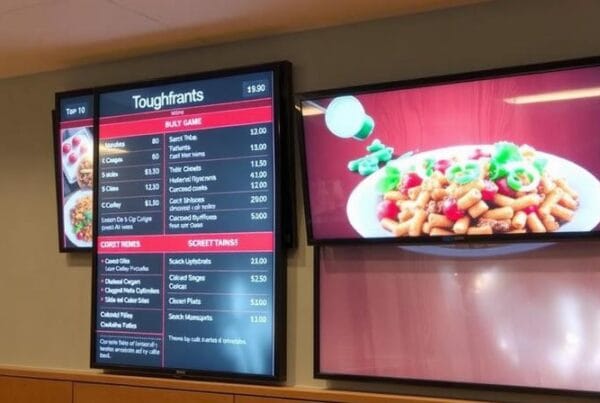
The menu board in the fast food industry is the most aggressive salesperson. It never rests, and it has to move a customer from ‘just looking’ to ‘I’ll take that combo’ within less than 3 seconds. It is the reason why menu boards for fast food are not merely a decoration but a tool of performance that directly influences the speed, order value, and customer trust.
“If customers hesitate at the menu, your whole line slows down.”
The issue is that static, faded, or cluttered boards create bottlenecks. Customers spend more time deliberating, employees have to repeat themselves, and misunderstandings are likely to cause wrong orders. That friction slowly builds up to the point where margins are being shaved away, particularly if your most profitable products are not being prominently displayed using a well-designed fast food menu board.
This is addressed by the modern digital boards that integrate visibility and control. The Digital Menu Boards by Nento are a combination of high-brightness hardware and dynamic software to streamline operations, upsell, and make updates in real time across locations. We’ll connect the main concepts of the fast-food menu signs and the practical aspect of the fast-food menu board design to real-life results in the sections that follow.
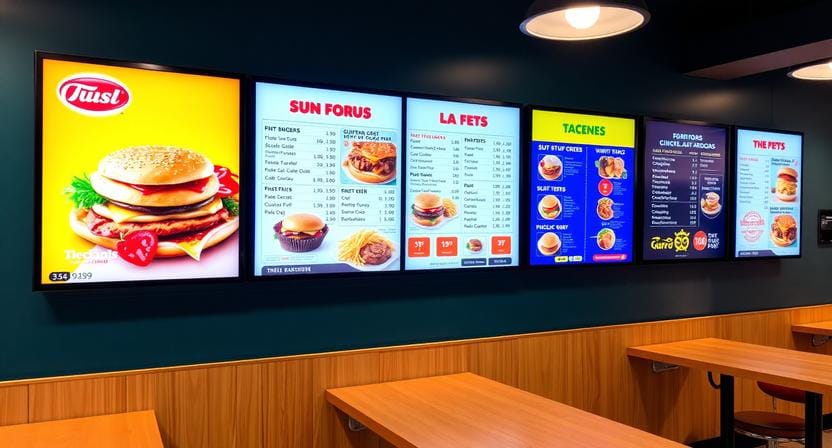
II. The Shift in Fast Food Communication: Why Digital Wins
Dynamic Upselling
Digital signage enables you to feature high-margin items when it is just the right moment. Combos, add-ons, and limited-time offers, in particular, can be prioritized during peak hours, without the staff having to memorize a script to boost average check value. A timely visual display can be more effective than a verbal suggestion since it targets all the customers at all times.
“Upselling works best when it’s built into the menu, not left to memory.”
Real-Time Updates
Slow fast-food operations are caused by printing costs and manual swaps. You can edit prices, remove sold-out items, and roll out a new promo in real time with a digital fast food menu board. This minimizes the mistakes that arise due to using old boards and keeps you on your feet when ingredients, demand, or promotions change.
Visual Appeal
Food photography and motion graphics are of high resolution; they are more effective in stimulating appetite as compared to static text. Motion, when applied selectively, will attract attention to the things featured without feeling too loud or pushy. This makes restaurant communication board screens active selling tools rather than information screens.
Operational Efficiency
Digital menus are also helpful in enhancing operational efficiency because they minimize confusion and rework at the counter. In case of clear and up-to-date menu information, the staff members can spend less time on explaining the options and fixing the misunderstandings. With kitchen display system integration, the whole flow is cleaner, which assists in minimizing errors and accelerating the fulfillment.
III. Designing for the Hungry Eye: Fast Food Menu Board Design Principles
Simplicity is Key
The best designs of fast food restaurant menu boards will not present the overload of information. The customers should be in a position to identify the best sellers, the combo structure, and the prices in a flash. Where a board attempts to demonstrate everything as being equal, the customers drag their feet, and the staff members find themselves leading the decision rather than verifying the order.
“Clarity beats completeness in fast food.”
The Golden Triangle
Before customers read details, they tend to scan a board in the expected areas, which are the top left, center, and top right. Here you put in best-sellers, high-margin combos, and key promos. When the most lucrative products are not within these areas, you miss the chance to influence decisions within the initial few seconds.
Typography & Contrast
Readability has to work for the customer with perfect vision and for the one who has forgotten the glasses. Good typography, big fonts on pricing, and high contrast of text and background make the menu readable in poor light and crowded areas. Good contrast also minimizes hesitation since the customers will not have to strain to make sense of what is on the screen.
Color Psychology
The functional role of color is applied strategically. Appetite is commonly stimulated with reds, and value and speed are frequently indicated with yellow and warm colors. The trick is not overdoing it: excessive saturation may seem disorderly, but purposeful color emphasis helps direct attention toward prominent objects.
Applying the principles across different environments
Even more important is the fact that these design rules are important when there is a lack of space or when there is less attention. The food truck menu board should be more hierarchical due to the shorter viewing distance and the smaller size of the board. A food court menu board should compete with noise, distraction, and different brands; therefore, high contrast and simple categories are necessary.
“Different venues change the rules of attention—your layout has to adapt.”
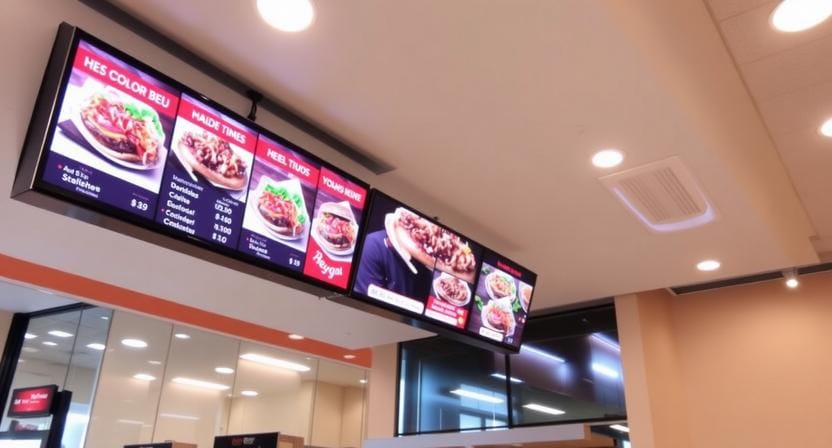
IV. Nento’s Solutions: Tailored Displays for Every Venue
For the Drive-Thru
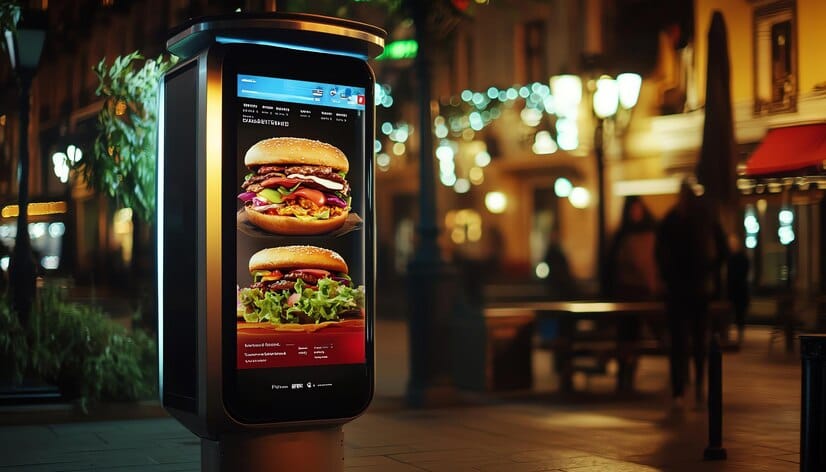
Drive-through operations require the highest visibility, scanning speed, and dependable performance in varying light. Nento provides high-brightness displays that are weather resistant and can be used to fight glare and be readable in the real world. This is where the signs of fast food menus are developed to become stable and constantly up-to-date digital sales resources.
For the Counter
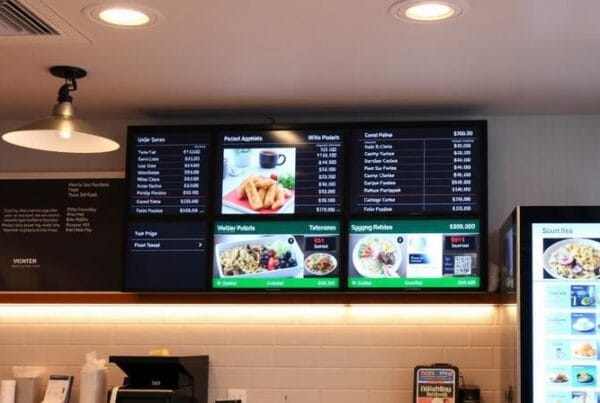
Counter environments have the advantage of content that facilitates fast decision-making and personalization. An interactive presentation and a clear layout of the menu will assist customers in verifying decisions without making the line slow. It comes in handy, particularly in a menu board in a coffee shop where speed is paramount and add-ons (sizes, flavors, extras) can considerably add to order value.
For Food Trucks & Cafes
Food trucks and small cafes require screens that fit in narrow areas and operate effectively. Nento also offers small, energy-efficient solutions that do not impose a complicated installation. This flexibility helps in serving a clean menu board for a cafe look and also in fulfilling the more rugged requirements of a menu board for a food truck setup where vibration and outdoor service are prevalent.
Ready to see your menu items pop? Contact Nento for a free mockup of your current menu converted to a digital display.
V. Content Strategy: What to Display (And When)
Dayparting
Dayparting will automatically change the breakfast to lunch (and so on) without human intervention. This keeps messaging accurate, avoids confusion of customers, and allows staff not to need to clarify what is available at a particular time. It also makes sure that the best-performing items in each time window are placed at the best location.
Promotional Scheduling
Online scheduling allows one to schedule timed deals such as happy hour offers or time-limited packages automatically. This keeps campaigns consistent and eliminates the possibility of promos being lost or distributed unequally across shifts. It also makes all the stores conduct the same campaign simultaneously in multi-location operations.
Upsell Triggers
When smart prompts like the ones of adding fries and a drink costing 2 more are graphically incorporated into the menu flow, they tend to work best. These triggers do not need to be cluttered; instead, they should be placed close to the point of decision-making—where the customers make their final choice of a main item or a combo.
“An upsell works when it feels like the next logical step.”
Social Proof
The restaurant can post reviews like ‘5-Star Rated Burger!’ right on the menu board to strengthen confidence. Social proof is especially effective with new products, luxury products, or signature products since it minimizes the perceived risk and can make customers gravitate towards higher-margin products.
VI. Implementation: The Nento Difference
Hardware
The Nento’s hardware focus is based on durability, 4K resolution, and thin bezels, which form a sleek and high-end appearance. Durability is important in fast food environments since the screens are used over long periods and need to handle heat, lighting changes, and constant use.
Software
The cloud-based CMS (Content Management System) by Nento will enable you to update all the fast-food menu boards in your chain from your phone. That is, pricing, promotions, and daypart schedules can be controlled at a central location without having to wait for local teams or reprinting.
“Speed of change is a competitive advantage in fast food.”
Installation & Support
Implementation works best when downtime is minimized. The white-glove model of installation and support developed by Nento will help you to go live in a short period of time and keep the systems stable. The practical objective is straightforward: you keep your menu updated, and your business continues running.
Stop printing and start profiting. Book a live demo of Nento’s menu board software today.
VII. ROI: Calculating the Switch
Eliminating Printing Costs
Updates through printing and vinyl appear to be manageable until you count them in a span of several years. The cost of making changes that are frequent in menus can be significant in the 3-year window—not to mention the labor time and rework due to uneven rollout. Digital reduces those recurring costs by a significant margin.
Increased Sales
Most operators can notice lift that can be measured when digital boards are put in strategic places. Sales growth in the 2–10% range is frequently mentioned in industry data when the sales of the high-margin products are put into focus, visuals attract the appetite, and the logic of upsell remains stable. It’s not that screens are magic that sell more; it is just that more visibility and more advantageous placement of the promotion determine the selection of choices.
“Digital improves what fast food already runs on: speed and suggestion.”
Labor Efficiency
With automatic updates of boards and the correct prices at any moment, employees spend less time on changing the signage and describing some simple facts. That time can go back into service and order accuracy, whereby the speed and customer satisfaction are secured. These small efficiencies translate to actual working value with time.
VIII. Conclusion
It’s no longer optional to modernize your fast food menu board design if you need speed, clarity, and profitability to go hand in hand. Clear layouts cut down the decision time, dynamic content makes more sales at higher margins, and real-time updates eliminate the friction and expense of reprints. Your fast food menu boards aren’t a dead sign; they are more like a system that supports your operations.
Nento assists you in making the transition from static to digital with hardware designed to perform, software designed to control and support, and designs for fast rollout. The end result is a menu board that remains up-to-date, remains legible, and remains focused on the important things: fast and consistent conversion of customers.
Don’t let your menu get left in the past. Get a quote from Nento for your digital transformation.
Frequently Asked Questions (FAQs)
Can Nento digital menu boards handle split-screen content, like showing a menu on one side and a promo video on the other?
Absolutely. The software of Nento is flexible in zoning. You can post your entire menu board of your fast food restaurant in one segment and use the other to run high-definition video loops of your food preparation or your current TV commercials and maximize the communication value of a single screen.
I run a food truck with limited counter space. Do you offer small-sized menu boards for food trucks?
Yes. Nento offers various screen sizes that are tailored to such a small setting as a food truck or coffee kiosk. These screens are tough to withstand vibration and temperature variations and provide the same high-brightness display as required in the field.
How difficult is it to update prices or add a new item to a Nento menu board?
It takes less than a minute. The cloud-based CMS of Nento will enable you to work on any device (phone, tablet, or laptop), drag and drop new images or text, and release the changes immediately in a single location or across the entire chain. No technical skills required.
Can I use different layouts for breakfast, lunch, and late-night menus?
Exactly. This is called “dayparting.” Through Nento, you can schedule your fast food menu signs so that they will automatically change the layout and content at a particular time. The system takes care of the changeover so that your customers will never see the wrong prices and products without any manual intervention by your staff.
How bright are Nento screens? I’m worried about glare in my drive-thru or storefront window.
The Nento fast food digital menu boards are constructed using commercial-grade LCD display panels and with high nit (brightness) ratings. In drive-through and outdoor applications, we will highly recommend ultra-high-brightness screens, which automatically dim in the sunlight and enable you to read your menu even on sunny days.