Introduction
Retail stores are more competitive, louder, and busier than ever before. Customers come in with phones in their hands, notifications on their screens, and endless purchasing choices at the touch of a button. Static posters and printed signs may no longer be effective in such an environment.
A paper sign can only say one thing. It cannot move, adjust, update instantly, or react to what is happening in the store. As soon as customers stop noticing it, it becomes background noise.
This is why retail store digital signage has become a practical option for modern retailers. Instead of relying on traditional posters, stores can incorporate dynamic displays to present promotions, product videos, limited-time deals, customer reviews, social media posts, wayfinding, and real-time updates.
The right retail display signage is capable of enhancing average order value, dwell time, purchase decision-making, and simplifying in-store promotions. Using Nento, retailers are able to deploy and manage digital signage without complex installation or constant technical assistance.
Ready to see how Nento can modernize your storefront? Explore our retail solutions today.
What Is Retail Store Digital Signage?
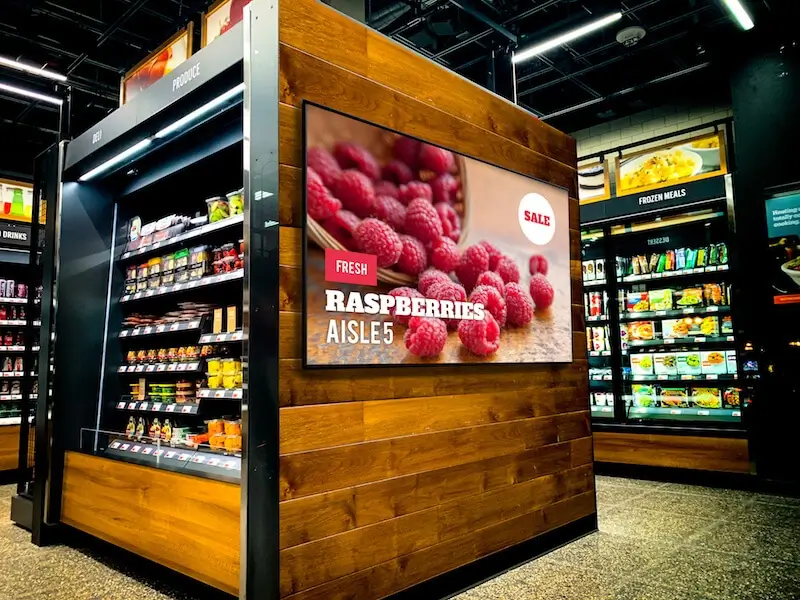
Retail store digital signage is a network of digital screens used inside or outside a retail environment to show multimedia content. This content may include videos, product images, announcements, prices, promotions, menus, customer reviews, and branded campaigns.
It differs from conventional signage because it is dynamic. Rather than printing a poster and leaving it on the wall for months, retailers can now update digital content in real time with cloud-based retail signage management software.
Static vs. Dynamic Content
Fixed signs are static. Once they are printed, they cannot be edited unless they are redesigned and reprinted. When the price changes, a promotion ends, or inventory runs out, the sign is obsolete.
Dynamic signage can update in real time. A store can promote winter products in the morning, introduce a flash sale in the afternoon, and update inventory-related offers before the end of the day.
Manual Updates vs. Cloud-Based Management
Conventional signs must be physically replaced. They have to be printed, shipped, installed, removed, and replaced by someone.
Managers can update content with a dashboard using retail digital signage software. A campaign can be published to a single screen, a single store, or an entire chain within minutes.
Common Types of Retail Digital Displays
Storefront digital signage is used in windows or entrances to attract passersby. It helps turn foot traffic into store visits by showing motion, offers, and product highlights.
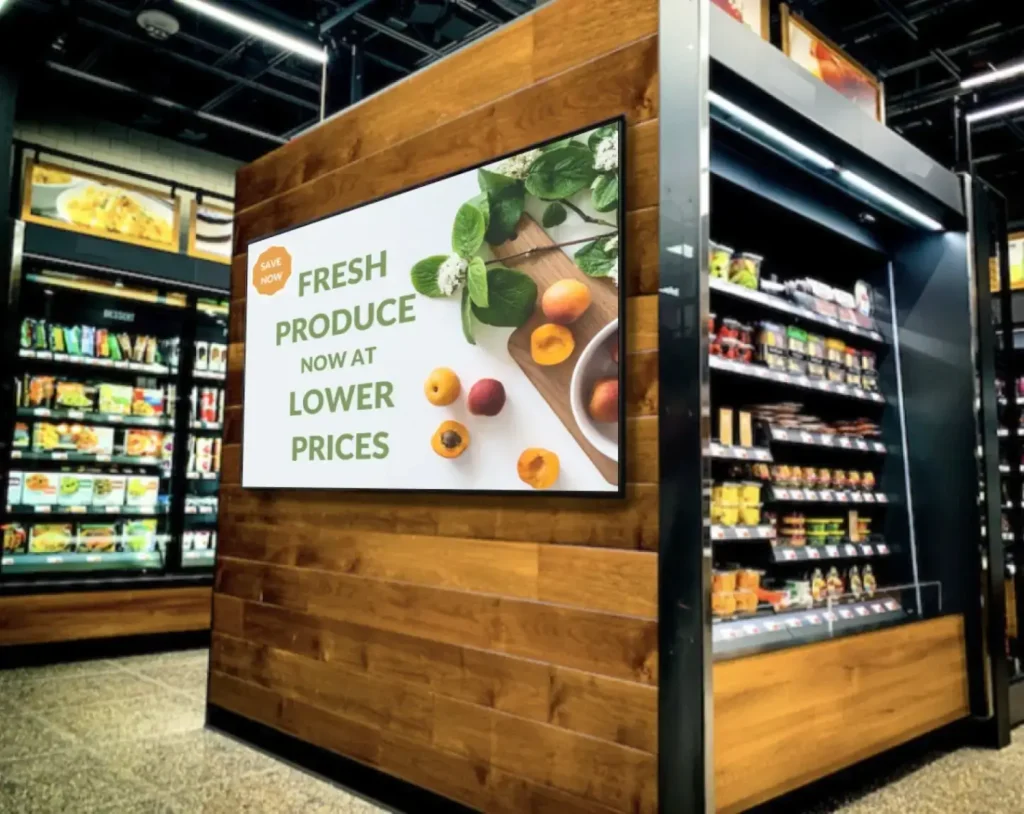
In-store digital displays include endcap screens, shelf-edge displays, product demo screens, freestanding kiosks, and promotions at the checkout.
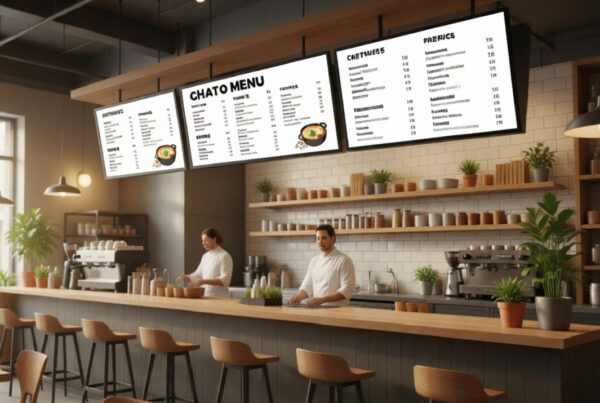
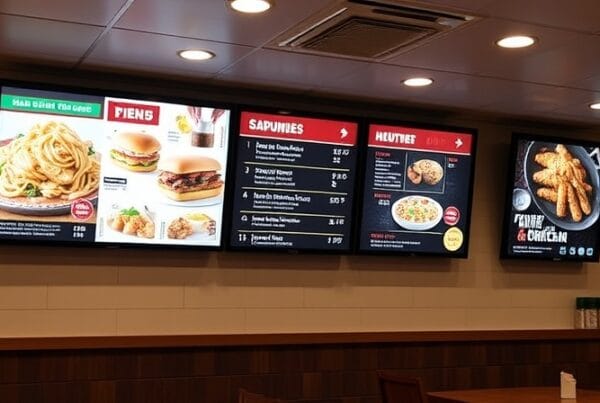
Quick-service restaurants, department stores, malls, and large-format retail stores often use menu boards and wayfinding screens.
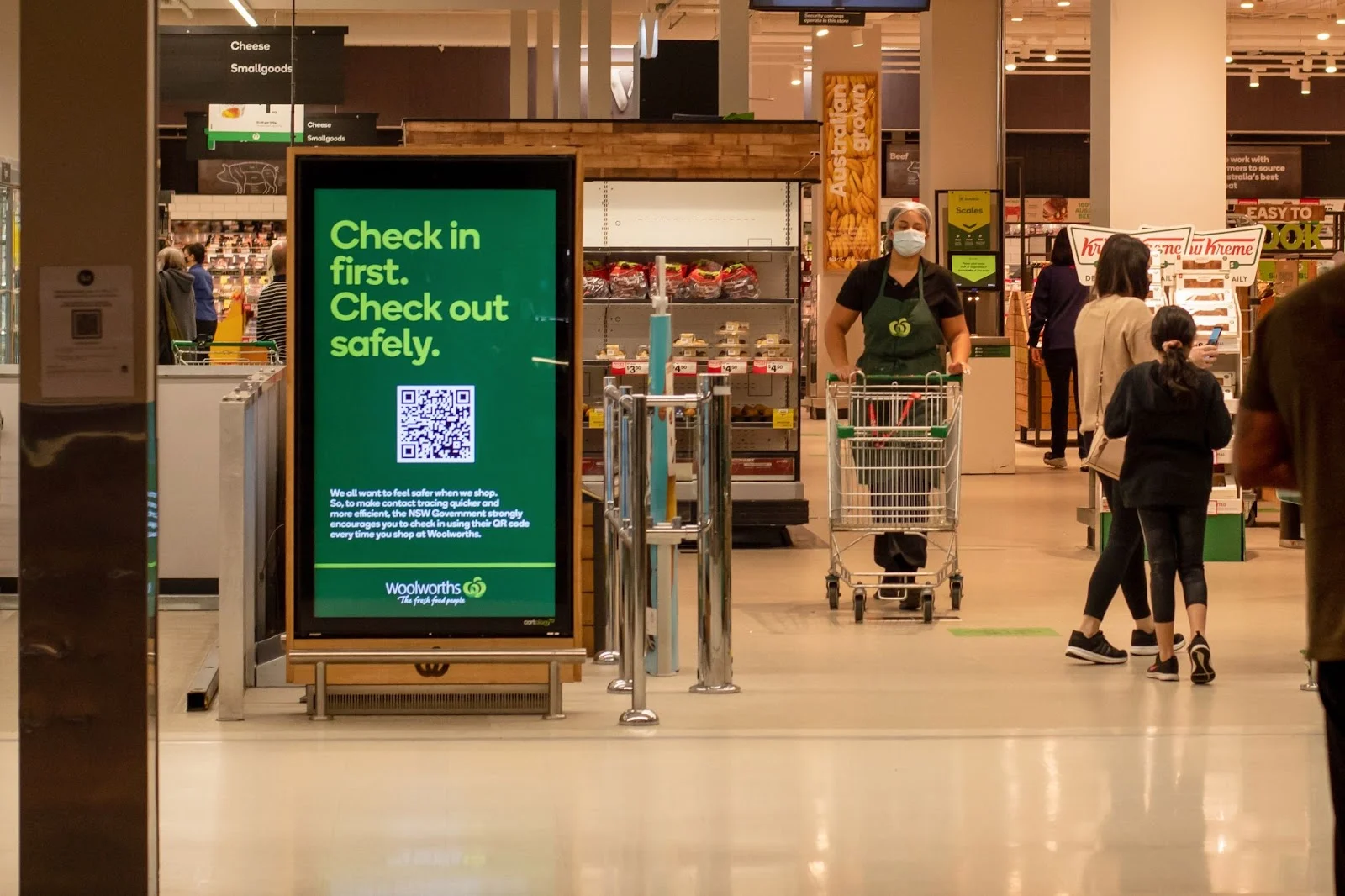
Retail digital displays today may also include touchscreens, QR code interactions, AI-based content, and live data feeds. This makes signage more helpful, responsive, and quantifiable.
“Static signs tell customers what you printed. Digital signs show customers what matters right now.”
5 Key Benefits of Retail Display Signage
Digital signage is about more than looks. When used properly, it can help increase sales, customer experience, speed of operation, and brand perception.
1. Increased Sales and Impulse Buys
Digital signage can help retailers influence customers at the point of decision. A checkout screen can promote add-ons. An aisle display can highlight a bundle. A storefront screen can draw attention to a limited-time offer.
Digital signage may help improve sales performance, particularly when used for timely promotions and impulse purchases. The actual impact depends on placement, quality of the content, relevance of the products, and store traffic.
Retailers can do real-time upselling campaigns with the help of retail digital signage software without having to wait until new materials can be printed.
2. Enhanced Customer Experience
Effective signage helps customers shop with ease. Product benefits, reviews, tutorials, sizing guides, availability, and suggestions can be displayed on screens.
This minimizes confusion and helps customers make faster decisions. Digital signage can also be used to shorten the perceived wait time in a busy environment by keeping the customer informed and engaged.
As an illustration, a customer in a checkout queue might notice a loyalty offer, product demonstration, or social proof from other customers. Both can improve the experience and encourage action.
3. Operational Agility
Retail moves quickly. Prices fluctuate, stock moves, seasonal campaigns launch, and promotions end. Static signage cannot keep up with that pace.
Using cloud-based retail signage management, stores can instantly update prices, promotions, inventory alerts, and campaign messages across all stores.
This is especially useful for multi-store retailers, which require uniformity and yet need local flexibility.
4. Cost Savings Over Time
Printed signage is not free. It includes design, printing, shipping, installation, removal, and waste. Each update involves a new cycle of cost and work.
Digital signage can cost more upfront, although this cost can be offset by savings on repeated printing in the long run. It also enables retailers to test and update content without having to print new physical material with each update.
5. Competitive Differentiation
Dynamic storefront digital signage can help retailers stand out in busy shopping centers. It can be more attention-grabbing than a static poster since it can include motion, brightness, video, and timely messaging.
For window shoppers, a digital display can be what makes them stop, look, and enter.
Nento’s cloud-based platform makes managing these benefits easier. See how in a free demo.
Choosing the Right Digital Signage for Retail Stores
Choosing the right digital signage for retail stores is dependent on your objectives, store format, and content requirements, as well as growth plans. The most expensive system is not always the best. The best system is the one that fits your retail operation and can grow with you.
The right digital signage for retail store environments should be easy to update, visually clear, and scalable across locations.
Screen Type and Placement
Placement affects performance. A window display must be bright, visible, and may require outdoor-grade hardware. An in-aisle display must have the appropriate size and viewing angle. A checkout display must have concise, easy-to-read messages.
Indoor screens are usually customer-facing and product-focused. The brightness and durability of outdoor or window-facing screens should be higher.
Software Capabilities
Software is what makes signage useful. Look for easy-to-use retail digital signage software that includes drag-and-drop editing, playlist control, campaign scheduling, content templates, and multi-location synchronization.
If software is difficult to use, the content will be outdated. A simple dashboard helps marketing teams and store managers keep screens up to date.
Scalability
As your business expands, your system should expand too. A retailer can begin with a single screen in a single store and then expand to multiple displays in various stores.
Prior to selecting a provider, ask whether the platform will be able to handle one screen, ten screens, or one hundred screens without becoming difficult or costly to manage.
Integration
Powerful digital signage software can integrate with POS systems, inventory systems, social media feeds, product databases, and marketing calendars.
This enables screens to be used to show live prices, stock levels, social proof, campaign content, and product information without manual edits every time something changes.
Support and Reliability
Retail signage is customer-facing. When a screen goes black or shows old material, customers will notice. Choose a provider with reliable uptime, support, and troubleshooting.
Nento stands out by offering easy installation, robust software, cloud-based management, and focused support for retailers who want results without operational hassle.
Retail Digital Signage Implementation: A Step-by-Step Roadmap
Successful retail digital signage implementation starts with a clear plan. It is not only about installing screens. The aim is to develop a signage system that supports sales, service, and brand experience.
Define Your Goals
Begin by determining what you would like the signage to accomplish. Do you want more foot traffic? Promote seasonal products? Improve wayfinding? Reduce printing costs? Support upselling? Share product education?
Clear goals help you select the appropriate screen placements, content, and performance metrics.
Choose Your Hardware
Choose screens, media players, mounts, and accessories depending on your environment. One premium display may be required close to the entrance of a boutique. A supermarket may require multiple screens in the departments. A QSR might require pickup screens and menu boards.
Nento can support compatible hardware bundles and help retailers select hardware that fits their needs.
Design Your Content Strategy
Good content should be simple, visual, and action-focused. Use motion sparingly, adhere to good layout guidelines, and do not clutter the screen.
For retail, content may consist of product features, promotions, customer reviews, social media, price changes, brand stories, and QR codes.
Install and Test
The installation may be handled professionally or handled as a simple DIY project depending on the number of screens and the complexity. Test brightness, internet connection, content playback, viewing angles, and schedule accuracy before launch.
A screen can look good when it is viewed at a short distance but not from the customer’s actual viewing distance. Testing helps prevent these problems.
Launch and Monitor Performance
Once launched, track which content performs well. Compare promotions; monitor sales impact and customer engagement; and update campaigns based on results.
Analytics can be used to transform signage from a visual medium into a performance tool.
Nento simplifies retail digital signage implementation from start to finish. Book a consultation to map out your rollout.
Retail Signage Management: Best Practices for Ongoing Success
Digital signage is most effective when it is actively managed. Any screen that does not change will ultimately be invisible, regardless of whether it is digital or not.
Keep Content Fresh
Avoid screen blindness by refreshing content. In most retail situations, weekly updates are a good starting point. Time-sensitive promotions, stock alerts, and seasonal campaigns need to be updated frequently.
Use dayparting.
Dayparting refers to showing different content at different times of the day. A breakfast promotion in the morning and dinner promotions later can be displayed in a QSR. A retail store can promote workwear during morning commute hours and gift items during evening traffic.
This helps content feel more relevant.
Test Different Messages
Run A/B tests across various in-store digital displays to determine the best-performing creative. One screen could show a product video, and the other could be a customer testimonial or discount message.
Testing helps retailers make content decisions based on performance rather than guesswork.
Use Centralized Control
Retail signage management in the cloud is a game-changer for multi-store owners. Teams are able to control content from a single dashboard instead of updating each store separately.
The Nento dashboard gives retailers control over their screens via a smartphone or desktop and allows them to easily launch a campaign, update promotions, and react to changes on the fly.
Prepare for Emergency Updates
Publishing weather alerts, store-hour changes, stockouts, and urgent announcements should be easy. An effective signage system enables quick changes and does not require a design team or IT personnel every time.
“The best signage strategy is not only creative. It is current, controlled, and measurable.”
Frequently Asked Questions
How much does retail store digital signage cost?
Pricing depends on the size of the screen, the number of displays, the type of hardware, installation requirements, and software features. Nento provides flexible pricing plans for small boutiques, growing retailers, and large chains.
Do I need technical skills to use retail digital signage software?
Not with Nento. The drag-and-drop interface is no-code, and ready-made templates support quicker, retail-ready content creation.
Can I use storefront digital signage outdoors?
Yes, but screens used outdoors or facing windows must be brighter, weatherproofed, and durable enough for the environment. Hardware can be recommended by Nento based on your environment.
How does in-store digital signage integrate with my existing POS?
Nento can support API integrations that bring live inventory, pricing, or product data to your screens. This helps keep promotions and product information accurate.
What’s the ROI timeline for digital signage for retail stores?
Increased sales, reduced printing costs, and improved promotional performance are some of the ways in which some retailers may see ROI within 6–12 months. Real performance is based on the quality of the content, store traffic, screen placement, and campaign strategy.
Can I manage multiple store locations from one dashboard?
Yes. The retail signage management system of Nento enables you to manage the content of all the stores using one login.
What content works best on in-store digital displays?
A combination of promotional videos, customer reviews, social media feeds, product education, dynamic pricing, limited-time offers, and QR code campaigns is effective. Nento also offers content best-practice guidance to assist retailers in starting.
Conclusion
Standalone retail is changing. Customers now expect more interactive, responsive, and helpful in-store experiences. Printed posters still have a place, but they cannot be as flexible, fast, and impactful as retail store digital signage.
Dynamic storefront displays, data-driven in-aisle promotions, and other digital signage retail strategies enable businesses to attract attention, direct decisions, support sales, and reduce manual update work. Retailers can make screens revenue-generating tools rather than mere displays with the right platform.
Nento simplifies the process of managing retail store digital signage, launching campaigns, updating content, and expanding locations using a single easy-to-use dashboard.
Don’t let your competitors get ahead. Join hundreds of retailers using Nento to power their in-store digital displays. Start your free trial or request a personalized demo today.