Does Digital Signage Actually Pay for Itself?
Digital signage is beautiful, but does it pay back? That hesitation is understandable—particularly in an economy where every marketing dollar has to be justified. The owners of the business and operations teams do not require another nice-to-have but something that delivers measurable impact in terms of revenue and efficiency.
Often, static signs stop getting noticed as the customers stop noticing what never changes. Meanwhile, the cost and time of updating traditional menus or posters are high, labor-intensive, and costly when you include the cost of printing, staff time, and version errors in different locations.
“If changing one price takes a day and a printer, your marketing can’t keep up with your business.”
This is where digital signage ROI comes in. Digital displays are not simple screens anymore; they are revenue-generating assets that can be used to influence purchasing, cut operational costs, and enhance customer experience. This guide divides up the process of measuring that success and how to do digital signage ROI measurement in a manner that is practical rather than theoretical.
Nento helps this by providing hardware, software, and analytics necessary to monitor performance, tie content to outcomes, and keep results constantly improving—so your screens are held responsible to your bottom line.
Ready to stop guessing and start growing? Explore Nento’s Solutions
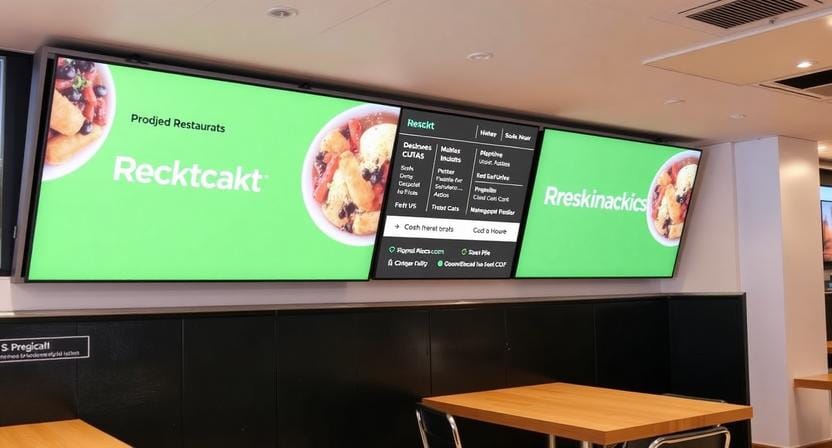
Understanding Digital Signage ROI: More Than Just a Screen
Defining ROI: revenue gains + cost savings
When people ask how to measure the ROI of a digital signage investment, they always tend to dwell on direct sales. As a matter of fact, ROI is the aggregate impact of the growth of income and the decrease of expenditure, which will be often supported by improved customer experience. The best approach is to track both sides: what the screens add and what they replace.
The Three Pillars of Digital Signage ROI
1. Revenue Generation
Screens have the power to encourage impulse purchases, market high-margin products, and upsell products that are consistent across shifts and locations. Practically, the greatest revenue generators are targeted messaging, which is timely, visible, and easy to update.
2. Cost Reduction
The cost of printing is quickly accrued, and the unseen cost is labor: signs have to be updated, new artwork has to be printed, inconsistencies reworked, and waste disposed of when a promotion is altered. Digital content removes most of that repetitive spending and minimizes mistakes, resulting in revenue loss.
3. Customer Experience
Customer experience is even considered to be soft, yet it appears in the form of repeat visits, loyalty, and trust. A contemporary display environment has the potential to render any business more credible, less confusing, and perceived to be of better service quality, all of which affect purchasing behavior in the long term.
“Experience affects conversion, even when customers can’t explain why.”
Proven Strategies to Boost Revenue with Digital Signage
A. The Power of Digital Menu Boards in QSR and Cafes
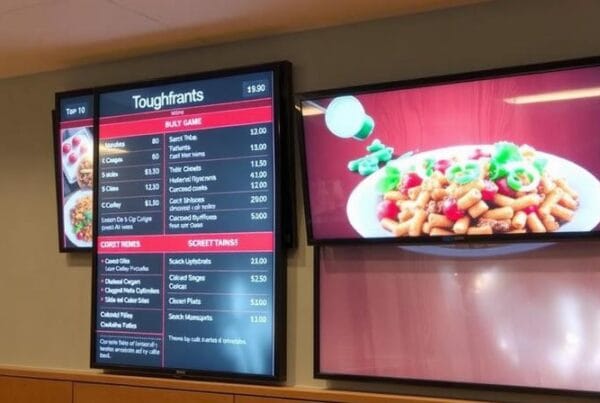
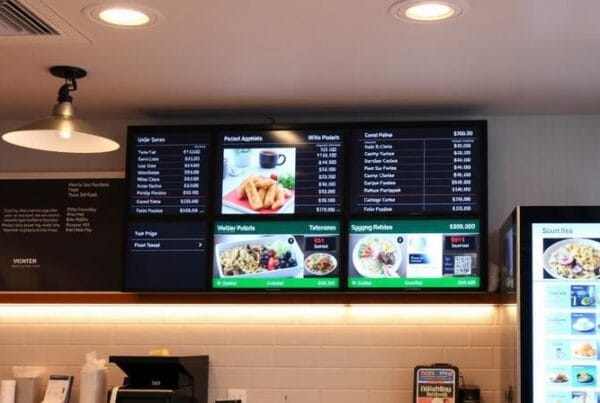
When you’re asking whether digital menu boards increase sales, the best argument is in QSRs and cafes, where decisions and order taking take seconds. Motion and video are more appealing to the eyes as compared to static menus, particularly in busy lines. That attention gives you more influence during the time of purchase, where minor changes can shift average order value.
When upselling is part of your display logic, rather than being dependent on staff memory, it will be more consistent. You can schedule prompts like pairing suggestions at the busiest times, highlighting add-ons, or accentuating high-profit upgrades at the appropriate moment. This answers the question: are digital menu boards effective? They assist you in standardizing upsell behavior between shifts.
Dayparting enhances the operations and the sales as it automatically switches menus between breakfast, lunch, and more. It minimizes confusion, decreases ordering time, and provides the proper items to be visible without human intervention, which assists in supporting kitchen flow and revenue per square foot.
“When menus change automatically, staff focus on service—not sign updates.”
B. Retail Digital Signage ROI: Turning Lookers into Buyers
Retail digital signage ROI is commonly leveraged in two ways: promotion agility and trust-building. In-store offers can be used to showcase slow-moving stock, high-margin products, or time-limited offers immediately, without having to wait until the print cycles or store-by-store rollout delays.
Social proof also can be supported by digital signage, and it can be a silent and compelling conversion factor. Posting Instagram content, customer reviews, or user-created material within the store serves to build credibility, as well as make indecisive customers more confident in making a purchase. It is not meant to overload the shoppers but to affect the decision at the shelf and at the checkout with appropriate messages in time.
C. Niche Application: Digital Signage ROI in the Automotive Industry
The digital signage ROI for automotive is often the most effective in the service lane area and the showroom, where the customer can take in information and where upsells are the most valuable. Waiting area screens can be used to advertise service specials, safety checks, tire packages, or seasonal maintenance checkups—and make customers realize that they are getting something valuable rather than seeing the add-ons as a side charge.
The showroom can be used to substitute the crowded window decals with transparent and bright messaging about the offers and features of the model in digital displays. It is easier to maintain the current promotions and retain a high-quality appearance. By centrally updating messaging and doing so on a regular basis, dealers minimize rework and are able to respond rapidly to shifting inventory and financing campaigns.
“In automotive, clarity builds trust—and trust improves conversion.”
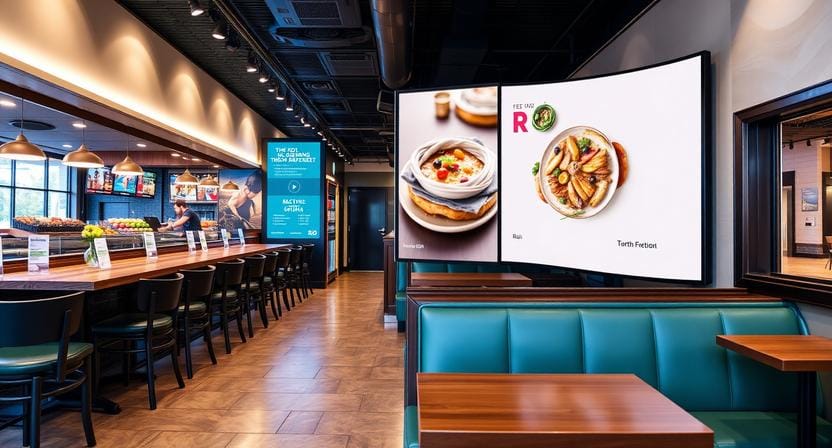
The Analytics Behind the Screen: How to Track Your Investment
The myth of the “set it and forget it” screen
Strong digital signage ROI analytics is only achieved when the digital signage is actively managed and measured. When there is no change of content and no performance that is monitored, screens are costly decorations rather than a growth tool. ROI is better when you use signage as a channel that can be experimented with: test, learn, refine, and repeat.
Key Metrics to Track
The following are viable metrics that will help you to measure the real digital signage ROI without complicating your operations:
- Sales Lift: Compare the sales of items being promoted prior to and subsequent to the launch of the screens, preferably over a period of time.
- Dwell Time: Monitor the duration of time that customers view the screen (usually needs camera analytics).
- Lower perceived wait time: This is particularly useful in restaurants and clinics where interaction will alleviate frustration.
“The simplest ROI model starts with one promoted item and one clear baseline.”
How Nento Helps
Nento advocates the measurement with the help of software and dashboards aimed at correlating the changes in content with the results of performance. This might involve connecting to POS data or analytics views that can assist in understanding which screens, types of content, and schedules are engaging. In the long run, this will make signage not a cost center but a constantly optimized revenue channel.
The Financial Picture: Addressing Digital Menu Price and Finance
Breaking down the costs
The digital menu price is better assessed by dividing the investment into parts instead of it being a single figure. Most digital signage projects include hardware (screens and mounts), software licenses, installation, and content development. The more uniform your rollout, the better it is to manage the costs and predict payback.
ROI timelines: realistic expectations
The payback varies with your industry, the number of screens, and the activity with which you are using the system. A general example is that a restaurant chain regularly pays back their investment in printing savings and high sales within 6-12 months, particularly with upsells and dayparting (when applied regularly). Other companies experience quicker returns when the price changes and advertising cycles are rapid.
“ROI speed is usually tied to how often you would have printed and changed content.”
The financing factor
A lot of companies are also concerned about the initial investment, but the future returns usually supersede the initial investment. Here digital menu screens on finance come in handy: when financing lightens the load in the short term, you can roll it out sooner and begin reaping the benefits sooner rather than waiting till the budget cycles to roll out. It is important to consider financing in terms of projected savings and revenue increase, rather than just the sticker price itself.
Worried about upfront costs? Nento offers flexible financing options to get screens on your wall with zero CapEx today.
Make Every Screen Earn Its Keep with Nento
Digital signage is an investment, not an expense, when you approach it with a clear strategy and measurement plan. The winning businesses are those that consider the screens as the active channel: dynamic content, a clear operating routine, and periodic tracking. That is what makes digital signage ROI a measurable outcome and not a far-fetched dream.
It is realistic to measure results when you concentrate on the appropriate indicators like sales lift, cost reduction, and customer experience and employ techniques that relate content to performance. Using the correct mindset on how to measure ROI of digital signage investment, you are able to justify spending, optimize campaigns, and scale without hesitation across locations.
Nento helps you repeat that process by integrating professional hardware, easy-to-use software, and personalized support, thus keeping your signage updated, measurable, and revenue-driven.
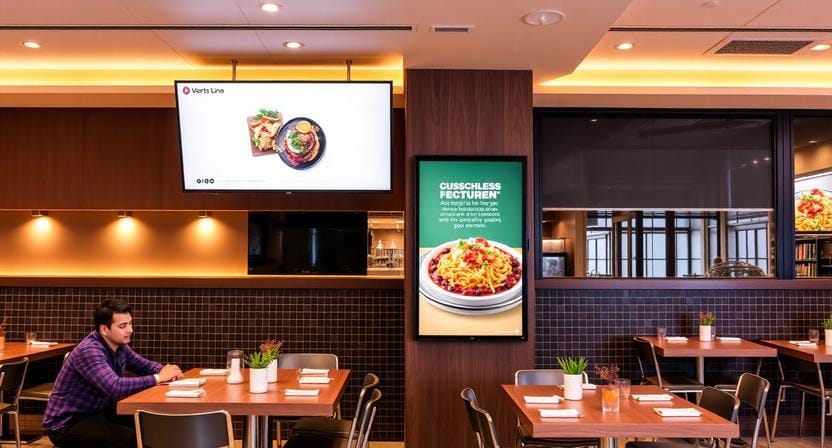
Frequently Asked Questions (FAQ)
Are digital menu boards effective at increasing sales?
Yes. The literature is consistent on the effect of digital menu boards on boosting the average check by 3-10% because of strategic upselling, quality images, and emphasis on high-margin foods. The movement and vivid colors are more appealing to the customers as compared to the static prints.
How do you actually measure the ROI of a digital signage investment?
Measurement means tracking a mix of hard (such as POS sales data on particular items promoted) and soft (such as decreased printing costs and labor saved due to the absence of the necessity to change the paper menu manually). More sophisticated analytics is also able to gauge viewer interest through camera movement.
What is the average digital menu price for a small business?
Pricing is flexible, depending on the size of the screen, the locations, and the requirements in the software. It is often better viewed as a monthly operating cost, not just a capital expense. Nento has packages that can be delivered to any budget.
Can digital signage work for businesses outside of retail, like auto dealerships?
Absolutely. Digital signage in the automotive industry is implemented to display inventory on the lot, advertise service specials in the waiting area, and create brand trust by showing certification and awards in the showroom, which directly influences digital signage ROI automotive metrics.
How quickly can I expect to see a return on my investment?
Many clients see immediate savings. Speaking of revenue growth, you tend to observe a sales boost in the first month of implementation of targeted content. In the case of most businesses, full payback of the hardware investment is typically reached in 12 to 18 months.
Stop letting your marketing messages gather dust. Start engaging customers and driving sales with dynamic content.