Introduction
Seafood is a specialty business, and freshness is the most important selling point. But when customers can’t see it or trust it, they won’t buy. That is why the seafood signage is not only informative but also a tool of credibility that influences whether customers order high-quality products or leave.
Paper posters and chalkboards do not cope with the seafood setting due to the market-price changes and the daily catch rush hours that leave no time to manually update these media. An outdated board makes customers assume the product is outdated too, and price discrepancies lead to a frustrating checkout experience.
“In seafood, weak signage doesn’t just confuse—it creates doubt.”
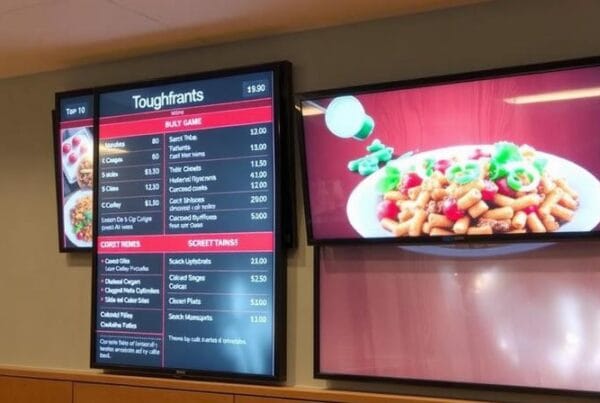
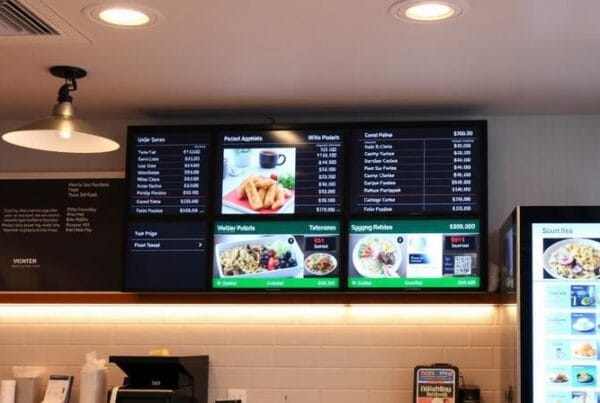
The modern seafood restaurant signage is changing rapidly. Be it a busy dining room or a fish counter, the digital displays can assist you in updating pricing in real time, highlight the best catch of the day, and promote high-margin items consistently. Here, you will know how to maximize your signage plan with the help of digital applications such as Nento to emphasize freshness, upsell, and simplify processes.
Why Traditional Seafood Signage Fails
Price Volatility
The prices of seafood may vary daily depending on supply, weather, and the market conditions. Manual signs create extra work every morning, and even the attentive teams can make mistakes under pressure. When the register price does not match the sign, the customers feel deceived, staff wastes time in clarifying, and the line slows down.
Perishability Perception
Seafood is judged by sight before it’s eaten. Customers assume seafood is old when the signage looks old or run-down and written in a hurry. This is a unique seafood challenge: the sign becomes part of the freshness signal.
Missed Upsell Opportunities
Without constant effort, static menus can’t highlight the Catch of the Day or rotate upsell prompts. When the seafood businesses can’t dynamically offer wine pairings, appetizer add-ons, premium upgrades, or limited-quantity specials, it is a loss of easy wins.
“If the sign can’t change, your upselling can’t scale.”
The Shift to Digital Seafood Restaurant Signage
Dynamic Pricing
Digital displays can provide real-time market pricing and daily deals, which saves work and eliminates customer conflicts. Customers trust more and buy faster when pricing is correct on the menu boards, the counter displays, and checkout messages.
Visual Appeal
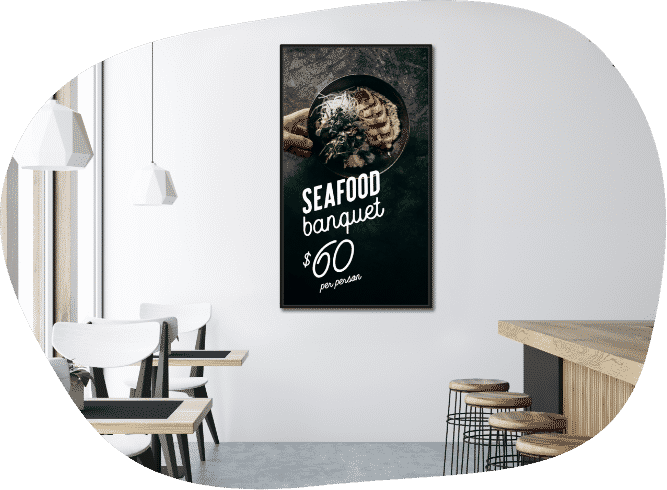
The high-definition imagery transforms the sale of seafood. A properly photographed oyster dish, grilled lobster, or sushi platter evokes appetite and makes quality products feel premium. Digital images have the potential to drive impulse purchases, which the text can hardly do.
“Seafood sells with the eyes first—digital makes that advantage consistent.”
Integration with Operations
Digital seafood restaurant signage can also be helpful in facilitating the flow of operations since it matches the flow of the kitchen and the pace of service. When the specials, sold-out items, and wait-time messages remain up-to-date, the staff spends less time correcting customers and more time serving customers. The high-margin promotions can also be reinforced using screens provided that the capacity of the kitchen allows them.
Leveraging Technology: Menu Seafood POS Integration
What is Menu Seafood POS?
Menu seafood POS: This is a point-of-sale system designed specifically to support seafood operations, in which pricing, availability, and product variations may change day-to-day. Seafood-specific POS systems usually emphasize inventory visibility, market-price management, and timely updates on rotating catch.
The Synergy: POS + Signage
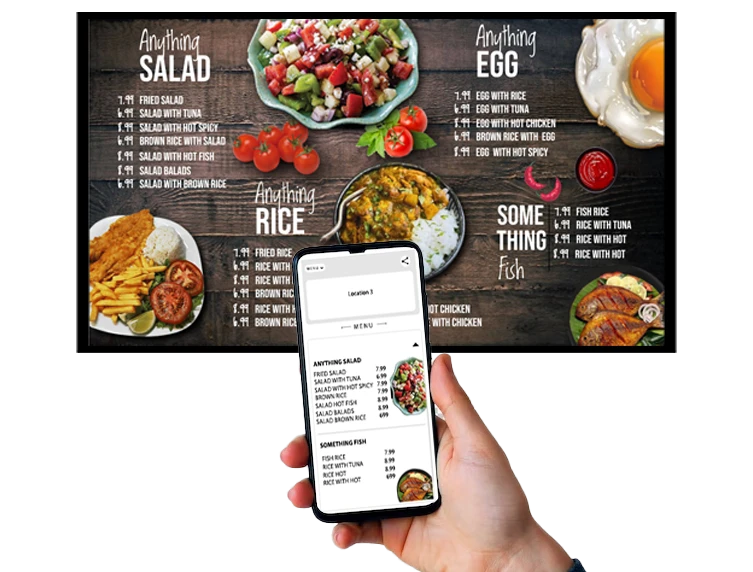
The greatest benefit is realized when your seafood restaurant’s POS system is linked to your digital signage. The POS turns into the source of truth, and the signage turns into the real-time message in a connected workflow.
An example of this is urgency messaging. When your POS notifies you that an item is in short supply, such as king crab legs, the display can be updated to show the market price—‘Almost Sold Out’—to make quicker decisions without compromising the message. This type of integration makes signage a working tool, rather than a marketing screen.
Accuracy: One price everywhere
The operational win is getting rid of the gaps between what customers expect and what they’re charged. Maintaining a menu board, seafood counter signage, and pricing at the checkout will minimize arguments, preserve trust, and keep queues moving.
“Accuracy is the fastest way to protect both trust and throughput.”
Essential Seafood Sale Signage Tips (Design & Psychology)
Tip 1: Use Blue and White Palettes
Blue brings about the feeling of trust and the sea, whereas white conveys the feeling of cleanliness and freshness. This palette feels safe and more high-end for seafood. The trick is contrast: the labels and prices should remain visible at a distance.
Tip 2: High-Quality Visuals Over Text
Good photography sells better than lengthy descriptions, especially for high-quality seafood. The outline suggests that a menu with good-quality food photography can boost sales by up to 30%, and seafood is even better since the quality of food on plates and its freshness are that important.
“Show the product the way you want it remembered.”
Tip 3: Highlight “Sustainable” and “Local.”
Sustainability and transparency are becoming important to modern customers. Signage of seafood can display simple icons of MSC certification, local catch, or origin tags, which reduce confusion. These signals of trust are particularly crucial to more expensive products.
Tip 4: Dynamic Dayparting
Dayparting helps seafood businesses promote what is appropriate at the particular time without any manual work. Nento can switch from breakfast items such as smoked salmon bagels to lunch lobster rolls to dinner grilled octopus automatically. This makes messaging timely and ensures continuity in operations between shifts.
Hook Your Customers Today with Nento!
Specialized Strategies for Signage Seafood Market (Retail)
Raw vs. Ready-to-Eat
Seafood counters in the retail store must be clear. Raw fish, prepared meals, and grab-and-go items can be separated and navigated using digital screens. This minimizes queries, speeds up decision-making, and empowers the customers to make purchases.
Cross-Merchandising
Product suggestions are one of the most powerful retail strategies. When a client reads, “Buy this halibut?” Try it with our lemon dill sauce—Aisle 3—and it increases basket size and lessens friction in decision-making. These pairings can be easily rotated and maintained with the help of digital screens.
Trust Signals
Everything at a seafood counter is trust. Screens have the ability to indicate time stamps of fish arrival or have brief behind-the-scenes videos, such as clips of kitchen preparation. This creates credibility without compelling staff to repeat freshness explanations over and over.
“Trust signals turn browsing into buying.”
Case Study / Real-World Application
Scenario: A busy seafood shack on the pier
The former method cost staff about 20 minutes a day updating the chalkboard, and customers were often confused on the availability of oyster varieties. That slowed the lines and made the upselling inconsistent.
The updates were centralized and quick after they implemented Nento digital signage as part of their seafood restaurant POS system. The outcome was an average order value increased by 15% with the help of dynamic upselling of appetizers, and the staff saved about 10 hours a week by not having to update signs manually.
“When signage stops consuming labor, it starts producing value.”
Why Nento is the Best Digital Signage Solution for Seafood Businesses
Ease of Use
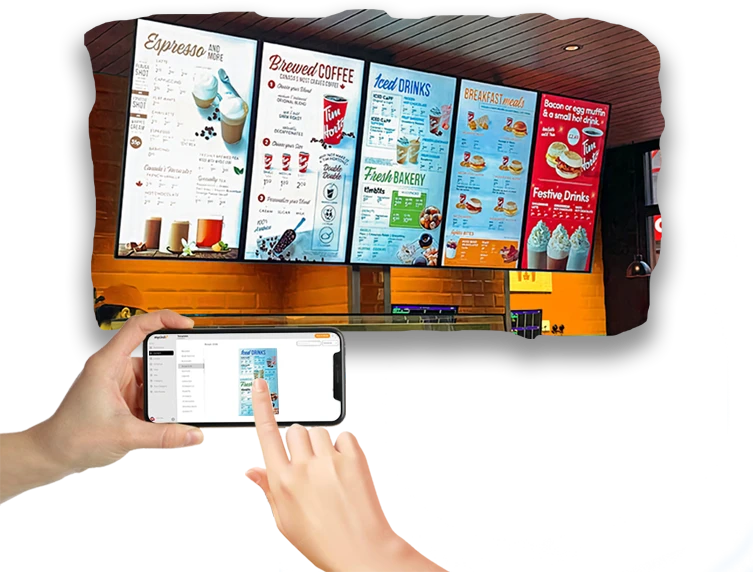
Nento is a time-saving team tool. You can update menu seafood POS-driven displays with a tablet or phone and do not require technical knowledge to keep menus updated and won’t slow down operations.
Integration
Nento integrates with major POS systems to automatically update prices and inventory notifications. It is at this point that seafood companies benefit: they will have fewer order errors and less conflict and will operate at a quicker pace at peak times.
Templates
Nento offers templates designed based on readability and appetite attractiveness, using seafood sale signage tips in a repeatable manner. This assists teams to publish fast and have a consistent and high-end appearance.
Scalability
Regardless of whether you operate a single seafood market or several seafood restaurant locations, Nento supports centralized management to ensure that consistency does not become a manual burden.
Conclusion
In the seafood business, perception is reality. Outdated signs indicate outdated fish, and pricing ambiguity creates immediate suspicion. The latest seafood signage systems are based on digital displays and help to enhance the perception of freshness, price accuracy, and more powerful upselling without introducing an additional burden to the daily work of the operation.
Don’t let old signs cost you sales. By modernizing your signage in your seafood restaurant, you are not only modernizing the screens but also modernizing trust, speed, and profitability.
Frequently Asked Questions (FAQs)
What is the best type of signage for a seafood restaurant?
The best solution at the moment is digital LED menu boards. Digital signage of your seafood restaurant, unlike a fixed board, can enable you to change prices immediately, show high-quality video of your menu, and connect with your POS system to automatically remove out-of-stock items. There are companies such as Nento that focus on user-friendly platforms that are customized to this.
Can digital signage help me manage fluctuating seafood prices?
Absolutely. With the integration of your menu seafood POS system and your digital signage through a company such as Nento, any price change you enter in the POS will automatically reflect on all the screens. This will avoid pricing mistakes and will save your employees time they have to handwrite signs every morning.
What are the most important elements to include on seafood market signage?
For seafood market signage, include: 1) Name of the fish (common name, Scientific name), 2) Origin (Wild vs. Farmed, Local vs. Imported), 3) Price per lb or kg, 4) Sustainability certification, and 5) QR code or recipe recommendation.
How much does a digital seafood signage system cost?
Costs depend on the size of the screen and the quantity of locations; however, in comparison with software systems such as Nento, manage multiple screens under one account and include subscription plans that do not need to cover the initial cost of traditional IT solutions. The software is normally charged as a monthly fee, as is the hardware (TVs/media players).
Can I use digital signage for both my restaurant dining room and my outdoor market/fish counter?
Yes. Nento will give you the ability to operate under one account and more than one screen. We can have high-margin cocktail specials on the indoor seafood restaurant signage and daily raw catch prices on outdoor, weatherproof screens in the fish counter.
Ready to modernize your seafood business?
Stop wasting time on outdated chalkboards and start driving sales with high-impact digital displays.
Whether you need a robust seafood restaurant POS system integration or a simple digital menu board for your fish market, Nento has the solution.