Introduction
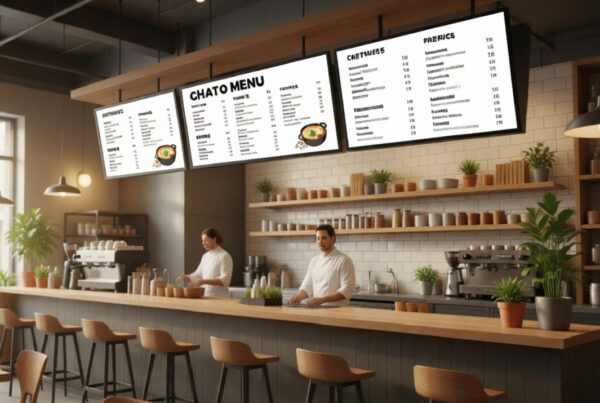
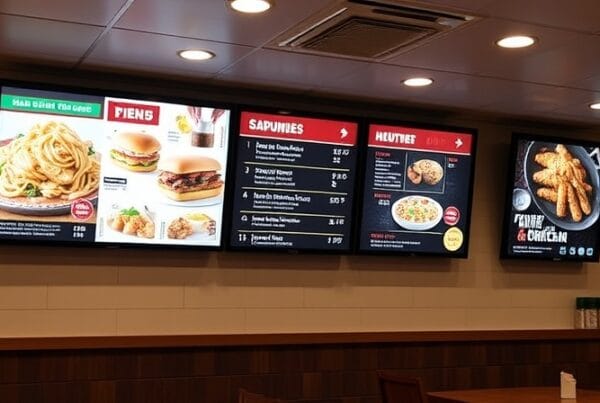
Consider a retail display that still shows an out-of-stock message two hours after the product has been replenished. Or a digital menu board still advertising breakfast at 3 PM as customers are trying to order lunch. These are minor content errors, but they send a bigger message: the business is not operating in real time.
Stagnant content has become the enemy of modern retail. Customers expect relevance, speed, and accuracy. When the screen feels outdated, the brand can feel outdated too.
That is why real-time digital signage is changing how businesses think about screens. It is not merely a matter of presentation. It means using screens as decision-support tools that react to inventory, weather, queue length, foot traffic, promotions, and customer behavior.
Businesses are shifting to live data for digital signage, instead of just playing through a programmed schedule, so that the content is updated depending on what is really occurring at the moment. A screen can stop being passive and become a responsive object with the appropriate infrastructure.
Nento helps businesses make that shift with real-time data digital signage software built to handle automation, monitoring, and fast updates without overwhelming the team.
Ready to stop managing playlists and start managing performance? See how Nento’s architecture supports true real-time responsiveness.
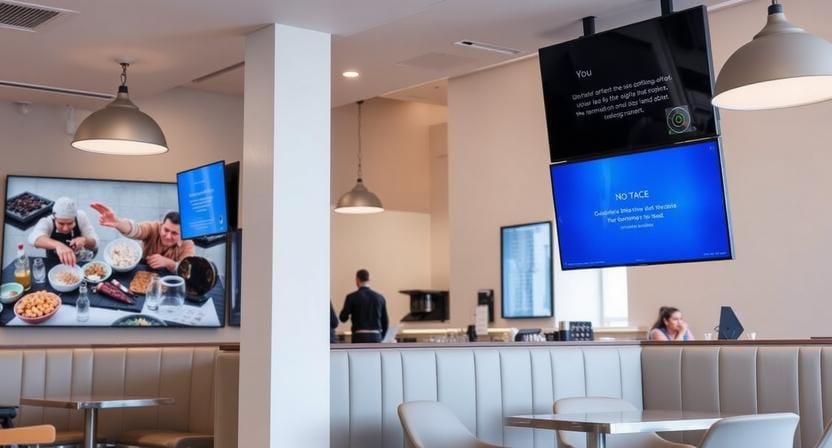
The Anatomy of a “Living” Signage Network
A reactive signage network can be considered ‘living.’ It collects information, applies logic, and changes what is displayed on the screen depending on actual circumstances.
The Data Sources
The “live” part of real-time digital signage starts with data. This data may come from internal or external sources to the business.
Internal data sources are POS systems, inventory, CRM systems, queue management systems, staff dashboards, and order status tools. As an illustration, when inventory data shows that a product is almost out of stock, the screen can reduce promotion of the out-of-stock product and focus on an available product.
External data sources include weather APIs, traffic data, social media feeds, local events, and news feeds. A café can promote iced drinks during hot weather. A retailer can highlight umbrellas when it is raining. During busy times, a restaurant is able to display quick-pickup messages.
The Logic Layer
The logic layer determines what should happen when data changes. A simple rule could be: When the temperature exceeds 75°F, display ice cream promotion. When it drops to less than 50°F, display the soup promotion.
More advanced rules can consist of multiple conditions. As an illustration, when there is high foot traffic, the queue is growing, and it is lunchtime, the screen can display quick-purchase items or QR codes for mobile checkout.
The Output on Screen
The end result is what customers see: a menu modification, a product feature, a live deal, a queue signal, or a friendly piece of advice. This is where the value of a real-time digital data signage system becomes visible.
The most important thing is that real-time signage is not just an option. It is a system architecture that unifies data, rules, and content into a single responsive flow of communication.
“A living screen does not ask, ‘What playlist should I run?’ It asks, ‘What does this moment need?’”
Why Remote Monitoring Is the Backbone of Real-Time Success
You cannot control real-time content if you cannot see what is happening on the screen. A screen can be turned on but frozen. A player may be connected but still display the wrong content. A data feed may appear active but fail to update properly.
That is why remote digital signage monitoring is essential.
Proactive vs. Reactive Screen Management
The old method is reactive. A customer or store manager sees that the screen is black, calls support, and IT sends someone to inspect it. By then it is too late to recover lost attention, sales, and credibility.
The new way is proactive. Real-time monitoring of digital signage alerts the team when a connectivity drop, player issue, or playback failure occurs—ideally before the store opens or before peak traffic begins.
The Value of Uptime
Screen outages are not only a technical problem. If a retail screen is down, promotions are down too. When there is a frozen menu board, ordering is slowed down. When a lobby screen goes blank, visitor experience is compromised.
This is the reason why retail signage uptime monitoring is important. When customers are in businesses, they need to know their displays are working, updated, and displaying the appropriate content.
Frozen screens damage attention since customers can tell when the content is not working or is irrelevant. An effective monitoring layer helps protect the sales performance and brand perception.
The Logistics of Remote Troubleshooting
Retail outlets, restaurants, clinics, and multi-location businesses often have limited on-site IT support. It is costly, time-consuming, and often unnecessary to send a technician to each site to address the most common signage problems.
Seeing the Screen Without Being There
With real-time digital signage, admins can see the status of the screen in real-time and, in most instances, a screenshot of what is currently displayed. This removes guesswork. The central team can inspect the problem, rather than asking a store employee to explain the issue.
Fixing Issues from a Central Dashboard
Remote troubleshooting for retail screens allows teams to reboot media players, adjust volume, change playlists, refresh data feeds, or update content from a central dashboard. This saves time and prevents service delays.
For example, when a screen is frozen before a weekend sale, the system can notify the support team and restart it remotely before the customers come. In case a playlist is erroneous, one can fix it without having to call the store manager.
Preventing Lost Sales During Peak Hours
This is the practical value of proactive signage monitoring. Issues are identified promptly, resolved more quickly, and prevented from disrupting key customer moments.
“The best support visit is the one you never need to schedule.”
Key Features to look for in Real-Time Software
Not all signage platforms are able to support real-time operations. The software should be designed to be fast, flexible, and reliable in case your business requires live content.
1. Data Agnosticism
A robust platform should be connected to various data sources such as APIs, POS, inventory tools, calendars, spreadsheets, CRM platforms, and third-party feeds. If the software is compatible with a limited number of integrations, your content options become limited.
2. Trigger Speed
Latency matters. When there is a change in inventory or queue spike, the screen must update fast enough to matter. Delays in updating the signage defeat the purpose of real-time signage.
3. Visual Rules Engine
Rules should be created without developer assistance by marketers and store managers. The real-time content can be made practical for day-to-day teams with a no-code interface.
4. Player Health Monitoring
CPU, memory, storage, and the system should monitor CPU, memory, storage, connectivity, and playback. This assists in avoiding crashes before they affect customers.
5. Screen Preview
A live preview or screenshot confirms what is really shown. This is particularly important for businesses that have numerous screens and in various locations.
These features separate basic playlist software from true real-time data digital signage software.
Case Scenario: The “Power Hour” Effect
Imagine a busy retail store when foot traffic suddenly increases. The queue is rapidly increasing; customers are waiting longer, and some even start leaving before the checkout. With fixed signage, the screens continue with the same loop of promotions.
With a real-time, digital data signage system, the screen reacts.
As soon as the queue reaches a certain length, the system will automatically change content. It displays a QR code to use mobile checkout, emphasizes fast-moving products, and promotes products that can be purchased quickly. It can also direct customers to a different checkout line or self-service.
The outcome is enhanced throughput, fewer abandoned carts, and reduced staff pressure. The screen is not just a marketing channel; it becomes part of the operational response of the store.
This is the strength of real-time signage updates. The display does not wait to be noticed for a manager to notice a problem. It responds to the condition automatically.
Designing these logic rules is easier than you think. Nento allows you to create ‘If-This-Then-That’ triggers for your screens in minutes. Explore our automation features today.
Future-Proofing: The Evolution of Signage Monitoring
Real-time response is not the only next step of signage. It is a prediction.
Predictive Analytics
Signage monitoring will no longer only report existing issues in the future. Systems will start making accurate predictions about when a screen might fail due to heat, power interruptions, memory usage, or recurring disconnections.
The platform is able to alert the team that a player is drifting out of normal operating range instead of letting the device crash. This would create a more dependable network and minimize emergency troubleshooting.
AI Integration
AI will also improve content choices. A system will be able to compare what is on screen and what is happening in the store and then suggest better layouts, offers, or times.
To illustrate, when a screen consistently struggles to generate QR scans in the afternoon traffic, AI could suggest a shorter message, a bigger code, or an alternative product offer. If a promotion performs better when it rains, the system will automatically increase the frequency of the promotion when conditions match.
This is where real-time signage becomes smarter: not just faster, but more strategic.
Conclusion
Stagnant signage has become a serious issue. It may get out of date very fast, mislead customers, slow operations, and make a brand feel out of touch with the moment.
Real-time signage is now a competitive advantage. It assists companies to react to inventory, weather, foot traffic, queue length, and customer behavior quickly and accurately. The screen is only the window. The brain that makes it useful is the real-time data digital signage software.
Businesses that want to compete in modern retail need more than playlists. They require real-time information, remote visibility, proactive monitoring, and automation, which keeps content up-to-date.
Stop managing screens. Start managing data.
Frequently Asked Questions
What is the difference between scheduled and real-time digital signage?
Scheduled signage is played at a certain time irrespective of the circumstances. Real-time signage updates based on real-time data like inventory, weather, time, queue length, or foot traffic. When live data for digital signage is used, content is created or modified dynamically rather than merely being pulled from a fixed playlist.
How does real-time data affect screen uptime and reliability?
Real-time data increases the system complexity, and thus remote digital signage monitoring is necessary. It is not just whether the screen is on that you are checking but whether it is processing data correctly. The software must be able to change to a backup image or safe playlist in case of a feed failure through robust proactive signage monitoring.
Is remote troubleshooting possible for older screens?
Yes, as long as the connected media player to the screen supports the software. Remote troubleshooting for retail screens is mainly software-based, so older screens can still benefit from real-time monitoring of digital signage as long as the connected player has network access.
How much technical expertise is required to set up real-time rules?
It is based on the provider. Modern platforms such as Nento focus on visual drag-and-drop rule builders, which enable marketers and store managers to configure triggers without coding skills.
What happens if the internet connection drops?
A strong system should include caching and failover logic in a powerful real-time digital signage system. It stores the most current information and switches to a failover playlist or safe mode, as necessary. This helps maintain the retail signage uptime monitoring in scenarios where the connection is temporarily offline.
Don’t let outdated content cost you a sale. Nento offers an intuitive platform for real-time digital signage data, complete with built-in proactive signage monitoring and remote troubleshooting for retail screens.
Whether you need to integrate with a complex POS system or simply want to ensure your screens always reflect current promotions, Nento makes the complex simple.
Take control of your store’s intelligence. Request your personalized demo of the Nento Real-Time Dashboard today and see your data come to life.