Introduction
The way people eat in restaurants has evolved. Visitors now expect speed, cleanliness, aesthetics, and convenience as soon as they enter or scan a code at the table. The use of paper menus does not seem strange, yet they do not correspond to the way many customers browse, compare, and order food nowadays.
Conventional menus are not dynamic. They are costly to reprint, take a long time to update, are easily damaged, and do not suit hygiene-conscious dining spaces. Paper menus add unwanted work for the staff and management in case there are any changes in prices, running out of ingredients, or when a new promotion begins.
This is solved with a digital menu platform, which bridges the gap between the physical restaurant experience and a modern digital interface. Rather than using printed menus or even simple image files, restaurants are able to manage their menus using software, screens, tablets, kiosks, or QR-based systems.
Nento assists restaurants in making this transition with good digital signage technology, quality displays, and easy-to-use software designed to fit real restaurant operations. Having a robust digital food menu is not a luxury anymore. It is now a viable requirement for efficiency in operations, improved customer experience, and increased revenue.
Ready to upgrade your operations? Explore Nento’s Digital Solutions today and see how easy managing your menu can be.
What is a digital menu platform?
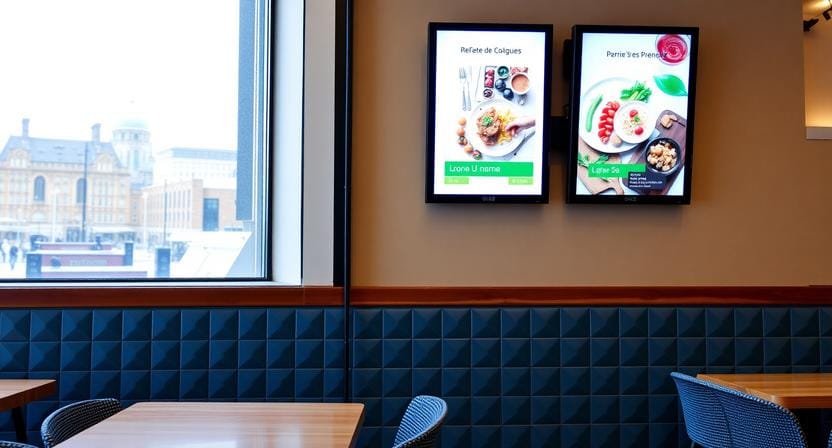
A digital menu is not just a screen with the items of the menu. It is an end-to-end platform enabling restaurants to design, modify, publish, and operate menus electronically through various touchpoints with customers.
A digital menu for restaurants should do more than show items; it should help with updates, promotions, and ordering decisions.
A mere PDF on a TV might appear digital, but it does not provide the control and flexibility required by restaurants. An actual digital menu system supports real-time updates, scheduling, design control, analytics, and multi-location management.
The Core Components
A full-fledged digital menu system typically consists of three key components.
To start with, it has cloud-based digital menu software to manage the back-end. Here, managers can update prices, add dishes, delete sold-out dishes, plan promotions, and have control over what is shown on each screen.
Second, there is hardware. This can be screens, tablets, kiosks, drive-thru displays, or counter menu boards. The hardware should be bright, durable, and fit in the restaurant setting.
Third, it has a digital menu service, which ensures that everything runs smoothly. This comprises installation, upgrades, technical support, content direction, and rapid implementation in a single or multiple locations.
Why It Is Not a Digital File
A static file merely shows some information. An effective restaurant online menu enhances the entire customer experience. It is able to inform decisions, market lucrative products, display quality images in real time, and facilitate improved ordering decisions.
Nento offers the hardware and software environment to streamline this experience. Restaurants can easily control content and also provide customers with a sophisticated, contemporary menu experience.
“A digital menu should not only replace paper. It should make the menu smarter, faster, and easier to manage.”
The Evolution of the Restaurant Industry: Why Go Digital?
Restaurants are constantly under pressure to serve more quickly, minimize errors, deal with fluctuating prices, enhance customer experience, and maximize order value. These problems can be addressed with the help of digital menus, which can make menu management more flexible.
Changing Customer Expectations
Digital experiences are becoming the norm for customers in virtually all aspects of life. They visit online product pages, scan QRs, read reviews, see pictures, and compare options before making their choices. Dining has now become the same.
A restaurant digital menu simplifies the process of ordering and makes it more visual. Visitors do not have to wait until they are seated or ask for a menu to see pictures, read the menu description, check out specials, and browse.
This is why digital menus for restaurants are becoming more useful in daily operations.
Real-Time Menu Updates
Speed is considered one of the greatest benefits. In case an item is sold out, it will immediately be removed. In case of a change in a daily special, one can add it instantly. In case it is necessary to change the prices, it can be updated within seconds on all displays.
This minimizes misunderstanding and avoids the situation whereby the staff have to explain time and again about what is not available or prices that are out of date.
Lower Operational Costs
The use of printed menus incurs continual expenses. Restaurants have to pay to design, print, replace, update seasonally, and replace damaged menu copies. All these expenses accumulate over time.
A lot of these repeated costs are eliminated with online restaurant menus. It also saves time to staff since updates occur via a dashboard and not by replacing them manually.
Better Upselling Opportunities
It is possible to emphasize high-quality add-ons, desserts, beverages, combos, and special deals better with a digital food menu than paper. Good images may make things more attractive and assist clients in paying attention to the things they may have overlooked.
Here, an example of a video that can promote add-on orders is a video about a dessert after the main course. Pairing a drink with a meal may help in boosting the average ticket size. A breakfast promotion will be able to automatically change to lunch content later on in the day.
Menu Insights and Data Collection
The digital restaurant menu can also assist restaurants in knowing what is viewed and ordered and how customers react to it. It can be used to inform pricing, layout, promotions, and menu engineering.
Restaurants do not need to make guesses about what sells best, as real performance data can be used to make better decisions.
Key Features to Look for in Digital Menu Design Software
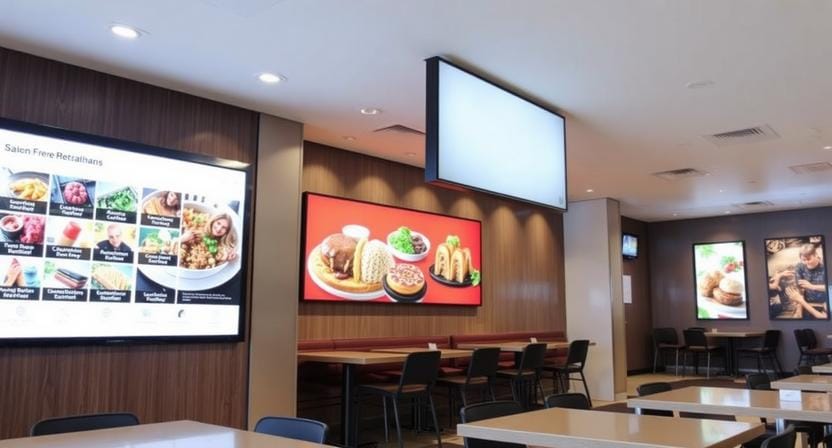
The selection of appropriate digital menu design software is important, as the platform will be a part of everyday restaurant activities. The most appropriate system must be simple for the managers, understandable to the customers, and adaptable to expand with the business.
Ease of Use
A developer should not be required every time there is a change in the restaurant’s prices. Look for drag-and-drop features, easy-to-use editing options, and a straightforward dashboard.
Managers ought to be capable of updating the prices, relabeling products, uploading images, and editing product descriptions and promotions without any technical pressure.
Template Variety
Templates are time-saving and assist menus in appearing professional. The most appropriate platforms provide customizable layouts that fit your restaurant branding, colors, fonts, and menu format.
It is particularly significant to restaurants that would like to have a sleek appearance without having to pay to have their content custom-designed each time they change.
Video Integration
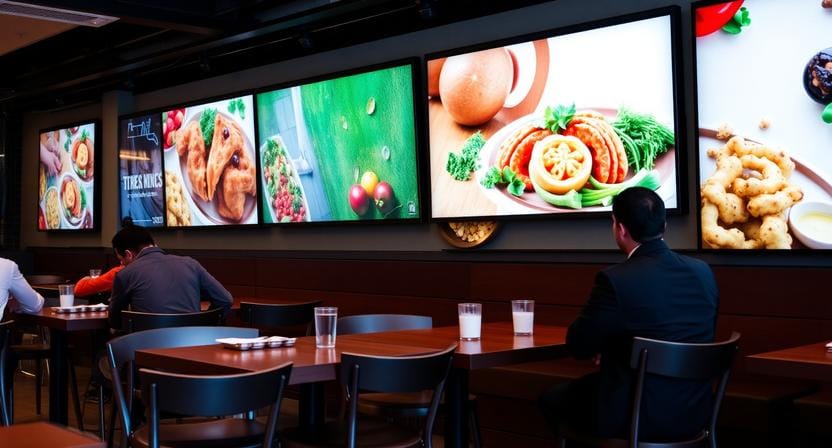
Food is visual. An effective digital menu system must be able to display high-resolution pictures and videos. The menu can be made to be more engaging with short videos of coffee, burgers, desserts, grilled items, or chef specials.
Videos are particularly effective in counter displays, digital boards, and promotional areas.
Multi-Screen Management
Multi-display or multi-location restaurants require centralization. Counter screens, drive-thru menus, table displays, and promotional boards should be managed by one dashboard.
This is necessary in case of chains and franchises. The head office is able to maintain brand consistency and allow local stores to modify certain offers.
POS Integration
POS compatibility assists in maintaining the prices, availability of items, and orders. With the digital menu and point-of-sale system linked, restaurants minimize the redundant work and prevent incorrect pricing.
This can be applied to update inventory, identify out-of-stock products, and change the menu dynamically.
Offline Mode
The menu should not cease to work due to problems with the internet. An efficient digital menu program must have offline or stored content to ensure that the menu is still displayed even when the connection is lost for a short time.
This safeguards the customer experience when service is very busy.
Types of Digital Menu Solutions for Various Venues
Different restaurant formats need different digital menu solutions. A quick-service restaurant, fine dining venue, café, and ghost kitchen all use menus differently.
Quick-Service Restaurants
Speed and clarity are the most important in the case of QSRs. Drive-through menu boards, counter displays, pick-up screens, and promotional boards enable the customers to make fast decisions.
The menus may change according to the time of the day, with breakfast in the morning, lunch at noon, and dinner offered later. This keeps content accurate and relevant.
Fine Dining Restaurants
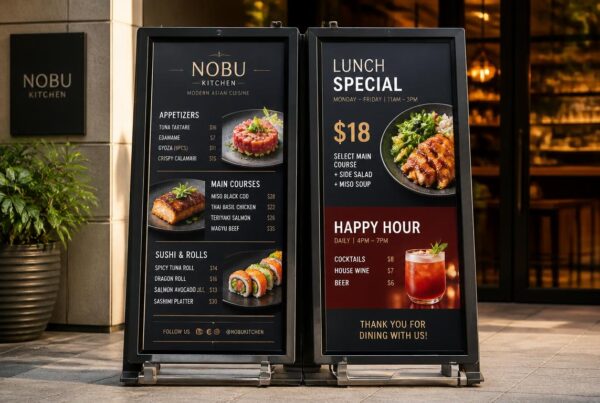
Fine dining restaurants require elegant, detailed, and brand-oriented menus. Digital restaurant menus can be displayed on tabletop tablets or QR codes and include the description of dishes, chef’s notes, wine pairing, allergen information, and high-resolution images.
Speed is not the only emphasis. It is about narration, showmanship, and high-quality guest service.
Cafés
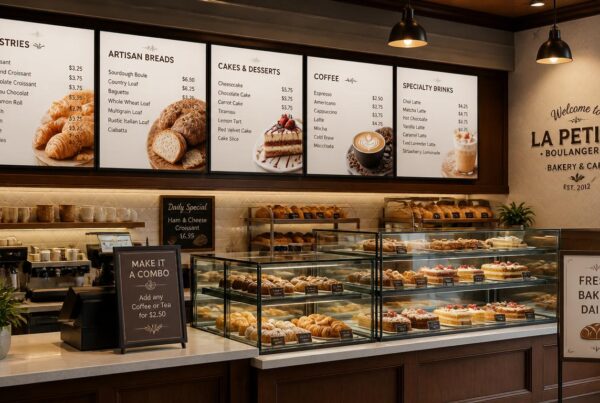
Cafes can enjoy the advantage of having screens above counters that will dynamically change with the day. The morning coffee offerings, lunch sandwiches, afternoon cookies, and seasonal beverages can be presented at the right time.
An online menu system enables cafes to maintain their promotions without having to print new boards every now and then.
Ghost Restaurants and Pick-Up Only Restaurants
Pickup-only restaurants and ghost kitchens can implement kiosks, QR menus, and self-service order screens to reduce the amount of work done by the staff. As these processes are very speed- and order-accuracy-oriented, digital menu tools can simplify the process.
Nento’s Flexible Role
Nento’s solutions are customized to restaurants. Nento has software and hardware that can be used to support the workflow whether you require drive-thru boards, tabletop menus, QR menus, kiosks, or multi-location display control.
The Design Aspect: Maximizing the Visual Impact
Design is significant in the way customers read, comprehend, and react to a menu. A digital menu must be appealing to the eye, yet at the same time, simple and convenient to navigate.
Psychology of Colors
Colors influence appetite, attention, and brand perception. Bright colors have the ability to produce vitality and appetite, whereas lighter ones can help to promote a high-end or casual dining experience.
It is not aimed at using bright colors everywhere. It is aimed at employing color strategically to draw attention to important objects and deals.
Typography and Readability
Glare, distance, and quick-moving customer attention are common to restaurant screens. The text should be big enough to be read fast. The fonts used should be appropriate to the brand and not be obscured from the customer’s viewing point.
A good menu cannot only be beautiful if customers cannot read it.
Professional Digital Menu Service vs. Self-Service
Most restaurants begin with a DIY solution; however, the digital menu service providers can assist in developing a more professional and trustworthy system. Design quality is not the only difference. It also includes strategy, layout planning, hardware choice, software configuration, and long-term support.
The mindset of “set it and forget it” is likely to come up with old content. It is easier and more sustainable to make regular updates with the help of a professional system.
List Layout vs. Grid Layouts
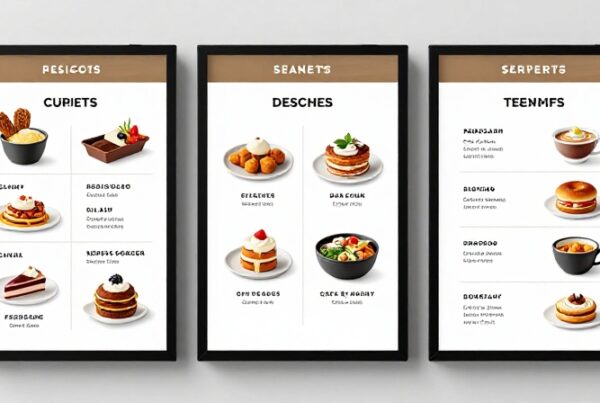
When visuals are important, grid layouts are effective. They can be applied to cafes, desserts, fast food, and promotional products since customers can scan pictures fast.
List layouts are better with detailed menus, fine dining, wine lists, and descriptions of items that are longer in length. The most appropriate option is based on the manner in which customers will go through the menu and the amount of information that each item requires.
“Good menu design does not just look attractive. It helps customers order faster and smarter.”
Choosing the Right Digital Menu Software
A web-based menu system ought to simplify your restaurant operations. Compare how the software manages updates, scalability, analytics, support, and future growth before deciding on the provider.
A good digital menu application should make updates simple for managers and clear for customers.
Cloud vs. On-Premise
Restaurants tend to be better served with cloud-based platforms since they can be updated remotely. A manager is able to update a menu with the help of a laptop or smartphone without touching the screen.
On-premises systems can provide greater local control but can also be more difficult to manage at multiple sites and usually need more IT support.
Scalability
Select software that is expandable with your restaurant. One café can begin with a single screen, and a larger chain of restaurants in the future might require the use of multiple menus in multiple locations.
Scalable digital menu software will not make you restructure your system as the business grows.
Analytics
Analytics assist restaurants in understanding the content that works best. A powerful platform can indicate which items are frequently viewed, which promotions are effective, and when certain items sell better.
This makes the menu a business asset, rather than a digital screen.
Customer Support
Hours of service in restaurants can be challenging. When a screen goes down or a menu is not updated at the right time during peak business hours, quick support is important. Find providers that offer prompt support and onboarding.
Update Frequency
Software ought to continue getting better. Recommended providers are those that release new features, security updates, templates, and integrations on a regular basis and are in a better position to support restaurants on a long-term basis.
Digital Signage and the Nento Advantage
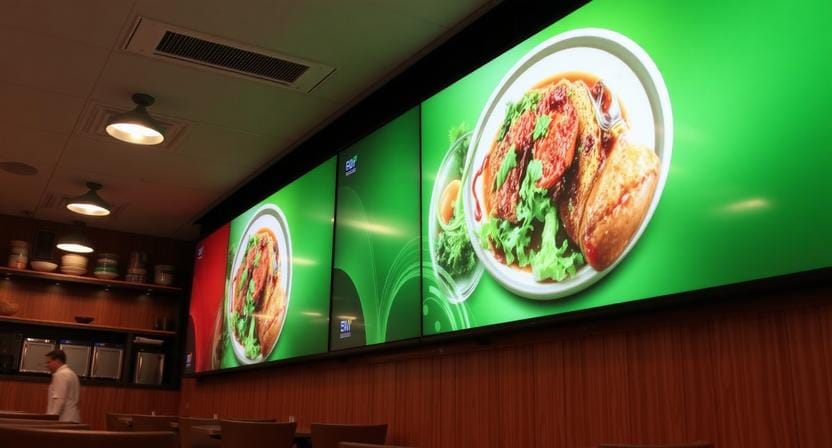
An excellent online food menu requires more than good software. It must have quality screens, powerful hardware, excellent visibility, and restaurant-grade technology.
The Hardware Factor
Restaurant settings are challenging. Screens can be exposed to heat, grease, extended working hours, and brightness issues, as well as being the subject of constant customer attention. It means that the quality of hardware is important.
Even a good menu might appear bad with a poor display. An efficient display ensures that food images are crisp, prices are legible, and information remains consistent during service.
Nento’s Expertise
Nento has experience in digital signage technology, such as brightness, longevity, energy efficiency, and content management. This enables restaurants to develop digital menu systems that are appealing and reliable.
The Nento Ecosystem
Nento combines online menu systems with robust hardware that is capable of withstanding the tough conditions of the restaurant. The outcome is a system that facilitates real-time updates, powerful visuals, multi-screen control, and smooth day-to-day running.
To illustrate, a restaurant that highlights high-quality add-ons, daily specials, and time-based offers with the help of Nento may improve the possibility of upselling and decrease the amount of work on updating the menu manually.
Get in touch with the support team and discover best practices for layout, pricing, and psychology—brought to you by Nento.
Frequently Asked Questions
What is the difference between a digital menu and a PDF file on a TV?
A digital menu platform is a remote, connected, and interactive platform. It enables real-time updates, scheduling, templates, and analytics. A PDF is non-dynamic and frequently needs to be updated manually via USB.
Can I update my digital food menu in real time if we run out of ingredients?
Yes. Using the appropriate digital menu software, you can remotely update the menu in a few seconds using a smartphone or a laptop. You are able to delete items, show delays, modify prices, or even add specials in real time.
How much does a digital menu system cost?
Prices differ depending on the number of screens, type of hardware, software features, installation, and complexity. But ROI can be achieved in the form of lower printing costs, quicker updates, fewer errors on the part of the staff, and higher sales as a result of upselling.
Is it difficult to train staff to use digital menu design software?
No. The interfaces in most modern platforms, such as those of Nento, are intuitive and drag-and-drop and do not need much training.
What happens to my digital menu if the internet goes down?
Trustworthy digital menu service providers offer offline modes. Nento makes sure that menus are saved and will remain visible in case of a connectivity drop.
Conclusion
Dining establishments are abandoning the traditional paper menu due to the speed, readability, and convenience of digital technologies demanded by customers. A new online menu system can assist a restaurant in updating its content rapidly, saving money on printing, enhancing upselling, and improving the customer experience.
Dining is turning more digital, visual, and interconnected. Menus will keep on developing with automation, analytics, personalization, and more POS integration.
It is important to select the appropriate partner. Through Nento, restaurants are provided with the technology, design flexibility, reliable hardware, and support to create a professional digital menu experience.
Not sure where to start? Book a free consultation with a Nento specialist. We will assess your location and recommend the perfect digital menu design software for your needs.