Introduction
Sleek software is destined to fail if it’s coupled with low-quality hardware. If the screen stutters, reboots, or goes dark during peak times, it doesn’t matter what the content is. That is why the costliest error in signage is thinking, “Any screen will do.”
The hidden costs of weak digital signage hardware show up quickly: lag that leads to poor video quality; overheating that leads to shortened life; and incompatibility that leads to constant troubleshooting. This doesn’t just look bad, but it also causes downtime, staff frustration, and lost revenue.
A performance-first approach means that the digital signage hardware solutions are selected for their uptime and predictable delivery. Once you have robust hardware, you have consistent content, you have scalable deployments, and ROI becomes repeatable.
“The screen is the face of your brand—hardware decides whether that face stays on.”
Not sure if your current hardware is future-proof? Contact Nento for a free performance audit of your digital signage setup.
What Makes Digital Signage Hardware Different from Regular Displays?
Commercial vs. Consumer Grade
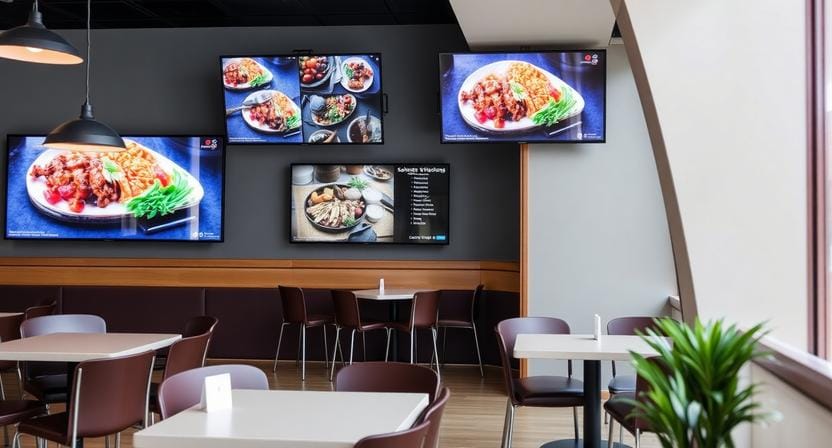
Commercial signage is designed for continuous use. Many commercial displays are rated for longer duty cycles (often 16/7 or 24/7), better thermal management, and greater brightness (typically 700+ nits) for challenging lighting conditions, compared to consumer TVs. They also tend to come with better warranties and serviceability, especially if screens are customer-facing.
Key Components
The signage “stack” includes more than a panel:
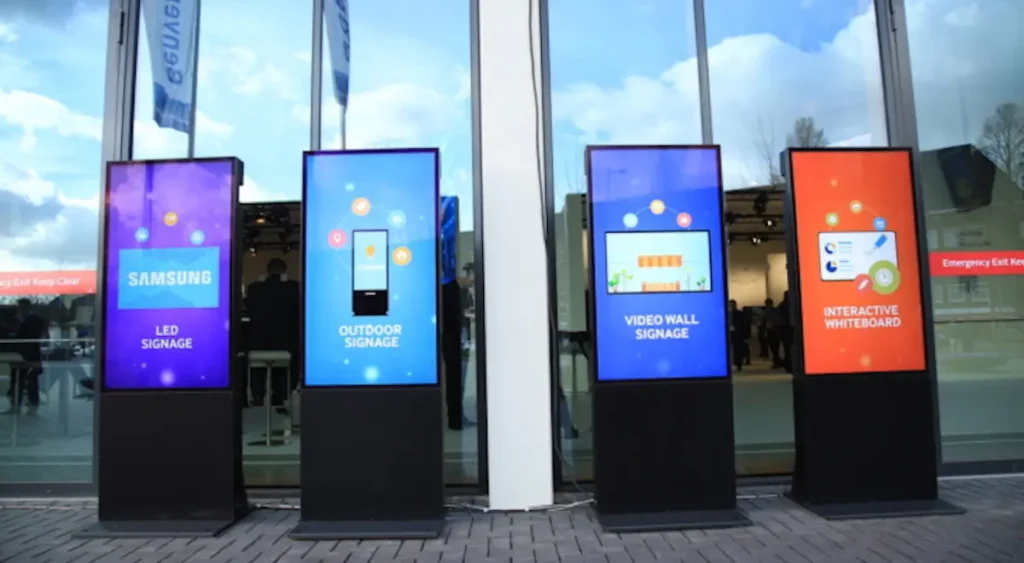
- Best digital signage displays: LCD, LED, and e-paper depending on the viewing distance and environment.
- Media players: The brain behind the screen—digital signage hardware player performance directly affects smoothness and media playback stability.
- Mounts & peripherals: Sensors, cameras, touch overlays, and cable systems for interaction and monitoring.
Why hardware for digital signage must include remote management chipsets
For real deployments, remote management is a must. The most reliable hardware features health monitoring, remote reboot, and device diagnostics. This is where “installed” becomes “”manageable”—particularly when you scale across locations.
“If you can’t manage it remotely, you can’t scale it safely.”
The 5 Non-Negotiable Features of Reliable Digital Signage Hardware Solutions
1. SoC (System-on-Chip)
For simpler content needs, SoC displays can eliminate external players. This can reduce cables, failure points, and installation complexity—perfect for simple menus and playlists.
2. Connectivity
Check for 4G/5G fallback (where needed), dual-band Wi-Fi 6, and PoE (where applicable). The stability of connectivity is important because it is needed for updating content, monitoring, and remote troubleshooting.
3. Storage & Memory
When using 4K/8K video, animated menus, or large playlists, too little storage or RAM can cause stuttering and failures. The real content load should be reflected in the hardware, not the “average case.”
4. Thermal Design
Heat kills signage—especially in real deployments. In dusty and greasy areas such as a kitchen or factory, for example, fanless systems are more likely to be chosen because the fans can clog and cause damage. Reliable thermal design ensures uptime and longevity.
5. Security
Content and device security is achieved through the combination of TPM 2.0 and hardware-level security, particularly in corporate and public deployments. Security is more than just IT: Tampering or compromise is a brand risk.
Ready to deploy hardware that never compromises on performance? Explore Nento’s pre-tested hardware bundles tailored to your environment.
Digital Signage Hardware and Software: The Integration Imperative
Myth: Any media player works with any CMS
In reality, incompatible stacks cause problems with the firmware, drivers, and inconsistent playback. While a CMS can technically ‘support’ a device, it may not under real load, particularly if the application is video-heavy or has interactive layers.
Reality: Matching the stack
A performance-first approach matches the hardware specs to the software requirements:
- CPU/GPU needs for animations, video walls, and HTML5 interactivity
- OS compatibility (Android, Windows, Tizen, webOS)
- Content format demands (4K video, live data feeds, interactive UI)
An example of this is interactive wayfinding versus menu boards. Wayfinding kiosks, which may require more compute power to handle touch, maps, and dynamic content smoothly, can run better on heavier systems, while menu boards can run on lighter systems.
Why the market is shifting toward integrated solutions
Businesses don’t want surprises from hardware compatibility, which is why the digital signage hardware market is slowly turning to the vertically integrated solutions. Integrated stacks lower overheads and ensure stability and predictability when scaling.
“Integration is the cheapest reliability upgrade you can buy.”
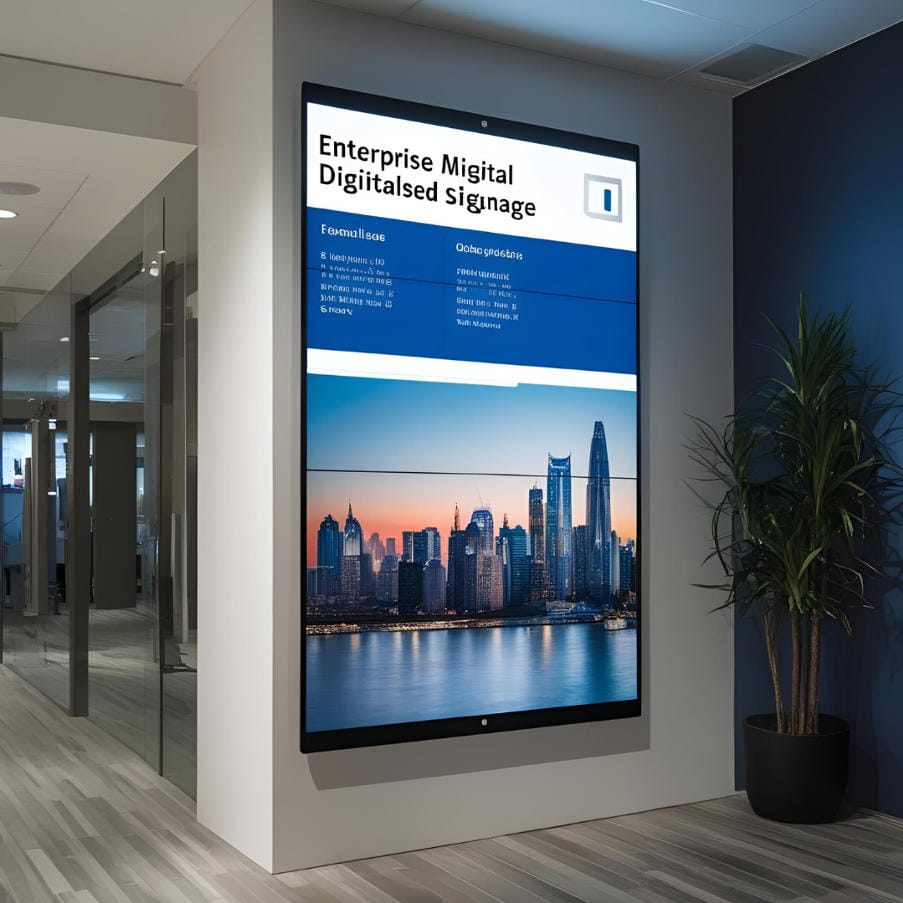
Best Digital Signage Hardware by Use Case
| Use Case | Recommended Hardware Focus |
| Retail | High-brightness (2500+ nits) best digital signage displays and touch overlays |
| Transportation | Industrial digital signage hardware player with vibration resistance |
| Quick Service Restaurants | OLED for contrast, fanless players for grease-prone air |
| Corporate | PoE-powered displays with occupancy sensors |
Market Trends: The Future of Digital Signage Display Hardware
The introduction of MicroLED and modular cabinets is opening up larger format display options that offer increased scalability. Edge computing is also entering the media player space, with AI-based triggers and real-time analytics and without a full cloud round trip.
Environmental sustainability is now a true choice criterion. Low-power hardware digital signage designs and Energy Star-style efficiency targets lower operating costs and align with enterprise ESG objectives.
The outline also mentions the digital signage hardware market’s analysts project continued growth through 2028, showing the ongoing growth of this technology as screens become an integral part of the business, not just a novelty.
“Hardware is evolving from ‘display tech’ into ‘distributed computing.’”
Common Mistakes When Buying Hardware for Digital Signage
Many deployments are doomed to failure because of avoidable errors: missing out on viewing angles (IPS/VA panels), missing the heat/humidity/IP ratings, and selecting consumer TVs without commercial warranties. One more frequently missed item is cable management and service loops, creating future maintenance issues that will cost more time in downtime.
“Most failures aren’t sudden—they’re designed in at purchase time.”
Why Nento’s Digital Signage Hardware Solutions Stand Out
Nento’s pre-configured hardware eliminates driver conflict issues, as combinations are tested as a stack, not randomly. This helps to maintain performance and reduces deployment time.
Warranty and operational support are also a key priority with Nento, offering enterprise-level support (24/7) and having advanced replacement options. The examples given are real-world, as in “A Nento client reduced hardware failure rates by 94% after switching from generic players.”
Stop piecing together mismatched components. Get a custom quote from Nento for a seamless, end-to-end hardware+software stack today.
Frequently Asked Questions (FAQ)
What is the lifespan of commercial digital signage hardware?
Commercial displays often last around 5–7 years, compared with 2–3 years for consumer TVs (varies by use). Media players usually have a lifespan of 4–5 years with adequate airflow.
Can I use any digital signage hardware player with my existing CMS?
Not always. Determine whether the player will support HTML5, GPU acceleration, and OS (Android, Tizen, LG webOS, or Windows). Nento pre-tests all combos.
How much does digital signage display hardware cost for a 10-screen network?
Entry-level commercial displays start at $400–$600 each, plus $150–$300 per digital signage hardware player. Enterprise-grade hardware runs $1,200+/screen.
Is integrated SoC hardware better than an external player?
An SoC is space-saving and power efficient, while external digital signage hardware solutions can provide more processing power for 4K video walls and AI analytics. Nento can recommend options based on your content load.
How do I know if my hardware for digital signage is failing?
Signs include random restarts, artifacts on the screen, Wi-Fi dropouts, or fans running constantly. Nento’s hardware features remote health monitoring, which can warn you before failure.
Conclusion
If you don’t have the best hardware, your content isn’t any better. Don’t get caught in the commodity trap; choose durability, thermal stability, and hardware-software integration for stable playback, consistent branding, and predictable ROI.
From rugged players to sunlight-readable displays, Nento delivers certified digital signage hardware solutions.