Introduction
Any restaurant is built around the kitchen. However, when that heart is chugging along on scribbled paper tickets, handwritten notes, verbal updates, and overworked staff, service can go down like molasses. A single lost ticket, a single ambiguous modifier, or a single delay in updating can cause confusion among the front counter, kitchen stations, delivery orders, and customers waiting for food.
This is why the customary kitchen menu board is evolving. The former chalkboard, printed sheet, or pinned order ticket is being replaced by a smart digital command center. Restaurants are trending towards interlinked screens displaying orders, menu updates, preparation priorities, item availability, and real-time kitchen updates.
This change is not just concerned with the appearance of modernity. It is speed, accuracy, and control. An interactive digital screen in restaurant settings assists teams to minimize errors, enhance communication, and ensure that kitchen operations are in tandem with front-of-house menus.
Nento is assisting restaurants with making this transition with rugged, high-brightness screens and intelligent software that is suitable in harsh foodservice settings. Cafes and ghost kitchens, as well as busy QSRs and multi-location restaurant brands, are the next frontier of kitchen efficiency on digital screens.
Ready to eliminate the chaos of paper tickets? Nento provides rugged, high-brightness displays built specifically for the heat of the kitchen. Contact Nento today for a free consultation and see how a kitchen display system can help reduce ticket times.
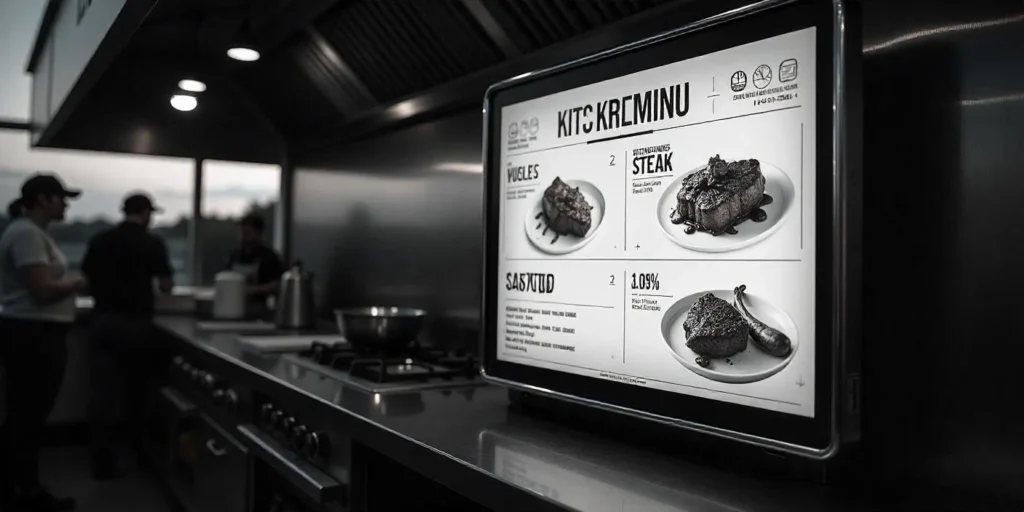
The Evolution of the Kitchen Menu Board
Kitchen communication has always depended on visibility. Previously, it was the use of chalkboards, whiteboards, printed tickets, handwritten order pads, and verbal instructions being shouted across the line. Such approaches were successful in the times of simple menus and few order channels.
Restaurants are dealing with dine-in, takeout, delivery apps, online ordering, drive-thru, catering, and mobile pickup today and likely all at once. A board that is not dynamic cannot handle such complexity.
From Chalkboards to Digital Menu Signage
Conventional boards are not fast-changing. When a menu item has been changed, one will have to rewrite it. In case an item is sold out, the message might not get to all the stations in time. In case of any changes in prices, printed material will have to be changed.
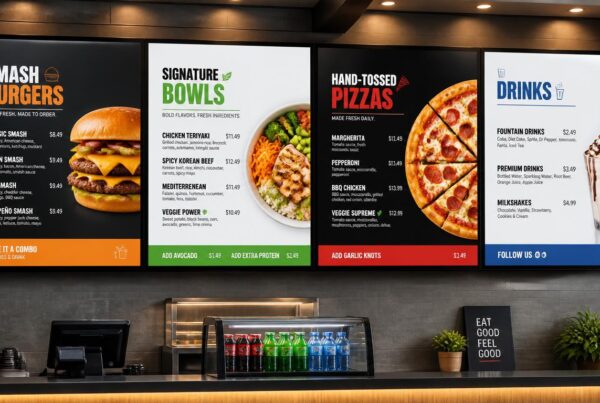
Digital menu signage is a solution to this, as it enables restaurants to update the content immediately. The live orders, menu alterations, daily specials, preparation notes, and station-specific tasks can be displayed on screens without the use of paper or memory.
The Ghost Kitchen Effect
Ghost kitchens and delivery-only brands rely on screens. The kitchen will have to operate in transparent digital processes since there is no dining room and less face-to-face customer interaction.
Orders from various platforms must be put in order, prioritized, and directed quickly. This is where menu boards for kitchen operations will be needed. They give visibility across the order channels and assist teams in keeping the delivery, pickup, and prep work flowing.
POS Integration Minimizes Human Error
The contemporary kitchen screens have the ability to be linked to POS systems. An order placed at the counter, online, or on a delivery app can automatically display on the appropriate kitchen station.
This minimizes the use of handwritten tickets and eliminates mistakes due to illegible handwriting or oral miscommunication. The outcome is an expedited, cleaner, and more precise workflow.
“A modern kitchen board is no longer just a place to display information. It is a live operations tool.”
What is a kitchen display system?
A kitchen display system for restaurant operations refers to a digital system that substitutes or aids paper tickets by displaying orders and kitchen instructions on displays. It assists the kitchen personnel to know what is to be prepared, when it is to be prepared, and which station is to prepare it.
Orders are displayed digitally instead of being printed on paper or updated orally and thus can be tracked at every step of the preparation.
Order Routing
A powerful kitchen display system has the ability to send various items of an order to various stations. Appetizers may be sent to one screen, entrees to another, beverages to a beverage stand, and desserts to a different prep station.
This will maintain the focus of each station and minimize confusion when there is a high number of people being served.
Timing Management
All items do not require the same amount of time to prepare. The preparation requirements of a steak, salad, soup, burger, and drink are different. A kitchen display system assists the staff in timing the orders correctly such that items are ready at the same time.
This enhances the quality of food and minimizes the chances of foods taking excessive time before they are served.
Waste Reduction
Digital systems could be used to monitor the prep demand, item flow, and sell-outs. Should one of the dishes be moving at a higher rate than projected, then the kitchen is able to prepare it. When a product is out of stock, the personnel have a chance to indicate it is out of stock before additional orders are received.
This assists in reducing over-prepping, food wastage, and customer dissatisfaction.
The Nento Difference
Restaurant kitchens are tough places. Screens can be exposed to heat, grease, steam, humidity, extended working hours, and frequent interaction between the staff and the screens. To manage these requirements, Nento has commercial-grade hardware that can meet these demands better than ordinary consumer screens.
For a reliable restaurant display kitchen setup, durability matters as much as software.
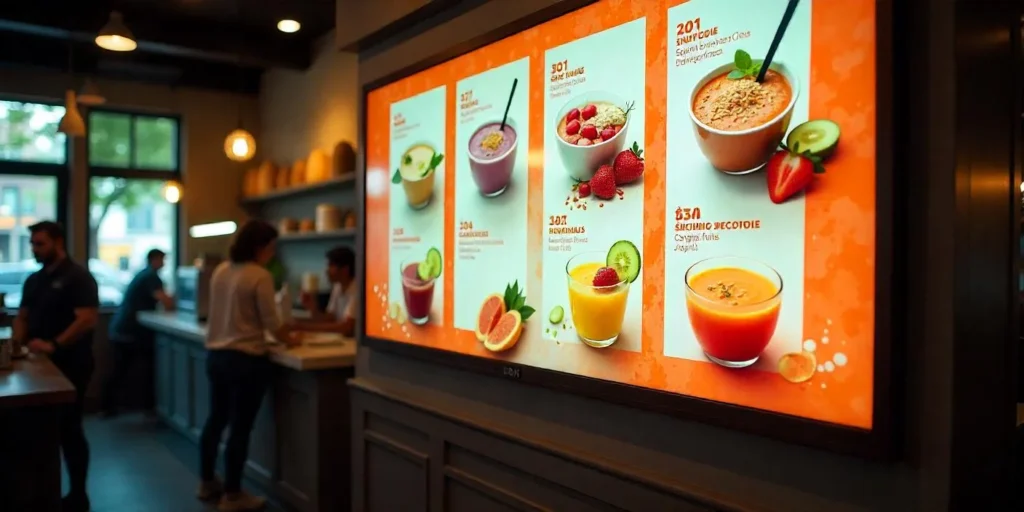
The Rise of the Home Kitchen Menu Board
Restaurants are not the only ones that use digital screens. More families are utilizing smart displays to plan meals, shopping lists, diets, and family activities.
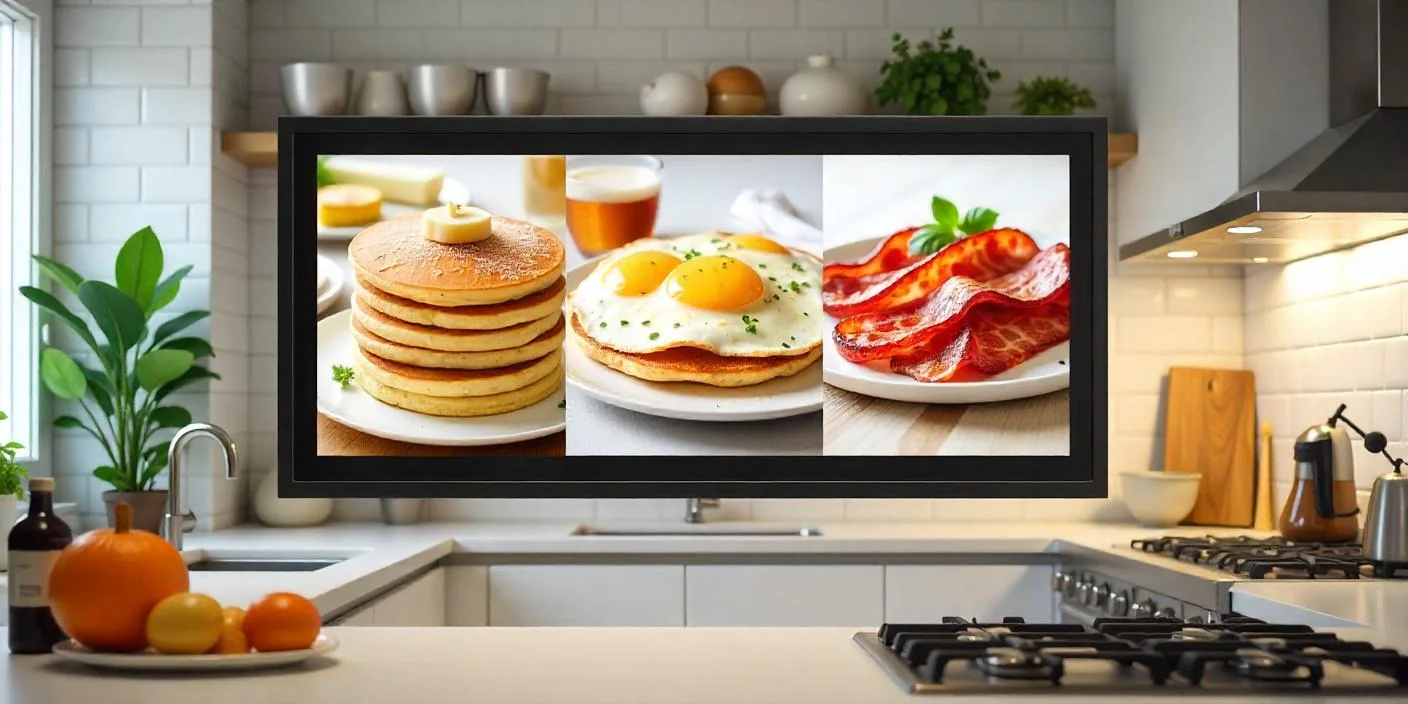
A menu board for home kitchen use can guide the family in planning the meals, monitoring the ingredients, showcasing recipes, making shopping lists, and establishing food routines. Families do not need to write dinner plans on paper or a fridge magnet; they can use a digital screen, which is easy to update.
Home Chef Advantage
A digital screen can display meal plans, cooking instructions, calorie targets, recipe videos, or dietary restriction reminders to home cooks. It can also assist busy families to answer the question they ask every day: What are we eating today?
This simplifies meal planning and minimizes last-minute planning.
Smart Home Integration
The smart home is also seeing the inclusion of digital kitchen screens. They are able to integrate with calendars, grocery applications, voice assistants, and recipe sites. In the case of large families this forms a central point for day-to-day planning.
Professional Durability/Consumer Aesthetics
Home users might be more interested in the looks, size, and easy management of applications. Restaurants, in turn, require greater stability, brighter displays, commercial mounting, and long-hour functionality.
It is what makes the difference between the decorative display in the home and professional digital menu screens that are designed to operate in foodservice.
Whether you are running a busy cafe or organizing a large family kitchen, smart displays make life easier. Browse Nento’s full range of digital menu screens to find the perfect size for your space.
Features That Transform a Kitchen
The most appropriate digital kitchen screens are those that do not just replace paper. They enhance transparency, speed, and decision-making throughout the restaurant.
High Visibility
Restaurant kitchens are fast, crowded, and bright. The screens should be easily readable even when at a distance and when there is bright kitchen lighting. Bright displays assist employees in viewing orders without slowing down.
This is more so during rush hours, where time is of the essence.
Instant Customization
A digital system enables the managers to modify items, prices, specials, and preparation notes in real time. In case of a menu change, both the kitchen and front-of-house departments can remain in sync.
This is one of the greatest benefits of using digital screens compared to the printed boards or handwritten updates.
Color Coding of the Types of Orders
Colors can be used to distinguish dine-in, takeout, drive-thru, and delivery orders using digital menu screens. As an example, Uber Eats orders can be displayed in a certain color, DoorDash in another, and in-house orders in a third one.
This assists staff to prioritize orders and not to confuse channels.
Sales Analytics and Sales Insights
Digital menu boards in restaurants can facilitate analytics since they can display which products are sold the quickest, the busiest times of the day, and which menu adjustments influence sales.
This information assists the managers to make better decisions regarding the quantities of prep, staffing, promotions, and inventory.
Better Station Coordination
A networked system enables the kitchen, cashier, pickup counter, and the customer-facing menu boards to interrelate. When everyone views the same true information, service is made easier.
“The best kitchen screen does not add noise. It creates clarity.”
Beyond the Kitchen: Digital Signage for the Front of House
Kitchen screens are further enhanced by linking them to customer-facing screens. A restaurant must not display a menu to the customer when a different one is displayed in the kitchen.
Kitchen and Customer Menu Sync
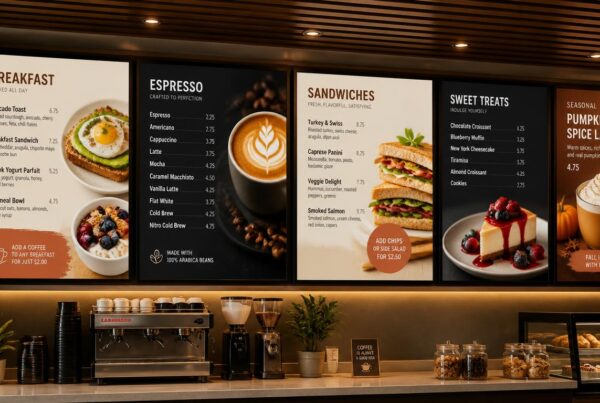
Cafe: A digital menu board for cafe use can indicate drinks, pastries, sandwiches, specials, and seasonal offers to the customers. When linked to the kitchen system, the same names of items, modifiers, and availability can be viewed by the staff.
This brings uniformity between the orders made by customers and what the kitchen prepares.
Dining Area Upselling
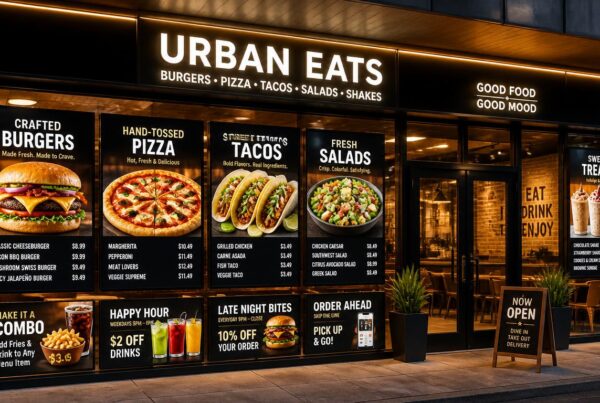
Restaurant digital signage may be used to advertise daily specials, combo upgrades or desserts, beverages, or seasonal dishes in the dining area. In case the kitchen has an excess of a high-margin product, it can be advertised within a short time through the front-of-house screen.
This will help in smarter upselling without having the staff repeat the same suggestion to each guest.
Pricing and Regular Adjustments
The interconnected system makes sure that the kitchen is able to see the same changes and details of the item chosen by the customer at the register or kiosk. This helps to minimize confusion and safeguard order accuracy.
In the case of busy restaurants, this consistency can minimize remakes, refunds, and customer complaints.
The Financial ROI of Going Digital
A kitchen display system is not just a technology upgrade. It has the potential to generate quantifiable financial value in terms of labor savings, food cost management, accuracy of orders, and scalability.
Labor Savings
Paper-based systems involve employees rewriting the menu, clarifying changes, handling tickets, and rectifying errors manually. Digital systems minimize the repetitive work and enable the employees to put more attention into preparation and service.
With automatic updates in menus and correct routing of orders, less time is spent on coordination.
Food Cost Control
Correct sales information aids restaurants in being smarter. In case some products are popular, the kitchen will be able to plan ahead. When another product is slow-moving, managers can decrease prep or change promotions.
This will minimize food waste and enhance inventory planning.
Better Order Accuracy
Miscommunication costs money. Wrong orders translate to remakes, refunds, wasted food, and dissatisfied customers.
An effective restaurant display kitchen system eliminates mistakes as orders are displayed as entered, including modifiers, timing, and order type.
Future-Proofing for Growth
Digital systems facilitate expansion in case of multi-location restaurants. A franchise or expanding brand can achieve the standardization of workflows, menu changes, and display systems across locations.
This simplifies the operations and makes them more predictable.
Don’t settle for standard TVs that overheat or break. Upgrade to Nento’s commercial-grade digital display for restaurant environments. Get Your Free Quote and help transform your kitchen into a hub of efficiency today.
Frequently Asked Questions
Can I use a regular TV as a kitchen menu board?
No. The heat, grease, humidity, and extended hours of operation in a restaurant kitchen are not suitable for a normal TV. Commercial displays are suggested because they are more durable and suitable for long operating hours. Nento has special screens to be used in harsh kitchen environments.
How does the kitchen display system handle internet outages?
The majority of modern systems, such as those of Nento, store their orders locally in order to allow the kitchen to still operate in case of an internet outage. This assists in safeguarding service in case of momentary connectivity problems.
Is a digital menu board difficult to train staff on?
Not at all. Contemporary interfaces are touchscreen-based, easy, and natural. They can be read and handled easily in most instances as opposed to the sloppy handwritten tickets or paper slips.
How often do I need to update the menu board for the home kitchen?
You will be able to update it daily, weekly, or any other day when you make any changes to your meal plan. A smart kitchen menu board can be operated with the help of an application to align with the grocery shopping, family schedule, or dietary requirements.
Can I integrate the kitchen display with my current POS?
Yes. Nento can integrate with POS systems used by many restaurants to enable them to integrate orders, menu availability, pricing, and kitchen workflows within a single system.

Conclusion
The kitchen menu board is no longer a piece of paper, a chalkboard, or a printed ticket rail. It is emerging as an active, information-driven application aiding restaurants in operating quicker, minimizing errors, and enhancing communication between the kitchen and the front of house.
Smart screens are transforming the way foodservice teams work, whether it is digital food menu boards and kitchen display systems or customer-facing restaurant digital menu boards. They enhance visibility, facilitate real-time updates, minimize wastage, and assist the staff in remaining focused during peak times.
AI-based recommendations, predictive ordering, smarter prep planning, and more POS integration will all be a part of the future of kitchen operations. The initial step is easy, though: substitute the paper mess with a trustworthy digital system.
If you are still using paper tickets, you are losing time and money.
Ready to eliminate the chaos of paper tickets? Nento provides rugged, high-brightness displays built specifically for the heat of the kitchen. Contact Nento today for a free consultation and see how a kitchen display system can help reduce ticket times.