Introduction
The hidden costs of using non-waterproof signs outdoors add up fast: fading, peeling, corrosion, and—in the most serious instances– electrical failure that takes a screen out of commission when it is most needed. What starts as a cheap sign turns into repeat replacements… and your exterior messaging looks battered.
“Outdoor signage doesn’t fail all at once—it fails slowly, and you pay for it repeatedly.”
Waterproof signage is built for wet, damp, changeable conditions where rain, condensation, and temperature swings are common. Businesses that depend on outdoor exposure, safety standards, and long-lasting messages in places where regular signs just don’t work are in dire need of it.
That is also the reason why many companies are moving toward waterproof outdoor digital signage as opposed to fixed boards. Remote updates and increased engagement are possible with digital, but only when the enclosure and display system are designed to be sealed and withstand exposure to the outdoors. Nento supports this shift with outdoor-friendly digital solutions that are fit to last in the real world.
Looking for signage that survives rain, snow, and sun? Explore Nento’s waterproof digital lineup today.

Why Standard Signage Fails Outdoors
The problem: Moisture ingress, UV damage, temperature swings
Standard signage fails because outdoor environments stress material and electronics. Water intrusion can damage internal components, UV rays bleach inks and plastics, and expansion/contraction due to temperature variations break seals and deform surfaces. Another silent issue is condensation, which can occur in poorly sealed units, fogging screens and corroding connectors over time.
Solution criteria: IP ratings (Ingress Protection)
The foundation of waterproof selection is the IP (Ingress Protection) rating:
- IP65: dust-tight + protection against low-pressure water jets
- IP66: dust-tight + protection against powerful water jets
- IP67: dust-tight + protection against temporary immersion
For heavy rain, frequent washdown, or coastal exposure, IP66 is often a safer baseline.
How waterproof exterior business signage differs from indoor commercial displays
Outside business signage is waterproof and needs to be enclosed; use gasket systems, corrosion-resistant materials, and thermal management to withstand heat and moisture combined. Indoor commercial displays can be commercial grade; however, they are not designed to withstand water jets, wind-driven rain, or outdoor condensation cycles.
“Outdoors isn’t a location—it’s a stress test.”
Best Materials for Waterproof Safety Signage
Aluminum composite panels (ACP) – rustproof, lightweight
The ACP panels resist rust, are lightweight to mount, and can withstand structural integrity during changing weather. They are a good alternative to safety and compliance signs that require sturdy but not bulky frames.
High-density polyethylene (HDPE)—chemical & impact resistant
HDPE is also suited to industrial applications since it is resistant to chemicals, impacts, and moisture. It is particularly helpful with signs that are often in contact with cleaning agents or rough conditions.
Polycarbonate covers—shatterproof, transparent for digital
Polycarbonate is shatter-resistant and clear, which is why it is best suited to be used as a cover over displays or printed inserts. It is especially applicable in waterproof digital signage protection, in which visibility needs to be crystal clear.
Marine-grade stainless steel – for coastal/saltwater areas
Corrosion is the primary threat in the coastal setting. Marine-grade stainless steel is constructed to withstand salt exposure where normal metals would not last long.
“The right material reduces maintenance more than it increases cost.”
Waterproof Signage Board vs. Waterproof Digital Signage
Waterproof signage board
A waterproof signage board is non-backlit, low-maintenance, and static, which is best in evacuation maps, hazard warnings, and fixed compliance messages. When the message does not change much and the emphasis is on long-term stability with low operation overhead, then it is the right decision.
Waterproof digital signage
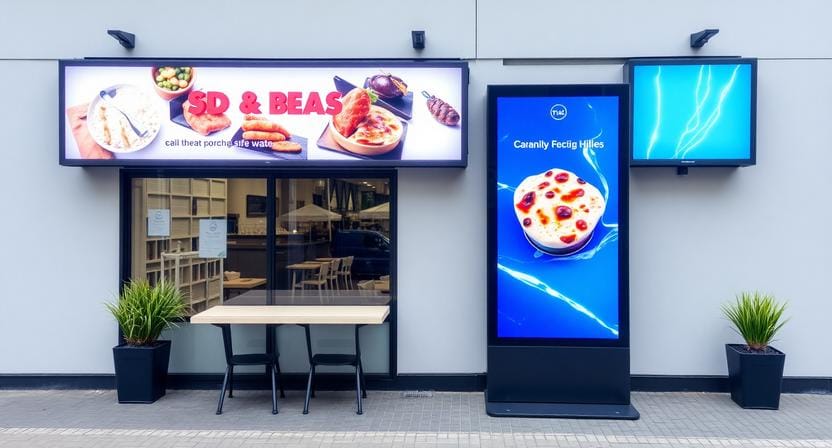
Waterproof digital signage supports dynamic messaging, scheduled playlists, and remote updates. It is more expensive in the short term but can deliver better ROI when you need to promote, change prices, time-based content, or operational messages that are frequently changed.
Comparison table
| Factor | Waterproof signage board (static) | Waterproof digital signage |
| Lifespan | Often longer with minimal moving parts | Strong lifespan when properly sealed; electronics add complexity |
| Visibility at night | Limited unless externally lit | Strong due to backlighting / self-illumination |
| Customization | Low (manual replacement) | High (remote updates, scheduled changes) |
| Repair costs | Typically low (replace board) | Higher if electronics fail, but manageable with proper support |
When to choose waterproof LCD digital signage over LED
Choose waterproof LCD signage when you require the ability to see fine details at close range, such as menu boards, pricing lists, or information screens where the text is important. LED can be better for large-format viewing over a greater distance; however, LCD frequently excels with menu accuracy and near-field readability.
Waterproof Outdoor Digital Signage for Business
Real-world applications
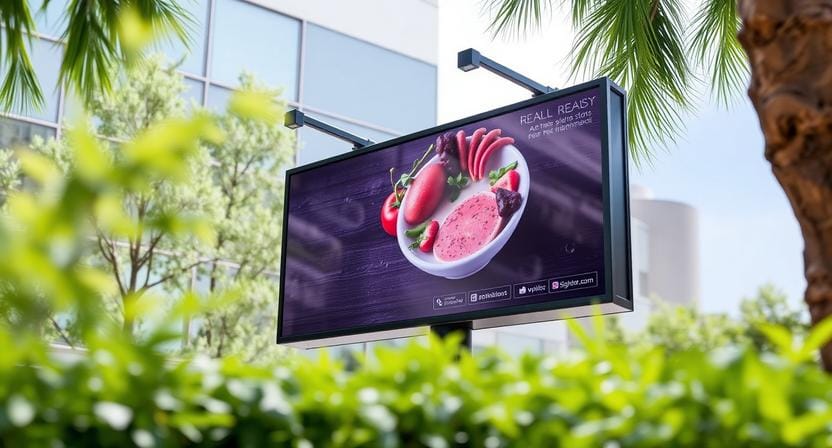
Outdoor business digital signage is typically waterproof, designed to be used in fast-food drive-through lanes, hotel swimming pools, bus stops, theme parks, and outdoor queue areas—any place where visibility and availability have a direct impact on revenue or customer traffic.
Challenges
Outdoor digital implementations need to accommodate glare and sun washout/glare, condensation within enclosures, and high temperatures that put a strain on electronics. This is where weak sealing and poor thermal design are exposed quickly.
Why businesses are moving to weatherproof digital signage with auto-brightness sensors
Auto-brightness sensors help maintain readability without the user having to make adjustments of their own—brighter during the day and dimmer at night to cut down on power consumption and prolong component life (when hardware supports it).
Upgrade to worry-free waterproof outdoor digital signage for your business. Get a free durability quote from Nento.
Advanced Solutions: 4K Waterproof Outdoor Digital Signage
Benefits of 4K for retail and public info displays
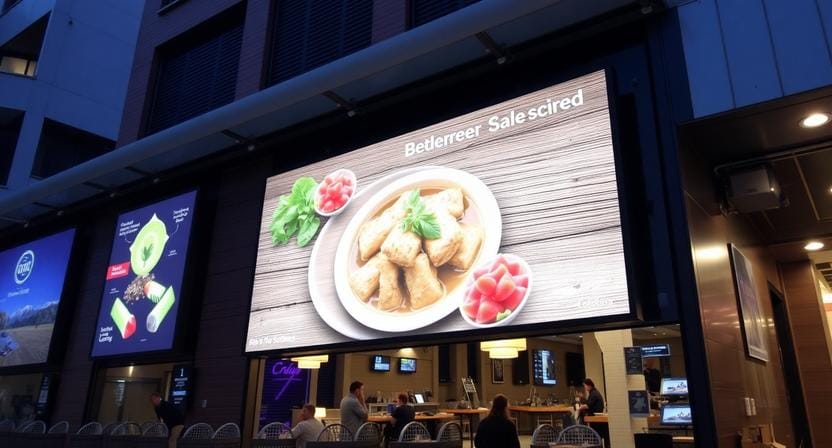
4K waterproof outdoor signage enhances visibility on large screens that are either viewed at a distance or up close—applicable in detailed menus, high-end retail images, and information boards in the community.
High brightness (2000+ nits) necessary for sunny days
It does not matter whether the screen is glaired out. For direct sunlight, many outdoor displays target very high brightness (often around 2,000 nits or more) for readability.
Examples
Stadiums and arenas benefit from 4K outdoor signs with sharp text and graphics in high traffic and diverse viewing angles—particularly where individuals are on the move yet require precise information.
Why Nento integrates 4K panels with sealed, waterproof casings
Nento pairs high-resolution panels with properly sealed casings so image quality doesn’t suffer because of the intrusion of moisture or heating problems.
“Resolution only matters if the screen stays readable—and stays on.”
Specialized Use Cases
Waterproof POS signage
Outdoor ordering kiosks and curbside pickup menus should have waterproof POS signage. These units should be resistant to rain, frequent contact, exposure to credit cards, and frequent cleaning, including spills of sanitizers.
Waterproof outdoor digital signage for business
Weatherproof displays with instructions, announcements, and rotating messages are placed in car washes, outdoor dining areas (QR menus), and construction sites. Its secret lies in durability and its ability to be read in a glare and spray environment.
Maintenance & Longevity Tips for Waterproof LCD Digital Signage
Proper cleaning of sealed units
Clean using non-abrasive cleaning techniques that can be used on sealed glass and casings. Avoid harsh tools—they can damage protective coatings.
Checking silicone gaskets every 6 months
The weak point of the seal in the long run is gaskets. Periodic inspections ensure that small seal failures are not transformed into moisture ingress events.
Avoiding pressure washers directly on screens
Even rated units can be forced to allow moisture to creep into seams over time by high-pressure water. Treat screens like electronics, not pavement.
Software updates
Cloud-controlled systems reduce the need to open enclosures or access devices physically. Remote updates of content and firmware safeguard uptime and minimize maintenance expense.
FAQ Section
What IP rating is truly waterproof for outdoor signage?
IP65 is resistant to low-pressure water jets; IP66 is resistant to strong jets; IP67 protects against temporary immersion. For heavy rain and washdown exposure, IP66 is often recommended.
Can a waterproof signage board be used in saltwater environments?
Yes, if made from marine-grade aluminum or HDPE. Standard metals can rust.
Does waterproof outdoor digital signage overheat in summer?
A quality unit uses active cooling (fans) or thermal management glass to control heat.
Is 4K waterproof outdoor digital signage worth the extra cost?
Yes—especially for large screens viewed up close (e.g., menu boards) or high-end retail visuals. In the case of traffic direction, 1080p is usually adequate.
How long does waterproof POS signage last outdoors?
5–7 years for digital, 10+ years for static boards, depending on UV exposure.
Can I retrofit my existing signage to be waterproof?
Rarely successful. Digital components need purpose-built enclosures; retrofits are rarely reliable. Board materials should be replaced completely in case of static boards.
Conclusion
Waterproof signage is not a bargain when it comes to outdoor visibility and safety considerations. When your setting is rainy, humid, sunny, or subject to temperature change, the regular signage will wear out sooner than you can imagine, and the cycle of replacement will continue eating up your wallet.
Over time, more businesses are switching to weatherproof digital signage to have dynamic, profitable messages that are able to withstand the weather. The best approach is to assess your conditions, i.e., rain intensity, humidity, heat, glare, and salt exposure, and then choose IP-rated, high-brightness displays with appropriate sealing and thermal design.