Introduction
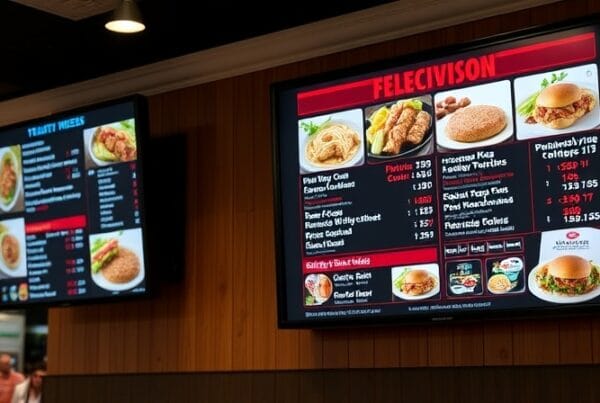
Over the years menus have evolved. The early ones were chalkboards, then posters on paper, then laminated paper boards, backlit boards, and currently the LCD display menu. Digital screens are being used in restaurants, cafes, food courts, drive-thrus, and retail food counters since static menus just cannot keep pace with business today.
A printed menu might be okay on the first day, but it will be an issue when prices are altered, products sell out, or when a seasonal deal has to be advertised. It will also get cluttered very easily, particularly when it contains too many things crowded in a single area. Customers do not desire to read a menu for five minutes. They desire clear options, nice pictures, and rapid responses.
The display menu is the solution to that issue since it transforms the menu into a dynamic digital interface. It is capable of displaying food products, prices, offers, videos, limited-time offers, and brand images in a simple and professional manner. More to the point, it provides businesses with control. You are able to update content quicker, advertise the correct products at the correct time, and generate a superior customer experience.
Digitization does not only transform the manner in which prices are displayed. It transforms the manner in which a business communicates, sells, and runs daily operations.
Ready to ditch the printing costs? Discover Nento’s modern display solutions today.
Why LCD Technology Is a Strong Standard
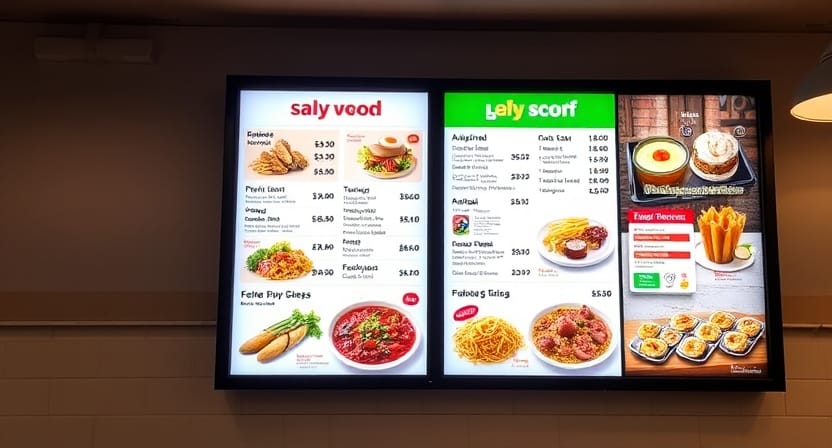
LCD screens have emerged as one of the most viable solutions for the digital menu since they provide good image quality, brightness, and dependable performance in indoor restaurant setups.
Clearer Visuals for Food and Promotions
Food has to be attractive. A boring menu is not helpful for selling restaurant items. LCD displays offer good color and text sharpness and contrast, as compared to many older display methods. This is important in displaying burgers, coffee, desserts, pizzas, drinks, or combo meals.
An effective display menu ought to be readable by the customer. It must also make the food appear fresh and appealing without overcrowding the screen.
Better Brightness and Readability
One of the primary reasons why restaurants opt to use LCD screens is brightness. A menu over a counter, close to a window, or in a sunny cafe must be bright enough to be readable.
An LCD signage display provides restaurants with a better, more visible menu experience as opposed to static posters or dim screens.
Durability for Daily Business Use
LCD commercial displays are intended to be used in longer durations as compared to home televisions. Most restaurants have screens that are on most of the day, at times even up to closing time. Durability is important for that.
A consumer TV can be used for light usage; however, a commercial menu TV display is normally recommended in restaurants since it is designed for business use.
Commercial-Grade vs. Retail-Grade
The appearance of a standard TV and a professional LCD menu board might be similar at the beginning. The distinction appears in everyday use. Commercial screens are designed to operate longer, cope with heat, enhance brightness, and have more dependable operation.
That reliability is important because a menu screen cannot randomly fail during the lunch rush.
The Power of Integration: LCD Signage Display Systems
An LCD menu is not required to display only prices and items. It can be integrated into a bigger communication system with the help of the appropriate software.
More Than a Menu
An LCD signage system can show menus, promotional messages, videos, order numbers, social media messages, weather-based messages, and brand messages. For example, a cafe can display its regular coffee menu on one side of the screen and a seasonal drink video on the other.
This is more beneficial than a printed board since what is on the screen may vary during the day.
Dynamic Content That Keeps Attention
Digital screen signage enables businesses to switch content without having to actually change anything. A restaurant may display breakfast in the morning, lunch combos at noon, and dessert promotions in the evening.
This is particularly handy to businesses that have limited-time offers or have frequent menu changes.
Centralized Control Across Locations
Centralized management is one of the largest benefits of digital screen signage systems. One screen, five screens, or hundreds of screens can be controlled from a laptop.
This is a significant advantage to multi-location restaurants. A head office can change pricing, promotions, or branding across all locations and still allow local stores to make changes to some items.
The Software Makes the System Smart
Software controls the experience, whereas hardware displays the content. Using the appropriate platform, companies can schedule menus, post media, and control prices and screens remotely.
That is what makes digital LCD signage more powerful than merely putting a USB drive into a screen.
Streamline your operations with Nento’s centralized management software.
Practical Applications: Where Do LCD Display Menus Shine?
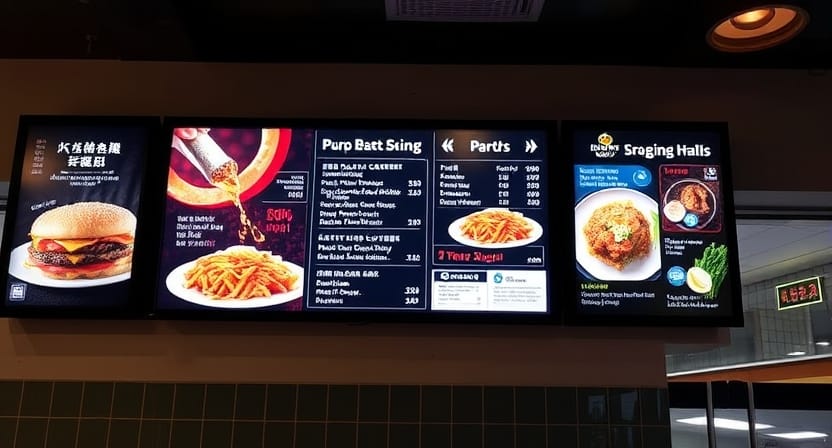
An LCD display menu system can be used in most business environments; however, it is especially effective in restaurants and foodservice environments.
Restaurants and Quick-Service Counters
Restaurants use an LCD screen for restaurant menu boards to show items clearly, highlight combos, and promote limited-time offers. Customers in quick-service restaurants make fast decisions, and therefore the screen should facilitate quick reading.
Digital menus allow bestsellers and high-margin products in a more prominent location. They also have the option of applying subtle movement to direct attention without distracting from the main menu.
Fine Dining and Premium Food Concepts
LCD displays can be utilized in different ways in fine dining restaurants. They can also use screens displaying wine features, chef specials, event menus, or private dining promotions instead of having a full menu above the counter.
Speed is not necessarily the objective. At times it is ambience and storytelling.
Cafés and Bakeries
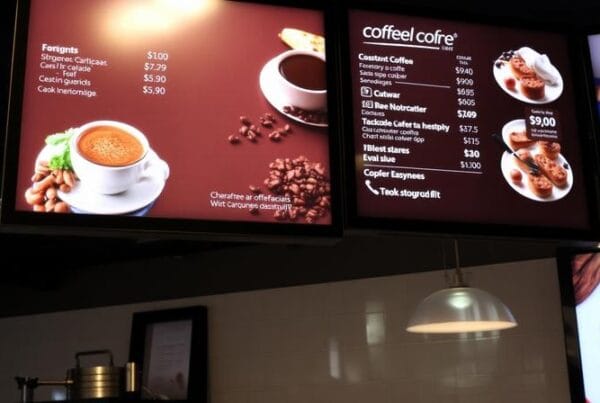
Cafes may utilize digital signage LCD screens to alternate between morning coffee deals, lunch sandwiches, afternoon pastries, and seasonal drinks. A bakery will be able to advertise fresh products as soon as they come out of the oven or sell products fast.
This makes the menu up-to-date and minimizes customer disappointment.
Drive-Thrus
Drive-thrus should have visible and clear displays. A bright LCD digital signage display can assist customers in reading the menu during sunshine and make quicker judgments while in a car.
In the case of drive-thru lanes, the brightness of the screens, weather resistance, and the simplicity of menu design are more important than the flashy animation.
Shopping and Business Areas
LCD signage can be used outside restaurants to lead customers through stores, advertise products, and display directories or internal messages in offices and breakrooms. The same technology is applicable in any place where there is a need to have clear and flexible communication.
Key Features to Look for in an LCD Display Menu
Not all screens are business-friendly. Resolution, brightness, connectivity, software compatibility, and overall design are some of the things to consider before selecting a display.
Resolution and Brightness
The sharpness of the menu depends on the resolution. The visuals of food, small text, and brand visuals can look cleaner on a 4K screen. Higher resolution is useful with menus that have detailed pictures or more than one category.
Nits are a measure of brightness. High screen brightness might not be as necessary indoors, but displays facing windows, outside displays, and drive-thru boards will need greater brightness.
Connectivity Options
The digital signage system must have robust connectivity that should accommodate various input and connection systems. Depending on the setup, HDMI, USB, Wi-Fi, Ethernet, and cloud-based content delivery can all come in handy.
Cloud-based connectivity is particularly useful, as it allows managers to update the content without having to touch the screen at all.
Content Management
The real value is reflected in content management. A good system must enable:
- Price updates
- Menu scheduling
- Posting of images and videos
- Promotional playlists
- Dayparting
- POS integration
- Multi-screen control
- Remote publishing
This is what makes the difference between a mere screen and an appropriate digital signage LCD system.
POS Integration
POS integration can assist in maintaining prices, inventory, and menu availability. When a product is sold out, it may be hidden or marked out of stock. In case of price changes, the screen can remain aligned with the register.
This minimizes misunderstandings and keeps workers from repeating explanations.
Dayparting
Dayparting is a feature that enables menus to automatically change with time. Breakfast may be in the morning, lunch in the middle, and dinner later, and it offers late at night afterward.
This is one of the most convenient digital signage features for restaurants.
Aesthetic Design
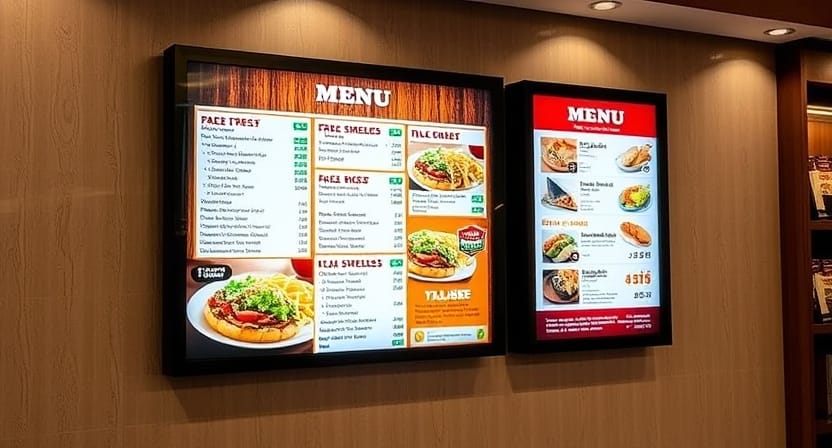
Contemporary displays can appear neat and nearly bezel-free and, in this way, look more like a part of the interior and not a large device. The restaurant should have a properly installed menu screen that helps in supporting the visual identity of the restaurant.
The screen should not look like an afterthought.
The Business Case: ROI and Benefits
An LCD display menu is not only a design upgrade. It is also able to promote improved sales, reduced expenses, and simplified day-to-day management.
Increased Sales Opportunities
Digital menus aid restaurants in marketing the appropriate products at the appropriate moment. Add-ons, desserts, combos, drinks, and limited-time offers can be brought to the forefront. A display may direct the focus to lucrative products without having employees talk about them each time.
When the menu is well designed, this can help support a higher average order value.
Reduced Printing Costs
Printed menus are not free. Each change entails design, printing, installation, and disposal expenses. These costs repeat over and over again in the case of restaurants that regularly update their prices or specials.
A digital menu minimizes the risk of having to reprint continuously. After the screen is installed, the content can be altered anytime it is necessary.
Faster Updates
One of the powerful advantages is speed. An out-of-stock product can be removed immediately. A new offer can be activated in a few minutes. It is possible to implement a price change on more than one screen without changing the posters.
This particularly comes in handy with multi-location brands.
Better Customer Experience
Customers appreciate clarity. Clear, well-organized, and bright menus assist individuals in making decisions quicker. It can minimize confusion, decrease queues, and make the restaurant look more professional.
An effective menu board need not be glitzy. It must be legible, up-to-date, and helpful.
Operational Agility
Food businesses are subject to change. The availability of ingredients, prices of suppliers, customer demand, and promotional calendars change. A digital menu provides the company with greater ability to react.
That agility can make daily operations smoother.
Choosing the Right Partner
Selecting an LCD display menu setup is not just a question of purchasing screens. Hardware, software, content design, and support are best matched to achieve the best result.
Hardware and Software Must Work Together
A powerful display with weak software is frustrating. Poor hardware combined with good software can still bring visibility and reliability issues. Restaurants need both.
The display should be able to display content clearly, and the software should enable easy management of that content.
Support Matters
Restaurant teams cannot afford to lose time in technical issues in busy times. An excellent partner must assist in set-up, training, troubleshooting, and long-term support.
This is particularly significant with restaurants having multiple screens or having more than one location.
Why Nento?
Nento understands the restaurant and digital signage space. Its solutions are a combination of display technology, content management, scheduling, and support, which enable businesses to manage menus with less stress.
Nento also assists restaurants in selecting the appropriate type of screen, software workflow, and content strategy to fit their unique setting.
Don’t settle for static. Contact Nento today for a custom LCD signage consultation.
Frequently Asked Questions
What is the difference between an LCD and an LED menu board?
LCD displays are liquid crystal displays that are typically used in detailed up-close images and text displays. LED can be employed in LCD screens to provide backlight or in big-screen outdoor displays and video walls. LCD displays can offer crisp text and clear images when it comes to restaurant menu displays at close range.
Can I update the LCD display menu remotely?
Yes. Using cloud-based digital signage software, you can update menu content from wherever you are with a laptop, tablet, or phone. This can help you easily alter prices, specials, pictures, and sold-out products without having to touch the screen.
Are these screens suitable for outdoor use?
Special high-brightness screens and protective enclosures are necessary for outdoor use. Outdoor-rated solutions and weather-resistant, IP-rated displays should be used by businesses to make them weatherproof, readable in sunlight, and usable in high temperatures. Nento has both indoor and outdoor options.
How do I manage daily specials or sold-out items?
An effective digital signage system will allow specials to be updated manually or integrated with inventory and POS systems. This enables sold-out items to be hidden and promotions to be highlighted quickly.
What is the lifespan of an LCD signage display?
Commercial-grade LCD displays often have long operating lifespans, but the exact lifespan depends on the model, usage, environment, and maintenance.
Conclusion
Replacing printed boards with an LCD display menu is not merely a matter of appearance. It is about control, flexibility, customer experience, and improved daily operations.
Clarity in menus, high-quality images of food, updated promotional messages, sold-out messages, and dynamic content that is updated throughout the day can be displayed on an LCD screen. With the appropriate software, it becomes integrated into a smart communication system instead of being only a wall screen.
In the visual economy, technology is no longer a luxury. It is becoming a competitive need for restaurants and modern businesses.
Explore Nento’s display solutions and build a setup that supports your restaurant.