Introduction
Printed menus used to be sufficient. A restaurant might create a menu, print it, and leave it on top of the counter, even for months. However, nowadays, such a method is sluggish. Prices fluctuate, the tastes of customers change rapidly, and restaurants have to respond to sold-out products, time-limited offers, and demand during peak times without having to wait until the next print run.
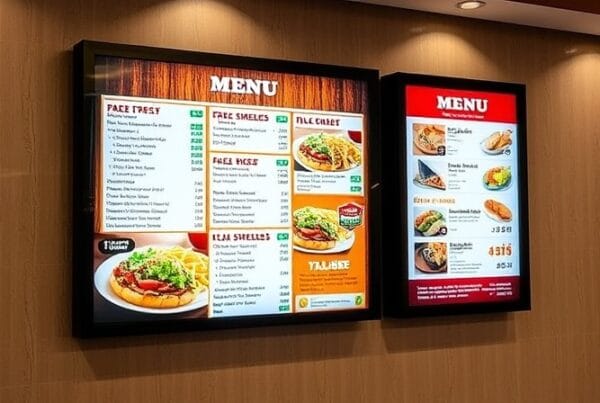
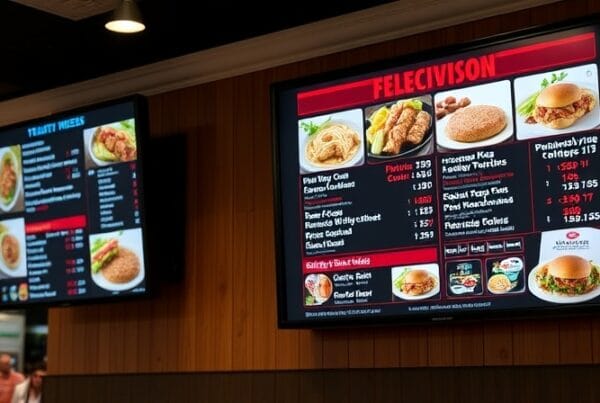
That is where data-driven digital menu boards come in. They are not just screens showing food items. They are intelligent menu interfaces that are capable of updating in real-time, promoting the right products, assisting in quicker ordering, and assisting restaurants in utilizing sales and inventory information more effectively.
An advanced digital menu board system enables restaurants to move away from the traditional menu communication system and move toward responsive menu management. With the appropriate arrangement, restaurants will be able to update prices, schedule menus by time of day, encourage high-margin products, and provide the customer with a more interactive experience.
This is important to restaurants that have to operate on rising costs and declining margins. The menu is no longer a list. It is a sales tool, an operations tool, and a customer experience tool.
Ready to modernize your dining experience? Discover Nento’s modern solutions today.
What Are Data-Driven Digital Menu Boards?
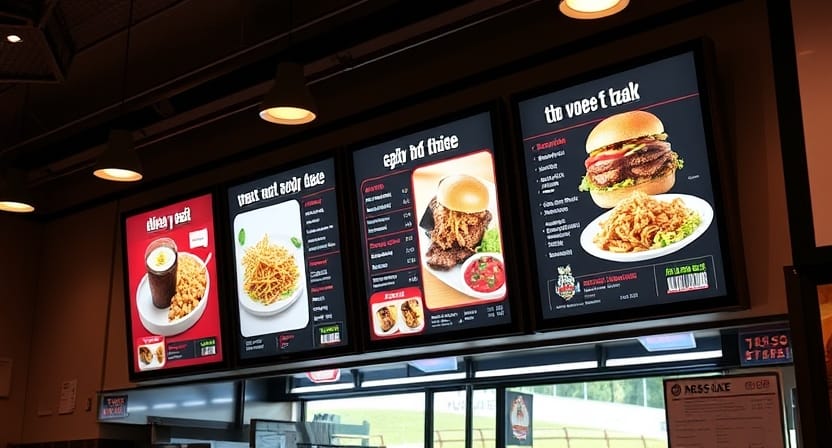
Digital menu boards are smart boards that are linked to a central software system. They are able to switch content depending on real business indicators, including time of day, weather, inventory, sales trends, or POS data.
In simple terms, they help restaurants show the right message at the right time.
More Than Just TVs on a Wall
Many people believe that digital menu boards are merely TV screens with menu pictures. That is just the simplest version. A real data-driven setup is a combination of commercial-grade screens, cloud-based software, integrations, scheduling tools, and analytics.
This is what makes a screen a restaurant management tool.
The Data-Driven Part
These systems are more powerful because they have a data-driven component. Sales trends can be used to market bestsellers in a restaurant, inventory information can be used to conceal sold-out products, weather data can be used to market hot or cold beverages, and time of day can be used to display different menus.
As an illustration, a cafe can display hot coffee and breakfast sandwiches in the morning, iced beverages in the afternoons, and desserts later in the day. A fast-food establishment can advertise combo meals when people are in a hurry during lunch and snacks when the place is not busy.
How Do Digital Menu Boards Work?
You may be asking yourself, how do digital menu boards work? It is relatively easy:
- Hardware: Commercial displays show the menu content.
- Software: Restaurant digital signage software determines what will be displayed on the screens.
- Connectivity: Menus are updated via Wi-Fi, Ethernet, or cloud.
- Integration: POS systems, inventory applications, and customer information can be used to automate updates.
- Scheduling: Various menus and offers can be displayed at various times.
This combination makes the menu simpler to manage and more helpful in everyday restaurant operations.
Why Restaurants Are Switching to Digital Menu Board Solutions
Digital menu boards are becoming the way forward because restaurants are shifting towards them due to the delays and missed opportunities created by printed menus. A fixed menu is not able to change during service. A digital one can.
Agility and Cost Efficiency
In case of an increase in food costs, restaurants might be forced to make price adjustments. In the case of printed menus, it involves redesigning, reprinting, and replacing hard copies. With digital boards, the pricing can be updated in real time either in a single location or in more than one branch.
This saves on printing and minimizes waste. It also assists restaurants to remain accurate when there is inflation or a high rate of supplier price fluctuation.
Better Sales Through Smart Placement
Motion graphics, food pictures, and highlighted areas can be used in digital menu boards to advertise selected items. High-margin items that restaurants can put more in the limelight include combo meals, beverages, desserts, premium toppings, or seasonal specials.
This does not mean making the screen glitzy. It involves being mindful of visual attention.
A brief animation of a featured product or an uncluttered promotional poster can assist customers in paying attention to deals and not being bombarded.
Dayparting for Different Customer Needs
One of the key benefits of digital menu boards for restaurants is dayparting. Menus can be switched automatically: breakfast, lunch, dinner, happy hour, and late-night menus.
No staff member has to remember to switch the board during a rush. The system handles it.
This makes the menu up-to-date and minimizes confusion.
Why Professional Support Matters
When it comes to choosing a digital menu board company, it is not just a matter of purchasing screens. The hardware choice, software installation, content development, integrations, and maintenance are some of the areas where restaurants require assistance.
A good provider realizes that the restaurant screens cannot go down at a critical time. Ease of updating, support, and reliability are equally as important as design.
Nento can act as a partner in your growth. Let us design your custom digital menu board solution.
Key Features of a High-Performing Digital Menu Board System
A robust digital menu board system must not be just a content display. It must aid the restaurant workflow, customer decision-making, and operational control.
Integration Capabilities
One of the most significant features to consider is digital menu board integration. Menu boards are very helpful when linked to POS systems, inventory tools, or kitchen display systems.
As an illustration, when a product is sold out, it can automatically be removed from the screen. Through POS, an update can be made to the menu in case of a price change. When the kitchen has become saturated with one particular product, the restaurant can shift marketing to faster-preparation options.
This minimizes manual labor and aids in maintaining menu accuracy.
QSR Digital Menu Boards
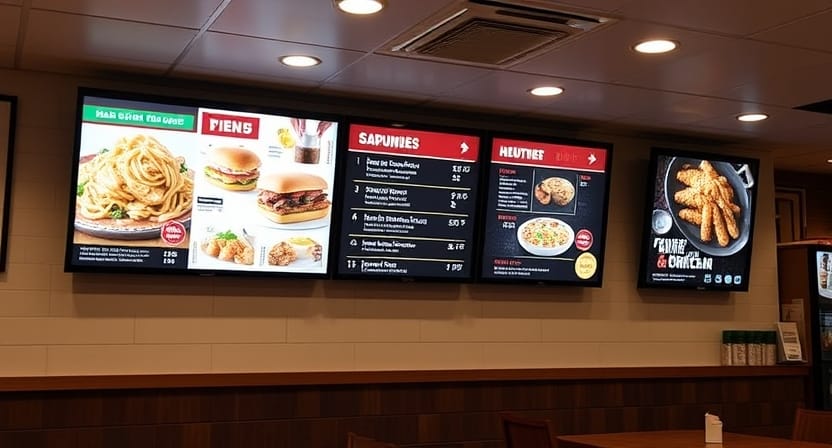
In the case of fast food restaurants, time is of the essence. QSR digital menu boards need to assist customers in making decisions fast, support a rapid flow of orders, and minimize confusion.
Service can be made easier by clear categories, powerful images, and availability linked to POS. In drive-thru operations, the value is even greater since customers do not have as much time to read and make decisions.
Digital Dining Software
Contemporary digital dining software links menu screens to the broader restaurant ecosystem. It can integrate with POS systems, inventory data, scheduling applications, and customer engagement platforms.
This assists restaurants in moving beyond mere screen displays toward more intelligent dining.
Remote Management
The restaurant manager should not be required to stand in front of each screen to update it. Remote management through a cloud-based system enables menus to be updated via a laptop, tablet, or phone.
This is necessary for multi-location businesses. One dashboard can control 10, 50, or 100 locations and still allow local modifications where necessary.
Content Scheduling
Content scheduling assists restaurants in planning ahead for promotions. Happy hour deals, limited-time specials, seasonal promotions, and weekend specials can all be pre-planned.
This eliminates last-minute rushes and keeps marketing consistent.
Implementing Digital Menu Boards for Restaurants
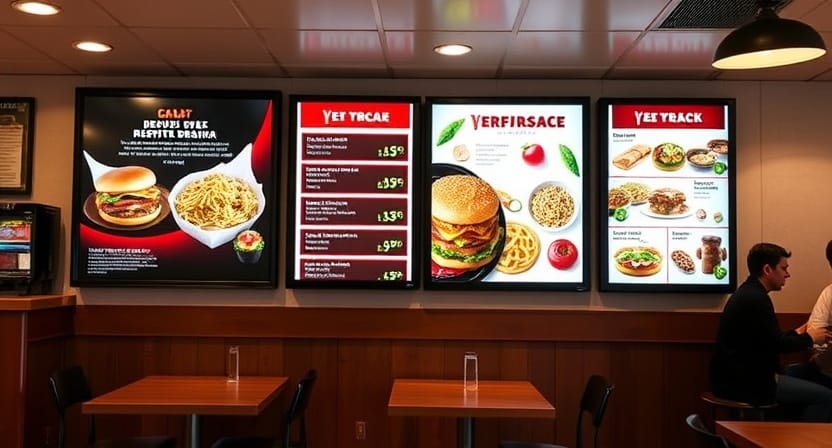
Digital menu board installation should be considered a strategy and not a hardware purchase. Planning the customer journey, content layout, and operational requirements prior to installation gives the best results.
Assess Your Current Restaurant Flow
Begin with the customer flow in the area. Where do they stop? At what point do they make decisions? Where are lines formed? What are the areas most problematic?
This assists in deciding where the screens will be positioned as well as what will be displayed on each screen.
Choose the Right Hardware
The requirements of indoor counter screens, drive-thru displays, outdoor boards, and promotional screens are different.
Indoor screens should be easy to read and easily installed. Drive-through displays should be brighter and more weather-resistant. Exterior screens must be robust and readable in fluctuating light.
Choosing the wrong screen can create readability problems later.
Build a Strong Content Strategy
A printed menu should not simply be copied into a digital menu. The screen content should have clear sections, readable text, powerful food pictures, and minimal clutter.
The optimal design assists customers to make decisions quicker. It must also emphasize the items that the restaurant wants to sell the most.
Deploy With Minimal Disruption
Installation has to be scheduled according to the restaurant hours and service flow. An effective rollout does not disrupt the busy periods, and the staff learn the functionality of the system prior to rollout.
Training matters. If the staff do not feel at ease updating the system, there is a risk that the screens will be out of date.
Optimize With Analytics
Restaurants ought to analyze performance after launching. Which products are more likely to sell with promotions? What menu format is more user-friendly to the customer? Which offers are most effective at slow times?
Here the data-driven digital menu boards come into play, as they are useful in the long term. They enable restaurants to experiment, learn, and improve.
The ROI of Data-Driven Signage
Digital menu boards are not only attractive, but they can also pay off. This comes from increased sales, reduction in labor expenses, reduced printing expenses, and enhanced operational control.
Average Order Value
Digital boards can assist in boosting the average order value through marketing add-ons, combos, desserts, beverages, and upgrades at the right moment. Suggestive selling can be achieved through the use of a simple message, like adding a drink or making a combo, without necessarily depending on the staff.
The outcome depends on the menu design, location, quality of offerings, and the number of customers coming by, but the prospects are evident: the more visible it is, the better the selling prospects are.
Labor Efficiency
Hardcopy menus require a workforce. Someone must order changes, print materials, install them, and take down old signs and clarify obsolete information when changes are overlooked.
This workload is minimized with digital menus. Updates are quicker and can be centrally managed.
Less Printing Waste
Each reprint produces an expense and waste. Digital menus minimize the use of promotional posters that are disposable, temporary menu inserts, and replacement boards.
This can create noticeable savings in restaurants with regularly changing offers.
Better Upselling
Data-based boards can help promote the right things at the right times. During the lunch rush a lunch combo may be shown. An offer of dessert can be presented later in the day. Drink promotions can be shown in hot weather.
This renders upselling more relevant and less random.
Faster Response to Change
In case of a sold-out item, the screen can be updated. The menu can change if a supplier problem occurs and impacts availability. If a promotion is not doing very well, then it can be replaced.
This agility is one of the business advantages.
Future Trends: The Evolution of Digital Dining
Digital menus are still developing. Menu boards will become even smarter as restaurant technology becomes more connected.
AI-Driven Recommendations
AI can be used in the future to recommend which items to promote based on the sales history, weather, time of day, or customers. A system might suggest the promotion of iced beverages on hot afternoons or comfort foods on rainy evenings.
Voice-Activated Ordering
Voice-activated kiosks and order tools can be more integrated with menu boards. This may assist customers in customizing meals more quickly and reduce counter pressure.
Interactive Displays
Touch screens can enable customers to read ingredients, nutrition, allergens, customization, and pairings prior to ordering.
This would be applicable in cafes, QSRs, food courts, and self-service settings.
Smarter Restaurant Networks
With menus linked to POS systems, loyalty programs, and inventory data, restaurants will be in a position to handle digital dining experiences more intelligently.
Technology is not an end in itself. The aim is smoother service and improved decisions.
Frequently Asked Questions
How do digital menu boards work?
Digital menu boards use cloud-based software to deliver content to screens. Data-driven boards can also modify the content depending on the POS data, time of day, inventory, weather, or sales trends.
Can I integrate my current POS system with digital menu boards?
Yes. Most contemporary digital menu board systems have API integration or POS connectors to synchronize prices, availability, and menu changes.
Are digital menu boards suitable for small restaurants or just QSRs?
They can be used in businesses of any size. One screen can be used by a single cafe to control its menu, and larger chains can use QSR digital menu boards in more than one location.
What is the best digital signage software for restaurants?
Restaurants should use reliable, user-friendly, cloud-based digital signage software that can be updated in real time. It must also facilitate scheduling, integrations, and remote management. Nento focuses on this kind of technology for restaurants.
How much do digital menu boards cost?
Prices differ based on the screen size, display count, installation requirements, software capabilities, and integrations. In most instances, restaurants can pay back the investment by saving on printing, enhanced upselling, and increased operational efficiency.
Conclusion
The move from paper-based menus to digital menu boards is more than just a change from paper to screens. It is all about providing restaurants with greater control, flexibility, and a better means of communicating with customers.
A current digital menu board system can quickly update prices, remove sold-out products, promote high-margin products, support dayparting, and connect with POS or inventory data. It assists restaurants to react quicker and utilize their menu space more smartly.
Agility matters in the contemporary restaurant environment. Pre-planned printed menus keep businesses stagnant, whereas digital menu boards allow them to have space to evolve.
Technology is supposed to simplify the activities of restaurants, not complicate them. The trick lies in finding a partner that is aware of the pace, stress, and the reality of daily foodservice.
Stop relying on outdated menus. Upgrade to a smart digital menu board system with Nento. Visit Nento to schedule a demo today!