Introduction
The dining experience has evolved rapidly. Paper menus are becoming a thing of the past, cash tips are becoming quite rare, and customers are seeking quicker, cleaner, and more digital methods of ordering and paying. The restaurant tip screen is no longer a mere pay step in this change. It is now part of the final moment when a restaurant can affect customer behavior.
The payment screen is still considered by many restaurant owners as a simple point of transaction. The customer swipes a card, chooses a tip, and leaves. However, that screen can do more in combination with a powerful digital menu service. The same system that assists customers in viewing items, adding add-ons, and viewing specials can assist in enhancing tipping, making checkout more convenient, and increasing revenue.
Having a screen at checkout is not the real opportunity by itself. The real opportunity is bridging that screen to the whole digital experience. The process of going through the menu, ordering, and tipping should all seem easy and connected.
By uniting digital menus, smart signage, and a streamlined checkout process, restaurants are able to enhance their operations and establish superior customer experiences.
Ready to modernize your checkout process? Discover Nento’s digital signage solutions today.
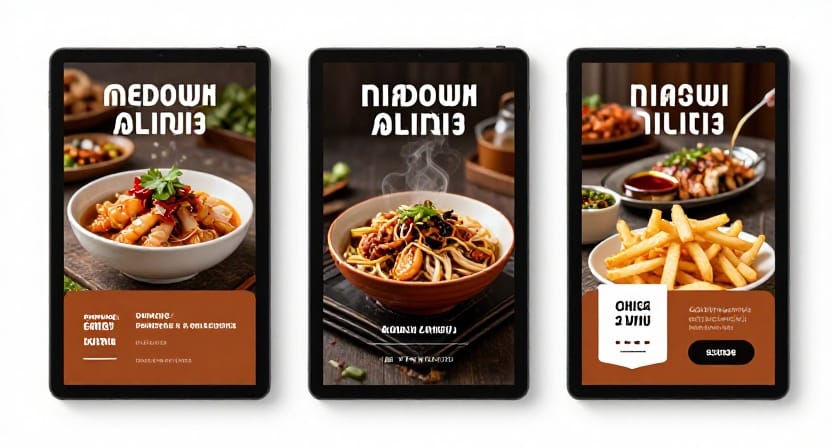
The Evolution of the Restaurant Tip Screen
A tip screen in a restaurant was formerly just a prompt. It displayed tip percentages and requested the customer to select one to make payment. That continues to occur, but the screen has expanded its functions.
More Than a Payment Terminal
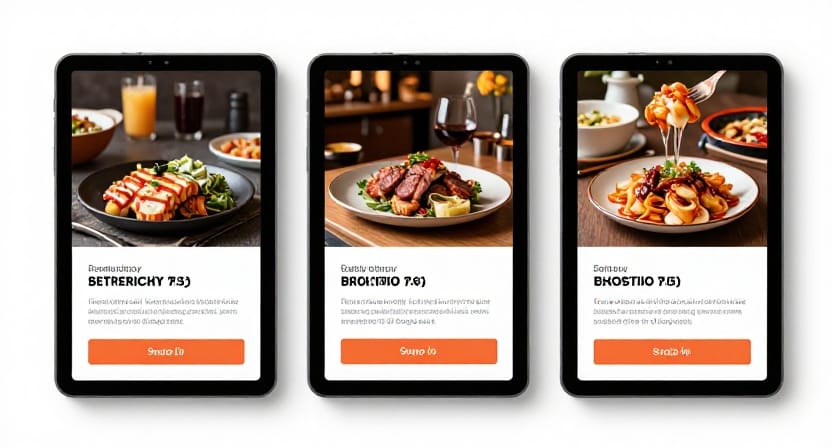
The tip screen has become a customer interface. It appears at the end of the order, when the customer has already decided to purchase something and is completing the experience. That moment matters.
In case the checkout process is smooth, clear, and well-designed, customers will be less likely to be frustrated when completing payment. In case it is awkward, hasty, or confusing, the experience will end on a weaker point.
The tip screen is not an isolated payment device but rather a component of the customer experience that restaurants should consider.
The Psychology of Tipping
Digital tip prompts can affect gratuity behavior due to their visibility and ease of tipping. The screen shows recommended values, e.g., 15%, 18%, 20%, or custom ones instead of using a cash jar.
This does not imply forcing customers. It entails simplifying the decision. Obvious cues tend to be more effective than ambiguous or unspoken tipping cues.
In the case of cafes, fast-service restaurants, bakeries, food trucks, and counter-service restaurants, this can positively impact the tips received by the staff.
Customization Matters
The same tip screen setup should not be used in all restaurants. A quick-service counter, a fine dining restaurant, and a casual cafe may require varying default options.
The most effective systems enable customization of tip suggestions based on the style of service, order volume, or type of business. For example, a full-service restaurant can have varying recommended percentages compared to a grab-and-go coffee shop.
Integration With the Digital Menu Platform
The tip screen will be more effective when it operates as part of a wider digital menu system. When the menu, POS, checkout, and signage are linked together, it makes the customer experience smoother.
A customer has the opportunity to see the menu and the recommended add-ons, make an order, and finalize payment without unnecessary friction. At that point, the screen is incorporated into a bigger revenue system.
What Is a Digital Menu Service?
A digital menu service is not just a PDF menu on a tablet. It is an entire ecosystem that assists restaurants to show, control, update, and optimize menu data on various screens and devices.
It may incorporate digital menu boards, QR menus, table ordering, and POS-linked menu boards, displays, and checkout screens.
Digital Menus for Restaurants
Digital signage for restaurants enables owners and managers to update prices, remove sold-out items, add new dishes, and advertise specials without having to reprint anything.
It is handy when a restaurant frequently changes prices, offers seasonal items, or has to deal with ingredient availability. An online menu assists in maintaining precise and up-to-date information.
Electronic Menu for Restaurants
A restaurant menu can also be enhanced through an electronic menu to improve hygiene and convenience. Restaurants can show menus on screens, tablets, kiosks, or customer phones instead of passing physical menu copies to customers.
This is particularly good in high-volume situations where cleaning and changing printed menus is a time-consuming process.
Digital Food Menu Boards
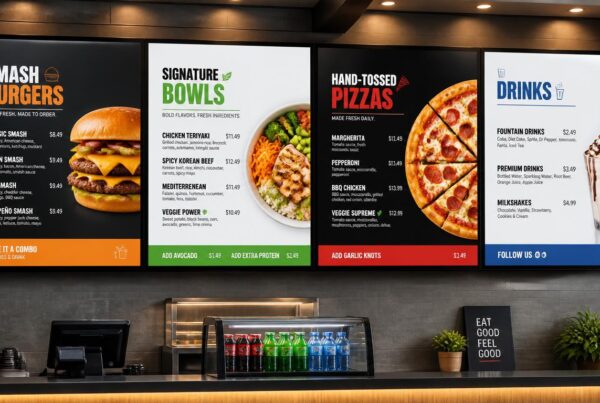
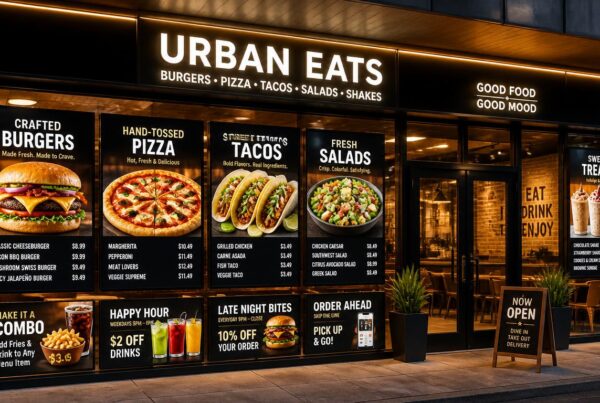
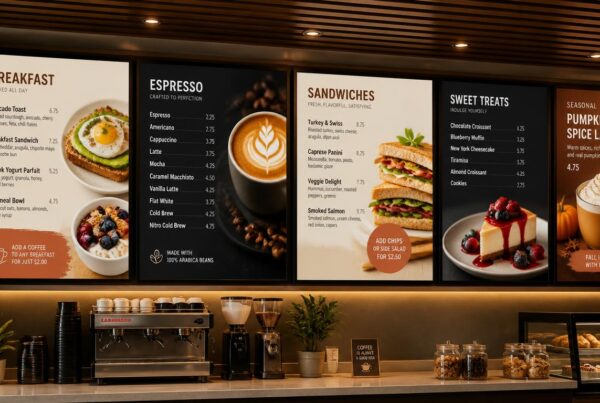
One of the most visible elements of a digital menu service is digital food menu boards. They display food products, prices, food images, offers, and specials on screens.
These boards assist customers in making quicker choices and provide the restaurants with greater ability to determine what is seen first. Good visuals can also be used to encourage impulse purchases, particularly of desserts, beverages, combos, and add-ons.
Why Small Restaurants Need It Too
Some owners believe that digital menus are only for large chains. This is no longer the case. A small restaurant should have the best digital menu system for small restaurants, which is affordable, easy to update, and scalable.
A tiny cafe might only require a single screen and a dashboard. The expanding restaurant can subsequently introduce QR menus, pickup screens, or various locations. The right system ought to expand with the business rather than impose costly changes prematurely.
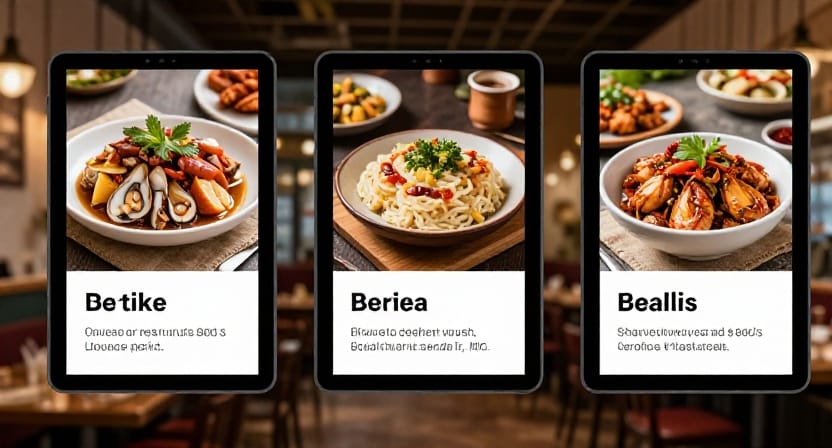
Top Benefits of Implementing a Digital Menu Board System
A strong digital menu board system helps restaurants save time, improve menu presentation, and create more flexible customer communication.
Operational Efficiency
Speed is one of the greatest advantages. A single central dashboard allows a restaurant to modify menu items, adjust prices, mark products as sold out, or add a new special.
Frequent updates can be made from a phone, tablet, or laptop with a digital menu board app. This means that a manager does not have to wait until each time something changes to get a designer or a printer.
In the case of multi-location restaurants, the advantage is even greater. Menus can be updated in various branches immediately while still allowing local changes as required.
Managing a Digital Restaurant Menu
A digital restaurant menu enables restaurants to have more control over the day-to-day operations. Menus such as breakfast, lunch, dinner, happy hour, and weekend menus can be pre-scheduled.
This reduces staff workload and keeps the menu up-to-date throughout the day. Customers are able to view what is available and not what was printed weeks back.
Visual Appeal and Upselling
With digital menu board solutions, it is easy to draw attention to high-value items. A restaurant can present a featured meal with a high-quality picture, offer a combo, or highlight an add-on suggestion toward checkout.
Animation can be used as well, although it should not be used extensively. Excessive movement will distract from ordering. Even slight movement around a featured item can help focus the attention without overwhelming the customer.
Cost Effectiveness
Printing has a cost. New prices, new deals, seasonal menus, holiday deals, and limited-time items will all demand new materials.
A digital system saves the time required to reprint and also saves staff time. Rather than having to adjust signs manually or clarify the information on an old menu, employees can count on updated screens.
Transform your restaurant’s atmosphere and efficiency. Explore Nento’s digital menu board solutions.
Choosing the Right Technology
Selecting the proper setup requires knowing hardware and software. The screen is significant, yet the platform behind it will be equally important.
Hardware vs. Software
Hardware consists of screens, tablets, kiosks, media players, mounts, and checkout kiosks. The content, scheduling, updates, integrations, and analytics are controlled by software.
A restaurant may have superb screens and weak software, and the system will still seem hard to work with. Conversely, good software requires good hardware to work efficiently when service demand is high.
The best setup brings both together.
Compatibility With POS and Tip Screens
Compatibility is essential. Your menu boards, checkout screens, and tip prompts should communicate with your POS system.
To illustrate, when a customer orders a combo from the menu, the checkout system should be able to record that order. When a product is sold out, this should be reflected on the menu so it is no longer ordered. In case there are any tip options displayed, they must feel like part of the payment process.
Remote Content Management
An excellent digital menu service must allow managers to remotely update content. This involves modifying prices, posting pictures, scheduling promotions, and modifying menus without the need to visit each screen.
Remote access is particularly significant to owners who have to operate in multiple locations or simply are not always able to be present on location.
Loyalty Program Integration
Loyalty programs can also be integrated with digital menus and tip screens. Customers can view reward points, discounts, personalized offers, or repeat-order suggestions.
This assists restaurants in establishing a better customer relationship over time.
Durability for Restaurant Environments
Restaurants are challenging places. The screens might experience heat, grease, moisture, extended use, and heavy staff usage.
Durability is even more important to kitchen display systems and back-of-house screens. This technology should be able to work in the real restaurant settings and not just appear good in a demonstration.
Why Nento?
Nento is a restaurant-oriented digital signage and menu solutions provider, which helps both customer-facing and back-office operations. It has infrastructure that is designed to make the management of menus, promotions, screen content and daily updates easier by restaurants.
Maximizing ROI: Connecting the Tip Screen and the Menu
The best outcomes are achieved when the restaurant tip screen and menu system are combined. This can enable an easier customer experience and can result in increased revenue opportunities.
The Upsell Moment
Checkout is usually the last opportunity to convince a customer to purchase something. The digital menu board system can propose add-ons prior to payment and the tip screen finalizes the payment.
As an illustration, when a client orders a burger, he or she might be offered a drink or dessert before leaving. An additional shot, syrup flavor or pastry pairing might be presented to a cafe customer. These minor recommendations can support a higher average order value without pressuring the customer.
Using Data Analytics
An intelligent digital menu system can monitor what customers are looking at, what offers are most popular and what the most popular tip percentage is.
The information is useful in assisting restaurants to make better decisions. In case a particular combo is successful at lunchtime, it can be advertised more frequently. In case customers tend to use a particular tip amount, the restaurant is able to modify its settings.
Statistics transform guesswork into informed menu management.
Creating a Fluid Customer Journey
The customer experience must be connected. A customer should be able to scroll through the electronic menu for restaurants, order, notice any add-ons, and make payments and leave a tip with ease.
The process becomes clunky when each step is distinct. When the system works together, the restaurant becomes more contemporary and user-friendly.
Higher Tips and Faster Service
An effective tip screen can assist employees in receiving higher gratuities. An effective online menu can speed up ordering. Collectively, they can promote employee satisfaction and restaurant efficiency.
This is the reason why the payment experience should not be considered an afterthought.
Future Trends in Digital Dining
Restaurant technology is shifting towards personalized and connected experiences. The tip screens, menus, loyalty tools and POS systems will keep becoming more connected.
AI-Driven Menu Recommendations
AI can be used to suggest dishes to restaurants based on the time of day, past purchases, the weather or sales statistics. A system might recommend iced beverages during hot weather or recommend comfort foods during cold weather.
Contactless Payments with Tip Screens
Contactless payment is increasing. Customers want quick and easy checkout. Tipping can be part of that process, but with digital tip screens it can be done without slowing the process.
Digital Menu Board Apps for Delivery Drivers
Restaurant screens are also changing due to the emergence of delivery and pickup orders. A digital menu board app can help control order status, pickup instructions for drivers, and real-time queue information.
This could eliminate confusion at the counter and enhance communication among the employees, clients, and the delivery drivers.
More Connected Restaurant Systems
Future restaurants are likely to use more integrated systems where menus, payments, inventory, loyalty and kitchen operations communicate with each other. This will help streamline digital dining and making it more personal.
Frequently Asked Questions
What is a restaurant tip screen?
A tip screen is a digital screen, typically included in a POS system, tablet or checkout terminal, which asks a customer to select a tip amount or percentage before finalizing the payment.
Can I update my digital menu board from my phone?
Yes. You can remotely update prices, mark items as sold out, update specials and change promotions with a modern digital menu board app.
What is the best digital menu system for small restaurants?
The best system is one that is affordable, easy to upgrade and scalable. Small restaurants should seek a cloud-based digital menu solution that will not require costly hardware and can be expanded as the business expands.
How does a digital menu service help with health regulations?
Through digital menus for restaurants, restaurants are able to save on the expenses of using shared printed menus. This assists in reducing physical contact and makes it easier to update the menu when health, allergy or ingredient information changes.
Does a digital menu board system support multiple languages?
Yes. Many high-quality digital menu boards can support several languages or are able to switch languages instantly. This can be useful in tourist-heavy places, airports, food courts and in different communities.
Conclusion
A restaurant tip screen could seem like a small part of the customer experience, but it can make a tangible difference when integrated with the appropriate digital menu service. It helps with easier checkout, improved tipping, and an enhanced digital dining experience.
Simultaneously, digital menus assist restaurants in updating content more quickly, save on printing expenses, market high-value products, and operate more effectively.
The most powerful restaurant technology is not fragmented. All parts should support each other: menu, payment process, tip screen, and customer experience.
Technology is not only an expense. When utilized correctly, it is an investment in increased tips, quicker service and improved communication.
Take the first step towards a smarter restaurant. Contact Nento today for a consultation on your digital menu service and signage needs.