Introduction
Enter any luxurious hotel nowadays. The first thing that you see is a silent, static sign—or a lively screen that feels helpful. Visitors make instant judgments in the lobby. The experience feels outdated when communication looks outdated.
“First impressions aren’t formed at the front desk—they’re formed before the first question is asked.”
So, what is hospitality digital signage—and what is digital hospitality? Simply put, it is the act of using linked digital screens to interact with the guests in real-time: welcome messaging, wayfinding, event schedules, restaurant promos, and service updates. It’s the shift from analog posters and printed flyers to the dynamic, responsive, and consistent experience that is shared throughout the property.
Hotels, resorts, and restaurants are upgrading due to the fact that modern-day guests need speed, personalization, and clear information without inquiring. When properly implemented, hospitality signage design combined with intelligent solutions will decrease the workload of the staff, increase revenue through upsells, and enhance guest satisfaction at each touchpoint.
Ready to modernize your property? Contact Nento for a free consultation on custom hospitality digital signage.
Why Hospitality Digital Signage is Non-Negotiable
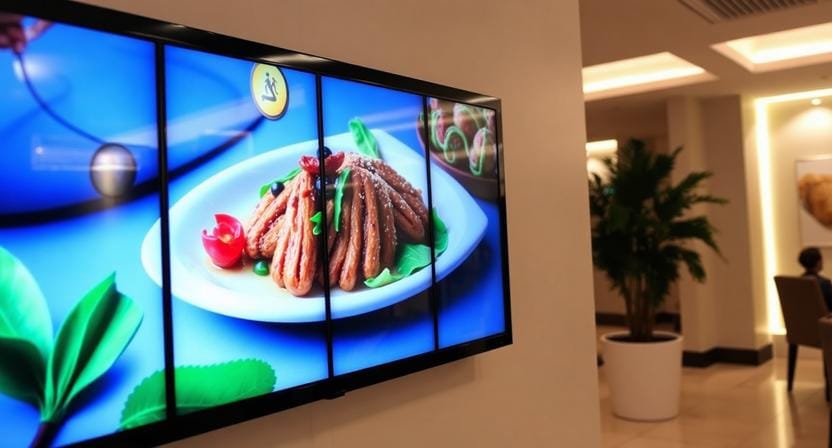
The expectation of the guests has evolved. Guests want quick answers: where to go, what’s on today, and what services does it offer at the moment. Information in digital signage in the hospitality industry fulfills that expectation by providing information that updates instantly—without staff having to repeat the same instructions all day.
Signage operationally reduces interruptions at the front desk. Rather than responding to questions such as “Where is the elevator?” What time is breakfast? etc. with repetitive responses, screens respond to high-frequency questions in a consistent, readable format. That liberates personnel towards meaningful interactions rather than low-level navigation and time-related questions.
The third reason why this cannot be compromised is revenue. Spa packages, happy hour, room upgrades, and local partner experiences may be advertised through digital messages at the most opportune moments when guests are most receptive to the message, waiting to check in, as they pass elevators, or as they enter the restaurant. That is why in the hotel industry, digital signage is becoming more of a revenue channel, rather than a cosmetic upgrade.
The Core Benefits of Hotel Digital Signage (Deep Dive)
Seamless Communication
Hotels operate on dynamic information: events, weather changes, maintenance alerts, local alerts, and daily schedules. Digital signs ensure messages are consistent and correct throughout the lobbies, elevator banks, and corridors so that guests do not have to speculate or interrupt staff for updates.
Increased Non-Room Revenue
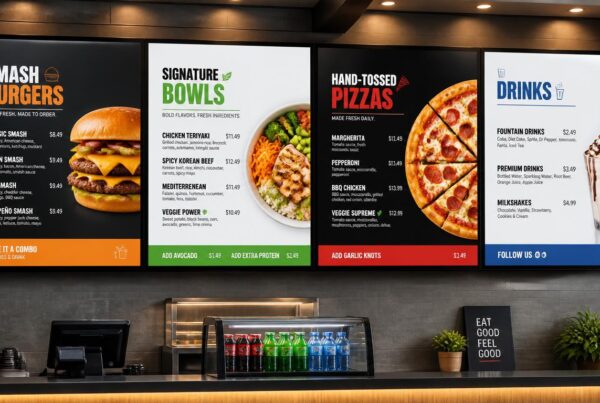
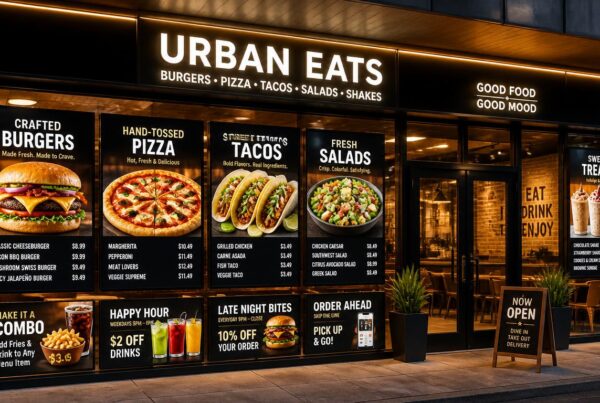
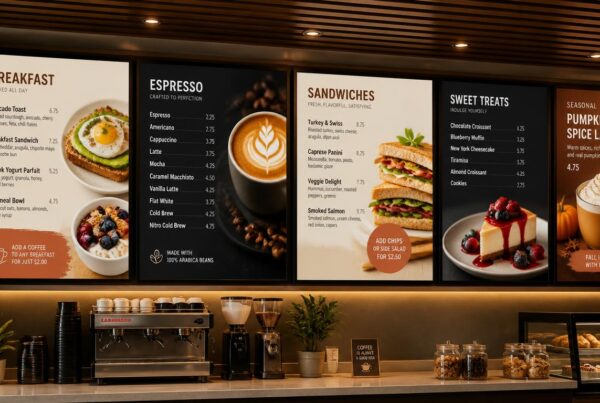
Easy wins are restaurant and bar promotions. Digital menu boards, rotating offers, and limited-time offers can boost F&B performance merely by enhancing visibility and timeliness. Non-room revenue rises when guests see the right offer at the right time—without adding strain on staff.
Wayfinding & Safety
Wayfinding minimizes frustration, particularly in large buildings that have various elevators, conference floors, and facilities. Digital signage also promotes safety by providing emergency alerts, evacuation procedures, and timely updates in case of unforeseen incidents. This is a service feature—not just compliance.
Brand Aesthetics
Hotels sell experience. Motion graphics, high-quality visuals, and uniform on-screen style are used to provide brand identity and a modern feel to the physical space. This is among the often-overlooked hotel digital signage advantages: it enhances the perceived quality without having to refurbish walls.
5 Key Advantages of Digital Signage for Hotels
- Faster guest decisions (less confusion, more clarity)
- Reduced repetitive staff questions
- Higher upsell performance (spa, F&B, experiences)
- Real-time, property-wide updates
- Stronger brand consistency across spaces
“Great signage doesn’t just inform—it quietly improves the entire flow of the property.”
Mastering Hospitality Signage Design: Best Practices
The design of hospitality signage is concerned with directing the guests with a minimum of effort. The first principle is visual hierarchy: guests should see the essentials first: time, weather, event times, and directions. This is what makes scan time lower and prevents guests from feeling overwhelmed.
Color psychology matters. Warmer tones would be appropriate in lobbies and welcome screens as they imply a sense of comfort, whereas more vibrant tones could be more suitable in gyms or activity areas. Readability should match viewing distance: fonts and words should be bigger in the hallway, and a little more information should be used in the lobby (without making the layout cluttered).
The difference between adding screens and improving the experience is brand consistency. The fonts, spacing, motion style, and imagery must be in line with the hotel decoration and tone. The rotation of content must be following the 5-second rule: if guests can’t understand the message in five seconds, the screen is overloaded.
In assessing hospitality signage companies, the hotel must look for providers that adhere to good design and offer templates that are designed for real-world viewing. Nento adheres to these design principles and allows scalable template-based publishing to get the same results across properties.
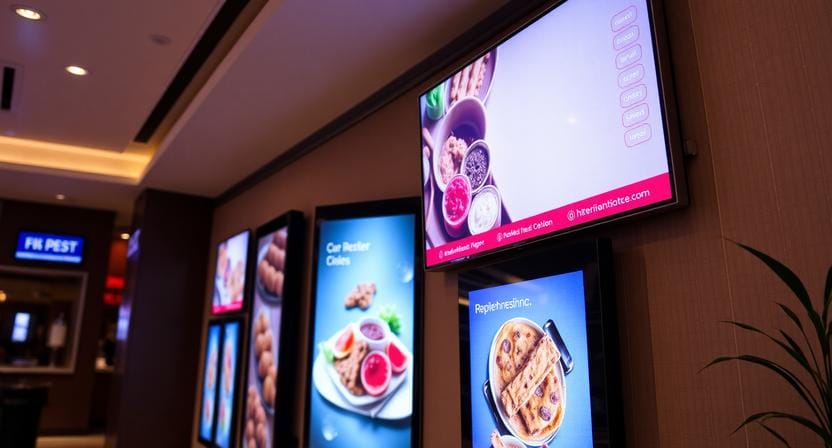
Top Use Cases for Digital Signage for Hospitality
Hotel Lobby
The tone is established with welcome messages. Screens may even be used with personalized greetings or stay-specific information with integration into property systems. This makes the lobby more of a communication channel and not a passive space.
Meeting & Event Spaces
Daily conference schedules outside each room help to avoid confusion and enhance professionalism. Digital schedules can be updated, rather than being printed on paper inserts, even when the sessions change or the speakers change.
Spa & Fitness
Waiting times, schedules of classes, and relaxing screen loops can be displayed on screens, which can be aligned with the space. This enhances the movement of guests and the luxurious ambiance of the wellness experience.
Restaurant & Bar
Digital menu boards, happy hour countdowns, and time-based promotions enhance greater F&B interactions. Visitors do not have to go out of their way to find out what offers they have; they just notice them as they pass through the premises.
Elevator Lobbies
Elevator zones are high-focus areas. The weather, news, and property highlights are good here since guests will automatically stop and seek information while they wait.
“The best hospitality digital signage solutions don’t add noise—they remove friction.”
How to Choose Hospitality Digital Signage Solutions
A key decision is cloud-based vs. on-premise. In the case of most hotels, cloud management is the winner since updates can happen remotely and instantly across multiple screens without onsite technical effort. This is imperative to multi-property operators and hectic managers.
Hardware is important, as hotels are frequently operating screens 24/7. Select commercial-grade displays that are intended to be used over a long period of time and have constant brightness. It should have software with template drag-and-drop, scheduling, and real-time updates to enable the teams to publish without excess design overhead.
It is at the point of integration that value multiplies. The most suitable solutions are interconnected with PMS platforms, calendar systems (Google/Outlook), and social feeds to keep content up-to-date automatically. This is where hospitality digital signage can scale without being staff-dependent.
Don’t guess – get it right. Nento offers all-in-one solutions with free hardware consultation. Book a demo today.
Case Study Snapshot: Before & After with Nento
A 200-room boutique hotel struggled with old event flyers and lack of consistency in information about the guests on the different floors. There were frequent instances of basic questions being asked at the front desk by guests and the meeting-room signage not being updated with schedule changes.
They implemented the cloud-based hospitality signage system of Nento and applied professional templates to standardize communication. The outcomes could be quantified: the number of F&B orders grew by 25%, and the number of calls to the front desk asking when breakfast is served dropped by 100 per week—all because the most important data became visible and accurate throughout the property.
See real results like this. Get in touch with Nento’s team to learn more.
Frequently Asked Questions (FAQs)
What is the average cost of hotel digital signage?
Varies by screen number and software. Nento offers scalable monthly plans.
Can digital signage integrate with my existing hotel PMS?
Yes. Some solutions (including Nento) can integrate with common PMS platforms (e.g., Oracle and Cloudbeds).
How often do I need to update content?
As often as you like. With cloud software, you can update in real-time from any device.
Do I need a designer for hospitality signage design?
Not with Nento – we provide hundreds of pre-made, customizable templates.
Is digital signage only for luxury hotels?
A: No. Budget and mid-scale hotels benefit greatly from wayfinding and upselling.
What happens if the internet goes down?
Quality systems (like Nento) cache content locally and continue playing offline.
Future Trends in Hospitality Digital Signage
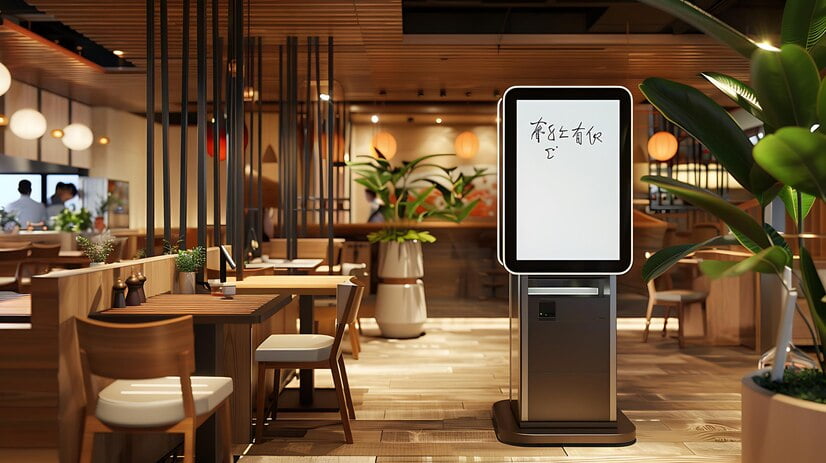
Personalization, which is driven by AI, is increasingly practical, enabling screens to personalize messages in accordance with the context of the guest but remaining privacy-aware. Interactive touchscreens are becoming more common in self-service check-in, concierge maps, and smart wayfinding.
Another direction that is evident is sustainability. Limiting printed flyers and collateral will meet the hotel sustainability objectives as well as reduce the waste in the operations. The hospitality signage providers that are innovative in 2026 will be considering smarter automation, enhanced integration, and faster publishing with less staff effort.
Conclusion
Great hospitality signage design isn’t just decoration—it’s a revenue and efficiency tool. It reduces repetitive questions, improves guest flow, and drives non-room revenue by promoting services at the right moments.
The best time to upgrade your guest communication is now, while expectations are rising and competition is sharpening.
Ready to transform your hotel’s digital experience? Contact Nento today for a free demo, a custom quote, and a no-obligation design mockup for your property.