Introduction
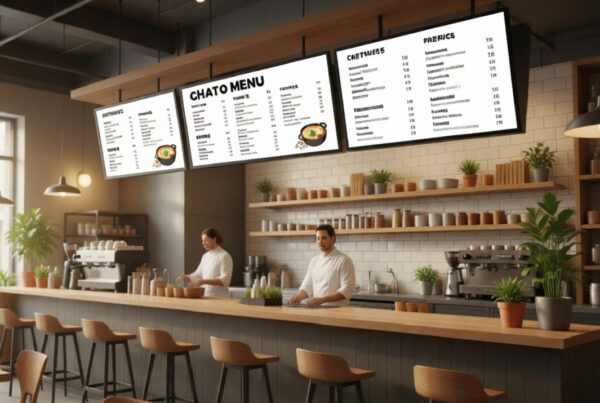
Restaurant menus have evolved. To begin with, there were chalkboards. Next came printed posters, laminated menus, backlit boards, and currently, dynamic digital displays. LED menu boards for restaurants are now one of the smartest restaurant upgrades for cafes, fast food restaurants, drive-thrus, bars, bakeries, and contemporary restaurants.
Conventional menus are not fully replaced yet, but they have obvious limitations. They are difficult to read when it is dark, they are expensive to reprint when prices fluctuate, and they are too fixed to attract attention in a crowded restaurant setting. Without additional effort, the menu will not respond fast enough to a sold-out item or to a seasonal offer.
LED menu boards are the solution to these issues, as they provide restaurants with brighter displays, quicker updates, and more control over what customers view. They are not only wall screens. They are highly impactful sales and communication tools that may enhance the appearance of your space, facilitate upselling, and simplify daily operations.
Digitizing the signage is no longer an option only for big chains. It is emerging as a feasible trend among restaurants that desire to appear contemporary, be adaptable, and compete aesthetically.
Ready to modernize your customer experience? Contact Nento today to explore our modern digital signage solutions.
The Visual Advantage: Illumination and Aesthetics
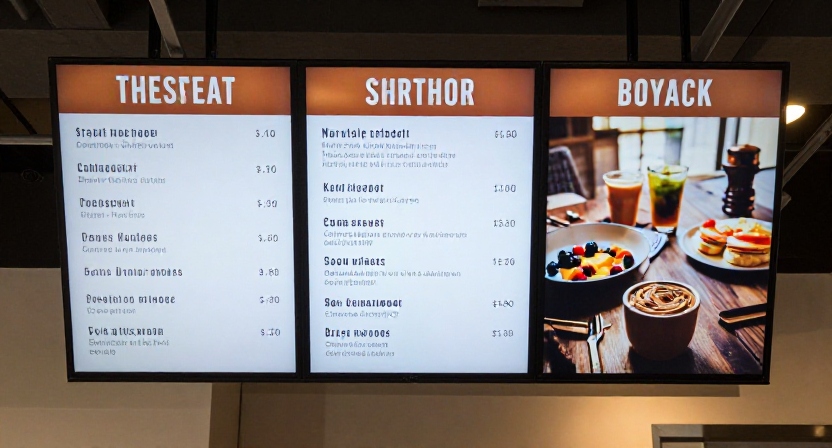
Before tasting food, customers see it. Before a customer makes an order, he or she looks at the menu and notices the pictures, reads the offer, and makes an impression. This is where illuminated screens can make a big difference.
The Psychology of Light
Clear, bright visuals are, of course, eye-catching. LED menu boards in restaurants enhance the visibility of food items, particularly in a crowded setting where customers are surrounded by movement, noise, and competing messages.
Burgers, coffee, desserts, and combo meals can all be made to look more appetizing with a bright menu. This does not imply that the screen should be clogged with pictures. It implies that the appropriate items must be visible, sufficiently contrasted, and properly spaced to direct the attention of customers.
Day-to-Night Versatility
A printed board might appear good in the daytime, but in the evening or in darker rooms, it might not be as readable. An LED light menu board is more efficient in various lighting conditions. This is applicable in restaurants that operate throughout the day and night, low-light bars, cafes where daylight is changing, and food companies in the malls or busy streets.
The screen displays the menu without relying on outside light.
Design Flexibility
Digital LED boards enable restaurants to change colors, layouts, images, and promotional material without having to redesign and print new boards. Depending on the style, a restaurant can employ smooth black backgrounds, high-contrast text, food photography with warm colors, or a vibrant brand color.
Good LED board design: restaurant spaces should correspond to the atmosphere. A clean and minimal layout may be desired by a high-end cafe. A fast-food restaurant might desire vibrant colors and vibrant visuals. A dessert shop can employ soft colors and strong product pictures.
Even signage menu boards can be customized to match the brand’s color palette, logo style, and customer mood.
Operational Efficiency and Cost Savings
The aesthetic improvement is significant, yet the functional value can be even greater. LED menu boards save time, reduce printing costs, and respond quicker to daily changes, enabling restaurants to save time.
Instant Updates
Restaurants are subject to change. Prices fluctuate, ingredients run out, seasonal offers change, and limited-time offers are launched and withdrawn. Using printed menus, each change has to be done manually.
With digital LED boards, it is possible to update immediately. A manager is able to adjust a price, remove a sold-out item, or add a new special within a few minutes on a single screen or a series of screens.
This can be very useful to restaurants that have more than one outlet. Content can be managed through a central system as opposed to updating each branch manually.
Eliminating Reprint Costs
Printing menus is not a one-time expense. Each price adjustment, new design, new product, or seasonal deal can incur yet another printing cost.
An LED menu display board can be used to minimize such recurring expenses. After the screen system is installed, the content can be modified digitally anytime it is needed. This can save on printing, design revisions, and man-hours in the long run.
POS and Inventory Integration
Modern menu systems are able to integrate with POS and inventory systems. This means that out-of-stock products may be automatically removed, or they may be marked as unavailable. It also aids in maintaining consistency between prices and menu information on the register and the screen.
This eliminates embarrassing situations where a customer orders a product that is out of stock.
Streamline your daily operations with dynamic LED menu boards. Schedule a demo with Nento to see how easy content management can be.
Types of LED Menu Solutions
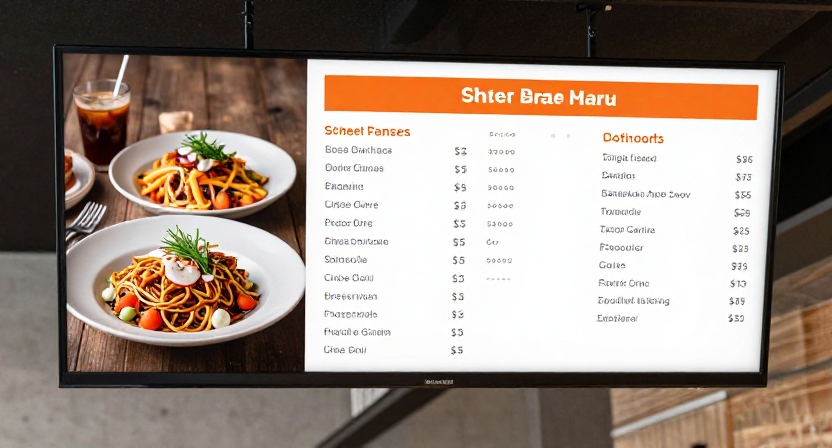
Not all restaurants require the same screen. The most appropriate arrangement is based on the location where the menu will be located, the distance between the menu and the customers, and whether the display will be indoors or outdoors.
Indoor LED Menu Boards
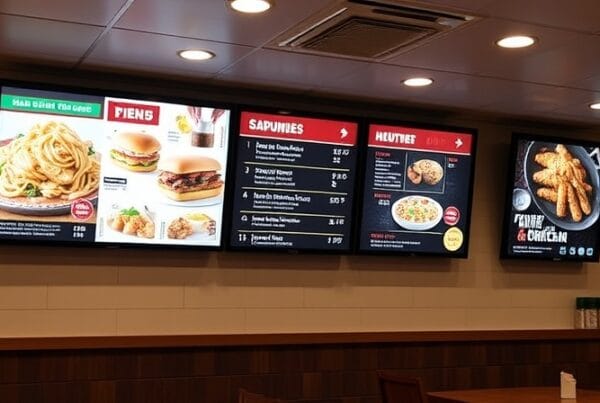
The indoor displays are usually placed above counters, on walls, at the back of service lines or at ordering stations. Cafes, bakeries, quick-service restaurants, food courts, pizza stores, and fast-casual dining areas are good places to install these screens.
They are able to display menu categories, prices, combos, food images, offers, and order instructions in a clear and readable format.
Custom Outdoor Menu Board
An outdoor menu board is a custom-designed menu board that can withstand harsher conditions. Outdoor screens must be able to withstand the sun, rain, dust, heat, and temperature variations. They should also be brighter to enable customers to read them in the daytime.
They are particularly applicable to drive-thrus, patios, outdoor cafes, roadside restaurants, and takeaway counters.
LED TV Menu Board
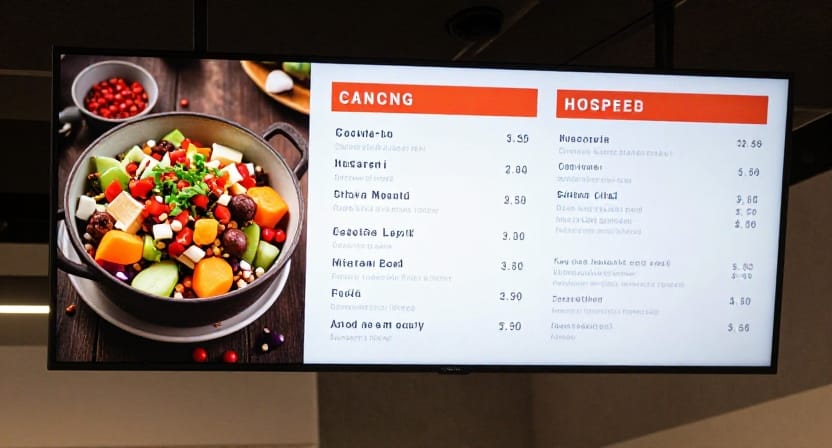
Commercial television-style screens are commonly used on an LED TV menu board to display high-resolution menus, food videos, and promotional material. These are popular because they are familiar-looking, clean, and can be installed in most restaurant designs.
The trick is to select commercial-grade displays as opposed to regular home TVs, particularly when the display will be on for long hours daily.
LED Menu Screen
An LED menu screen may also use high-density LED displays that are intended to be viewed over shorter distances. These may perform well in situations where restaurants desire a high level of brightness, saturated colors, and a high digital appearance.
The correct choice will be based on the size of the screen, viewing distance, and budget.
The Video Menu
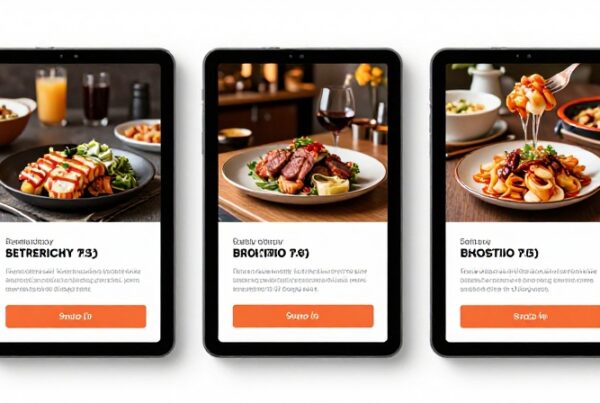
A video menu is a visual menu where products are made to look more attractive through motion. For example, a screen may display a bit of steam rising from coffee, cheese stretching out of pizza, or a cold beverage being poured over ice.
Used judiciously, shifting graphics can be used in upselling and highlighting high-margin products. Balance is the key. Movement must be appealing, not distracting to customers when reading the menu.
Design Best Practices for Digital Menus
A digital screen may appear spectacular; however, design is important. An inefficiently designed digital menu will be as disorienting as a messy paper board.
Readability Comes First
The menu should be readable from the customer’s position. The font size, contrast, spacing, and layout are important.
Avoid tiny text. Do not have too many items on a single screen. Prices should not be difficult to see because of the backgrounds. The key options should be easily understood by customers.
Content Hierarchy
Not all items should be given equal space. Strong visual locations should be used to put high-margin, bestsellers, combos, and limited-time offers.
Special attention should be paid to eye-level zones. These golden zones assist in naturally drawing attention without making the menu seem forced.
Motion and Animation
Animation can assist, but excessive movement will be distracting. It can be a basic change, a moving highlight, or a brief product video. Ordering may be more difficult with constantly flashing or rapidly changing slides.
The most effective digital menus have purposeful motion.
Dayparting
Dayparting enables restaurants to automatically change menus based on time of day. Breakfast may be served in the morning, lunch at noon, dinner in the evening, and late-night offers afterward.
This makes the menu up-to-date and reduces the manual updating process.
Keep Branding Consistent
The colors, fonts, pictures, and tone should match the restaurant brand. The screen must be an extension of the space and not an incidental screen that was added afterward.
A consistent design assists the restaurant in appearing more professional and reliable.
Why Quality Matters: Choosing the Right Partner
Restaurants rely on a digital menu system on a daily basis. It should be stable, simple to update, and appropriate for the restaurant environment.
Commercial vs. Consumer Grade
A typical error is to use a normal home television as a menu board. It can work in the short run; however, consumer TVs are not intended for constant restaurant use.
Commercial LED menu boards are designed for longer use, better brightness, durability, and stability. This is important when screens are on from opening to closing daily.
Software and Support
The screen is not the only section of the system. What is displayed on the screen is controlled by the software. Easy-to-use software must allow price updates, scheduling content, image posting, management of multiple locations, and easy maintenance of menus.
Support also matters. When one of the screens fails during a lunch rush, the restaurant cannot afford to wait for assistance.
Why Nento?
Nento is a digital signage provider focused on hospitality. That means its hardware, software, templates, and support are based on restaurant requirements, not on generic display needs.
Nento can assist restaurants in developing a system that is convenient, appealing and manageable through indoor menu boards, outdoor displays and content management tools.
Don’t settle for generic screens. Partner with Nento for custom hardware and software solutions tailored specifically for the hospitality industry.
Frequently Asked Questions
What is the difference between an LED menu board and a standard digital display?
A typical display is not as bright, robust, or commercial as an LED menu board. It is designed to display menu content efficiently, for long hours and it might have higher brightness, increased visibility and restaurant-oriented software support.
Can I update the menu prices myself?
Yes. With a user-friendly content management system, restaurant owners and managers are able to update the prices, specials, images and sold-out items without requiring a designer or IT department.
Are outdoor LED menu boards weatherproof?
Outdoor LED menu boards must be well-protected against the weather. Seek IP-rated screens or enclosures, high brightness and screens with outdoor visibility. This is significant when it comes to drive-thru, patios, and outdoor ordering areas.
How do LED menu boards impact sales?
Sales can be supported through LED menu boards that can help make promotions, combos, add-ons and high-margin items more visible. Prominent visuals and smart arrangement can help customers notice what they might not have observed.
What size screen do I need for my restaurant?
The correct size of the screen is determined by the viewing distance, the mount height, the length of the menu, and the available wall space. One or two screens might be required in a small cafe whereas in a high-volume restaurant, a multi-screen setup might be required. The farther customers are from the screen the bigger the text and display ought to be.
Conclusion
LED restaurant menu boards are not just an aesthetic enhancement. They assist restaurants in improving readability, save money on printing, update menus quicker, promote high-value products and make the customer experience much more modern.
The restaurant business is competitive and it takes more than just good food to be different. Clarity, speed, atmosphere and presentation are also noticed by customers. All these can be supported by a bright and well-designed LED menu board.
The key is to select the appropriate hardware, software, design and support. A menu can be shown on a generic screen, but an effective restaurant signage system can help sell it.
Take the first step toward a brighter, more effective restaurant. Visit Nento to browse our catalog of LED menu boards for restaurants and get a custom quote today.