Introduction
The era of printed menus is gradually disappearing. The first sight of what you can eat in a restaurant nowadays can be on a screen. Within a few seconds, customers will scan the menu, look up, see the pictures, and choose what to order. This is the reason why a custom menu board has become a lot more than a display. It has become a part of the customer experience.
It is still possible to use printed menus, but there are real restrictions. They are costly to maintain, easy to become outdated, and not very adaptable to price fluctuations or stock-outs. They are also not always effective in busy cafes, fast food restaurants, food courts, or takeaway counters where the customers are making swift decisions.
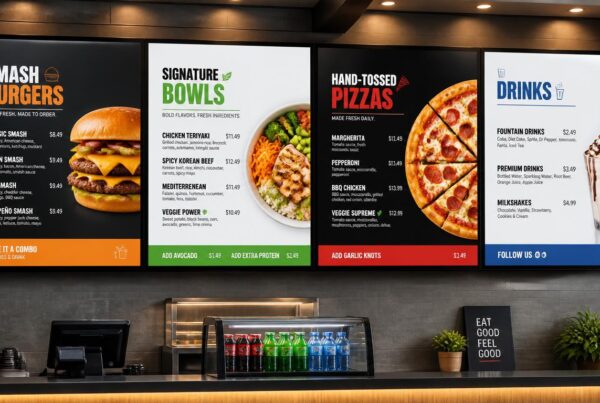
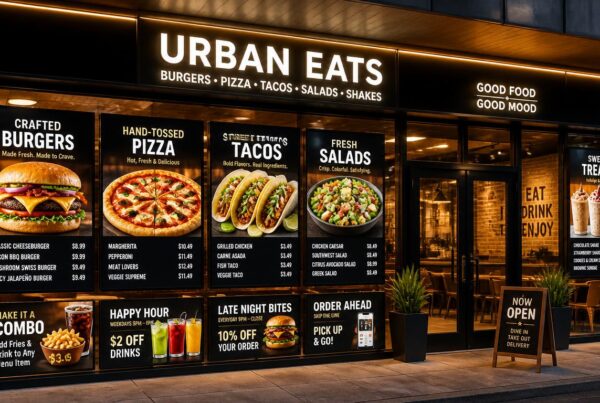
A digital custom menu board is a solution to this issue, as it provides restaurants with a more flexible and more visual means of presenting food. It can display prices, pictures, specials, limited-time deals, and daily specials without having to reprint anything. What is more important is that it provides the owners of restaurants with control over the content that is viewed and when it appears.
This guide outlines how customizable menu boards can enhance restaurants of all sizes, from a small board cafe menu setup to a large-volume restaurant menu board system in several locations.
Ready to reduce printing work? Discover how Nento can digitize your dining experience today.
What Is a Custom Menu Board?
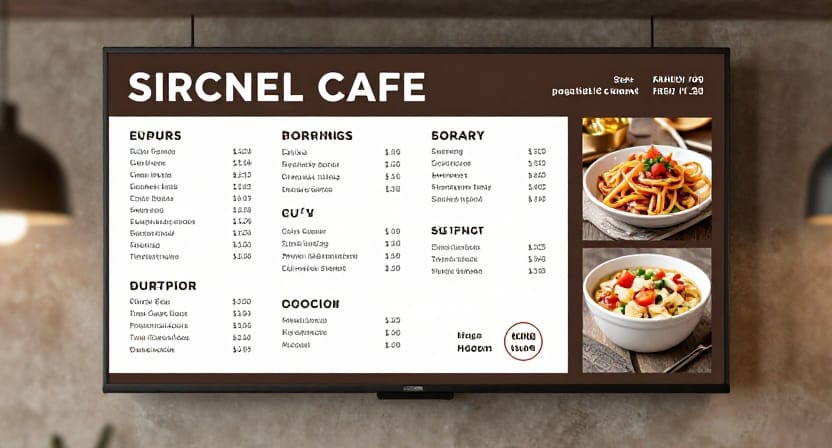
A custom menu board, or personalized menu board, is an electronic display system that enables any restaurant, cafe, bakery, or food business to display its menu on a screen rather than on a poster or a chalkboard. In digital terms, it typically involves hardware and software.
The hardware is the screen itself. This can be an LCD screen, LED screen, commercial television, tablet, or digital menu board. The software is what enables the business to build, update, schedule, and post menu content.
From Chalkboards to Digital Displays
Restaurant menus have passed through a number of stages. Cafes were using chalkboards since they were personal and simple to alter. Then printed menu boards were used more often, as they were more professional-looking. Digital menu boards are now becoming a smarter choice, as they are flexible, visual, and controllable.
A digital board does not remain fixed like a regular poster. A restaurant will be able to update the price, replace a picture, advertise a new product, or remove a sold-out product quickly.
The Core Benefit: Flexibility
Flexibility is the greatest advantage of a custom menu board. Restaurants are able to design various menus to include breakfast, lunch, dinner, happy hour, weekends, or seasonal campaigns.
For example, a coffee shop can display coffee and pastries in the morning, sandwiches during lunch, and desserts in the evening. A hamburger restaurant can emphasize combos during peak times and after-dinner snacks.
This is referred to as dayparting, and it is among the key factors that are driving restaurants to digital menus.
The Technology Behind It
A custom menu board is typically operated by cloud-based digital signage software. This enables managers to edit menu information using a laptop, tablet, or phone. Some systems are also linked to POS systems, inventory management tools, and scheduling.
The software manages the message, and the content is shown on the screen.
Simple thought: A menu board should not just show what you sell. It should help customers decide what to buy.
Why Switch to Customizable Menu Boards?
Customizable menu boards are replacing the traditional printed menu boards in restaurants since they address issues that printed menu boards cannot handle effectively. They save time, enhance design, facilitate upselling, and streamline the customer experience.
Instant Menu Updates
The food business is dynamic. Prices shift. Items sell out. New items are introduced. There are seasonal offers and limited-time offers. Using printed menus, each modification has to be redesigned, reprinted, and replaced.
Using digital custom menu boards, restaurants can update one or several screens in a short amount of time. This comes in particularly handy when the restaurant has multiple branches since updates can be pushed from a single central dashboard.
Better Visual Appeal
Design matters. High-resolution photos, motion graphics, brand colors, and clean layouts can be utilized to make food appealing through a digital menu.
Effective cafe menu board design can help a small cafe to appear more professional. It can also be used to make customers aware of seasonal beverages, baked goods, snacks, or loyalty programs.
It is not aimed at filling up the screen. The idea is to have a clear and appetizing menu.
Smarter Upselling
Digital boards can bring out high-margin items in a natural manner. A restaurant would be able to advertise combo meals, premium toppings, beverages, desserts, or limited-time offers without necessarily having to rely on the staff to recommend them.
A visual cue like “Make it a combo” or “Add a drink” can be used to encourage a purchase without leaving the customer feeling like they are being pressured.
Improved Customer Experience
Customers want clarity. They would like to see what is on offer, what it costs, and what looks nice. An easy-to-understand digital menu will make it less confusing and allow customers to place orders quicker.
This can help reduce wait time and repetitive questions and improve order accuracy. In the case of busy restaurants, the slightest gains in ordering speed can be significant.
Design Inspiration: From Coffee Shops to Kitchens
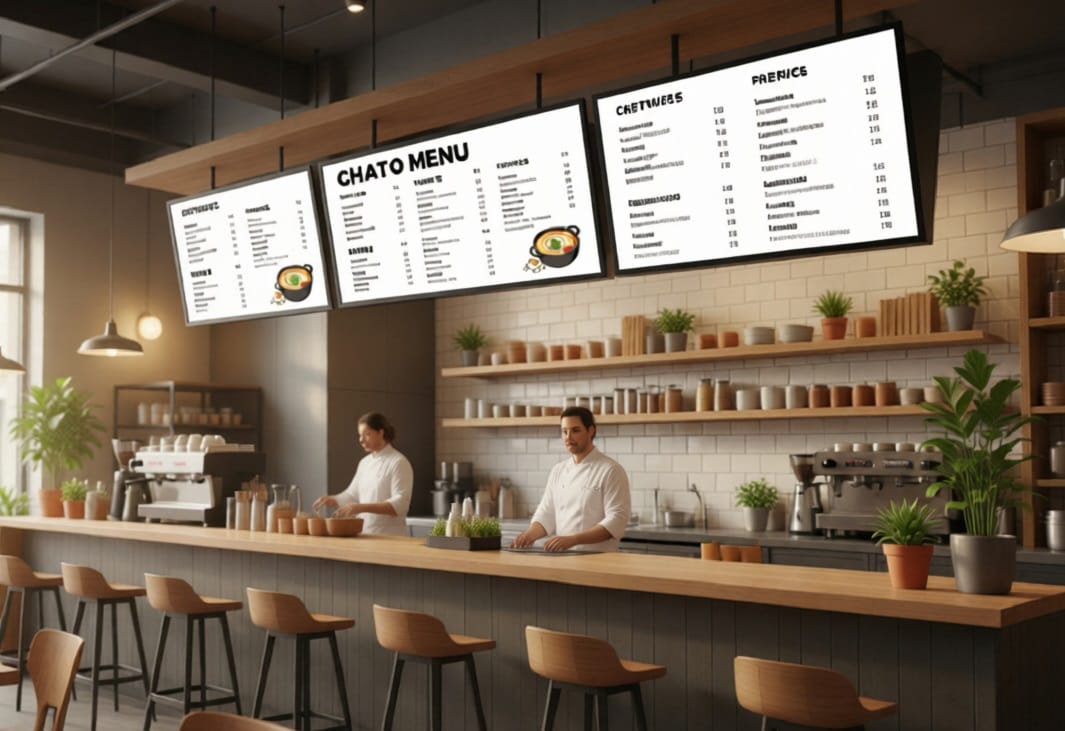
Digital menu boards can be created in various styles, based on the restaurant type. A coffee shop should have a different appearance as compared to a burger restaurant. A kitchen display requires different information compared to a front-of-house menu.
Coffee Shop Menu Board Ideas
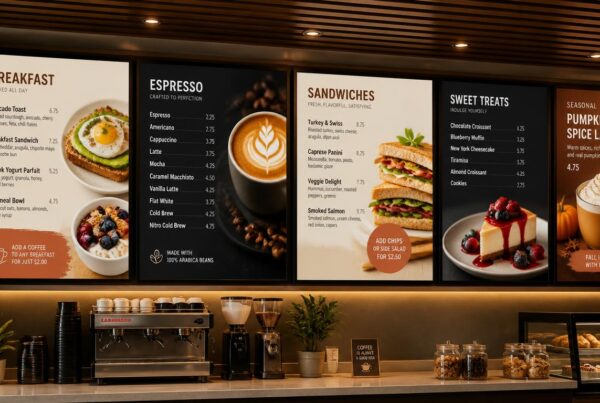
Good coffee shop menu board ideas usually revolve around coziness, simplicity, and ambience. Coffee shops typically require menus that are welcoming and not too corporate.
Warm colors and soft textures, clean typography, and close-up shots of coffee, pastries, or seasonal drinks may be used by a digital café board. It can also put emphasis on the loyalty programs, limited-time flavors, or the drink of the day.
As an example, a small cafe could alternate between espresso drinks, breakfast, iced beverages, and a loyalty message. This makes the screen usable without cluttering it.
Kitchen Menu Boards
Kitchen menu boards may be used for another purpose. Back-of-house screens can display order status, prep instructions, timing, staff reminders, or kitchen display system information.
Kitchen-facing screens can enhance communication between the front-of-house employees and kitchen employees in fast-casual restaurants. With clearer orders, errors can be minimized and service can be quicker.
Beautiful photography is not required on kitchen screens, but they have to be practical, readable, and reliable.
Food Menu Board Strategies
Design psychology applies to a strong food menu board. The menu must be easily understood by customers, and the most important items should be noticed first.
The rule of the Golden Triangle comes in handy. Naturally, customers will tend to focus on the middle and upper sections of the screen. The areas where attention goes first should feature bestsellers, high-margin products, and featured offers.
Color also matters. Warm colors can be used to make food look more appetizing, and neutral layouts can be utilized with high-end brands. The correct choice will be based on the identity of the restaurant.
Menu Boards for Different Restaurant Types
Restaurant menu boards must be suitable for the business model. Fast readability is required in a fast-service restaurant. A cafe should have a comfortable visual design. A pizza restaurant might require good product pictures and combos. A juice bar can specialize in freshness, colors, and health-based categories.
The most decorative design may not necessarily be the best design. It is the one that customers can grasp.
Struggling with cafe menu board design? Nento offers professionally designed templates to make your food look appealing. Get a demo now.
Key Features of High-Performing Custom Menu Boards
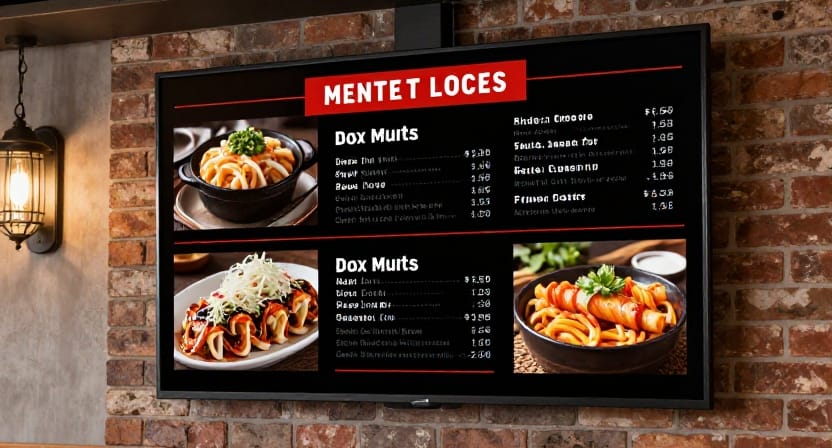
An efficient digital menu board is not just a screen with a menu picture. It must have features that facilitate day-to-day operations in the restaurant.
Dayparting
Dayparting enables menus to be automatically updated according to time. Breakfast may be in the morning, lunch at noon, dinner in the evening, and late-night specials.
This is beneficial since restaurants are not required to assign employees to manually update the display on a regular basis, such as every few hours. The system follows the schedule.
POS Integration
POS integration connects the menu board to the sales system of the restaurant. In case of an item selling out, it can be removed or marked out of stock. In case there is a change in price, the screen will be able to update.
This will minimize confusion and ensure that the menu is correct during service.
Scheduling
Scheduling enables restaurants to prepare promotions in advance. Happy hour deals, weekend deals, holiday menus, or seasonal campaigns may be prepared ahead of time and displayed at the appropriate time.
This will streamline the marketing process and minimize last-minute work.
Remote Management
The best system must be capable of remote updates. Restaurant owners and managers should have the ability to update content using a phone, laptop, or tablet.
This is vital to multi-location businesses but also applicable to small restaurants where the owner may not be present at all times.
Brand Consistency
A consistent custom menu board plan ought to make all digital touchpoints appear linked. All colors, fonts, and the tone of the menu board, promotional screen, pickup display, and ordering kiosk should be similar.
This makes the restaurant look more professional and credible.
The Nento Advantage
It is important to select the appropriate provider. The digital menu board is not a one-time purchase. It has to be integrated with the day-to-day operations of the restaurant, and therefore, the system should be user-friendly, stable and scalable.
Built for Restaurant Needs
Nento offers digital signage services for restaurants, cafes, food courts and hospitality companies. The platform assists businesses in developing, maintaining and updating digital menus without complex technical expertise.
Easy-to-Use CMS
It must have an easy-to-manage content management system. The restaurant employees must be capable of modifying a price, updating a product or publishing a new offer without calling a designer or an IT specialist.
Nento’s CMS allows one to control the content of the menu from a single location.
Scalable for Any Business Size
A restaurant can use one screen and then increase the number of screens. One board cafe menu setup may be all that a cafe requires, and dozens of restaurant menu boards may be required for a chain.
The solutions provided by Nento can be scaled to the business.
Reliable Hardware and Support
Restaurant screens tend to run for long hours. They must be reliable. A screen that malfunctions during the lunch rush may cause confusion and slowness.
Nento offers businesses trusted displays and customer service, which helps to ensure that digital menus can run smoothly.
Frequently Asked Questions
What is a custom menu board in digital terms?
A digital custom menu board is an electronic display screen that is linked with software that enables the restaurant owners to create, edit, schedule and dynamically display menus. It supports real-time updates and multimedia capabilities, unlike traditional printed boards, and also supports remote control.
Can I update my menu boards for restaurants remotely?
Yes. Using Nento’s cloud-based software, you can edit your own custom menu board using your laptop, tablet or even smartphone. You are able to do it at the back office, at home or even while traveling.
Are digital menu boards expensive to maintain?
The initial hardware cost is typically offset by the savings in time and money from printing, design rework and labor spent changing hardcopy signage by using digital customizable menu boards.
Do digital menu boards work for small coffee shops?
Yes. Small coffee shops can have a lot of success with digital menu boards. The main menu, seasonal drinks, loyalty offers, and promotions can be displayed on one screen. Nento has scalable solutions for both small businesses and larger restaurant groups.
How do I choose the right design for my food menu board?
The optimal design is one with high-contrast text, clear categories, good food photography and spacing. Customers should have an easy time reading it. Nento offers professional templates to help restaurants make professional digital menus without the need to employ a graphic designer.
Conclusion
A custom menu board allows restaurants greater flexibility, improved visuals and enhanced control over daily menu communication. Rather than using printed boards to change prices, promote specials, remove sold-out items and direct customer attention, restaurants can use digital screens to update prices, promote specials, remove sold-out items and direct customer attention.
Customizable menu boards are applicable to cafes, fast food restaurants, bakeries, food courts, and multi-location brands. They enhance the appearance of menus, but more importantly, they enhance the functionality of menus.
Technology is becoming an important part of the success of restaurants in the present day. A digital menu board assists restaurants to remain up-to-date, sell more effectively and provide a cleaner customer experience.
Don’t let your menu get stale. Contact Nento today to schedule your consultation and upgrade to a digital custom menu board.