Introduction
A customer enters a shop while it is raining. Instead of the same unchanging poster that they saw the previous week, they are welcomed by a bright promotion of hot coffee, warm snacks and a special discount offered only on rainy days. A few hours later, when the weather clears, the screen changes to a quicker, more impulse-driven offer.
That is the power of smart digital signage.
Traditional signs are becoming invisible. Basic screen loops, posters and printed banners cannot respond to customer behavior in real-time, weather, inventory and time of day. They might appear professional initially, but as soon as the message becomes outdated or repetitive, customers stop paying attention.
Smart digital signage changes that. It makes visual communication a responsive system, that can adapt, automate, and improve customer engagement. The goal is no longer just to display information. It is about delivering the right message at the right time.
Businesses need intelligent digital signage systems to remain competitive with powerful displays, integrated software, and automated content streams. The display may be the visible part, but the smart digital signage software is the brains of the system.
What Exactly is Smart Digital Signage?
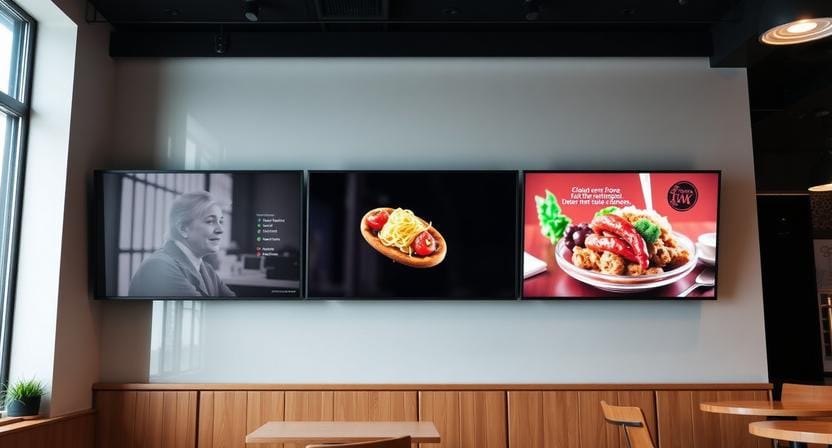
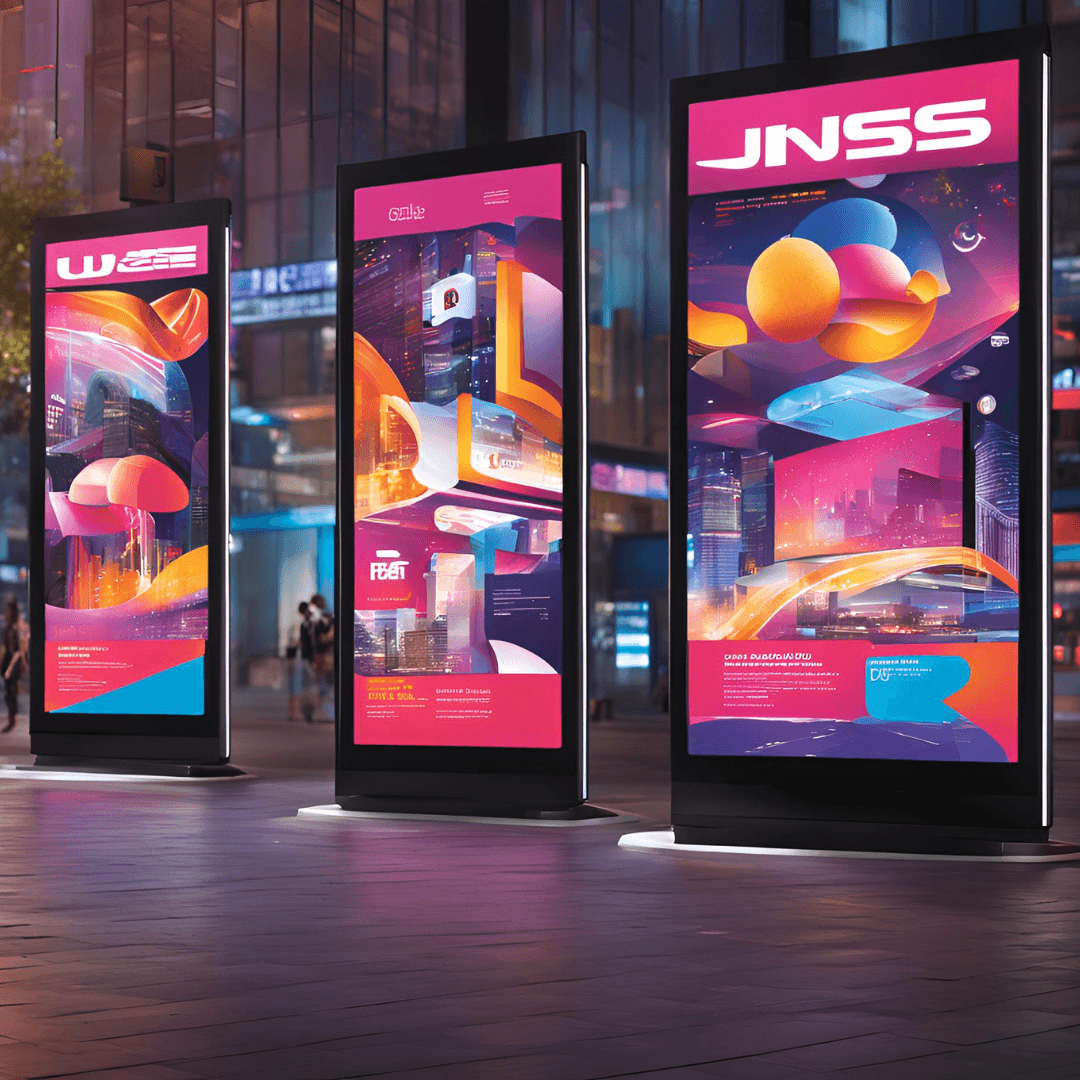
Smart digital signage is more than a TV mounted on a wall. A normal TV can display videos or slides, but an intelligent digital signage system can control, schedule, update and personalize content using data.
The difference is control. A typical display shows what is uploaded manually. An intelligent system can react to the changing conditions and provide businesses with a more efficient communication.
The Core Components
The hardware includes the physical display, media player, mounts, and screen environment. An effective smart digital signage system is typically built around brightness, long lifespan, extended operating hours, and strong visibility, extended working hours, and good visibility in crowded areas.
The software controls what is displayed on the screen. This is where the content scheduling, automation, templates, analytics, and user permissions occur. Even the best display becomes a passive screen without good software.
Connectivity enables remote management via cloud platforms, IoT integrations, and live data feeds. This implies that a business will be able to edit content on one screen or hundreds without visiting each location.
The Smart Difference
Smart signage is proactive, not reactive. The system is able to change based on time, location, weather, inventory, or audience behavior, as opposed to waiting until somebody manually updates a promotion.
It also makes communication more interactive. Viewers can be turned into participants with touchscreens, QR codes, mobile integration, and live data overlay. This is what makes the difference between simple digital signage systems and truly smart systems.
“Smart signage does not just show content. It understands when content should change.”
The ROI of Upgrading to Smart Digital Signage Solutions
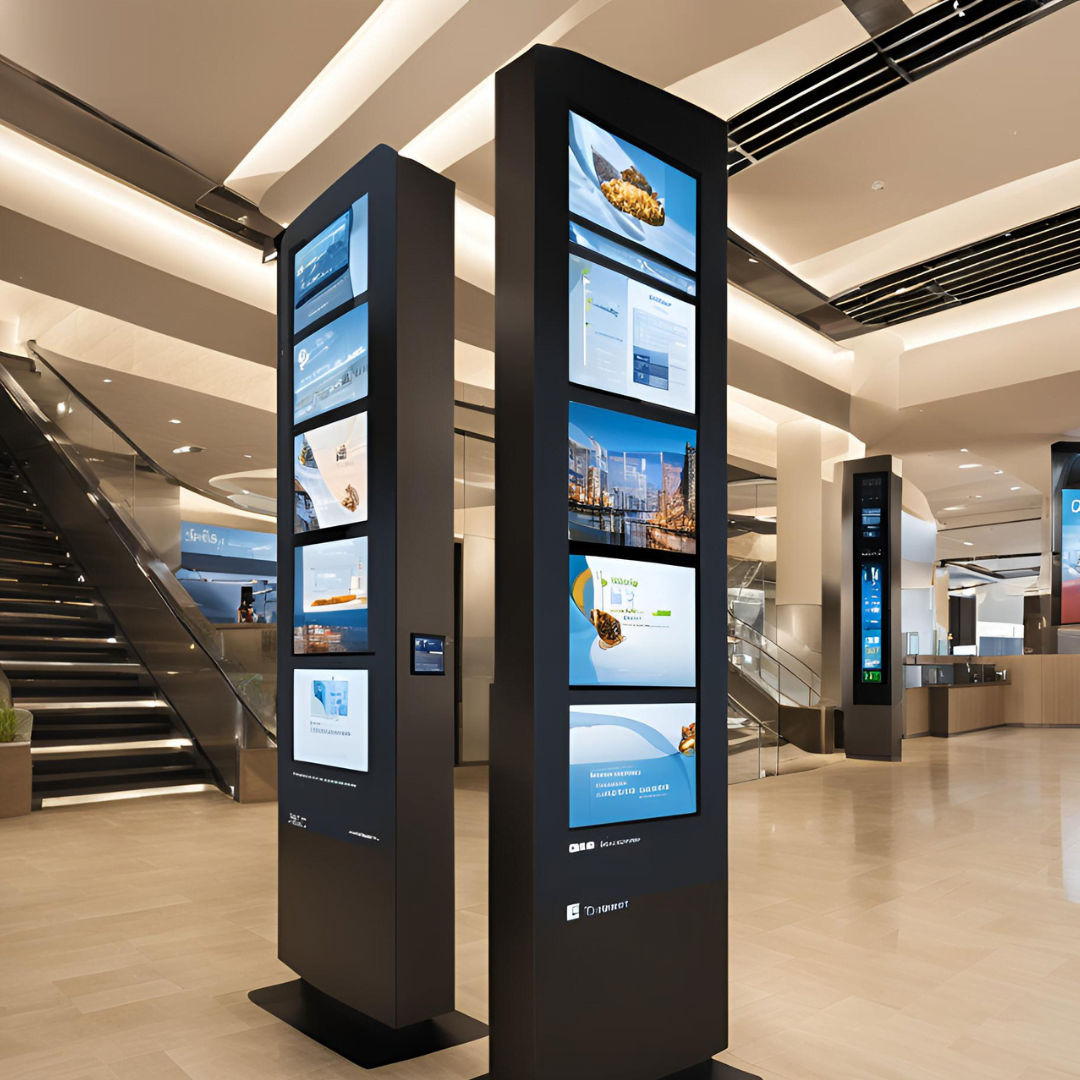
Smart signage is not just a visual upgrade. It has an impact on customer experience, operational efficiency, and revenue.
Enhanced Customer Experience
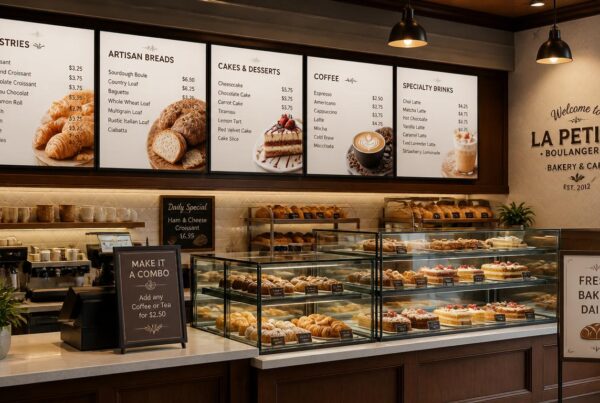
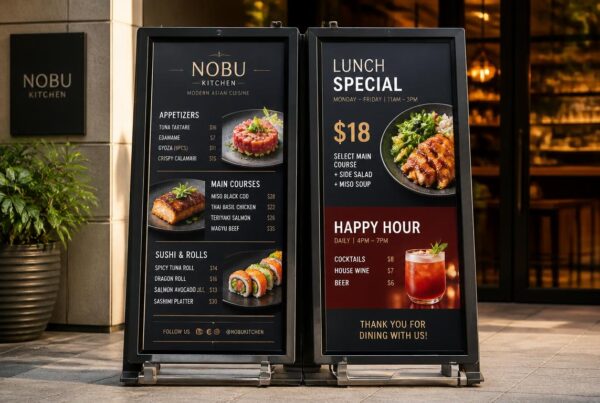
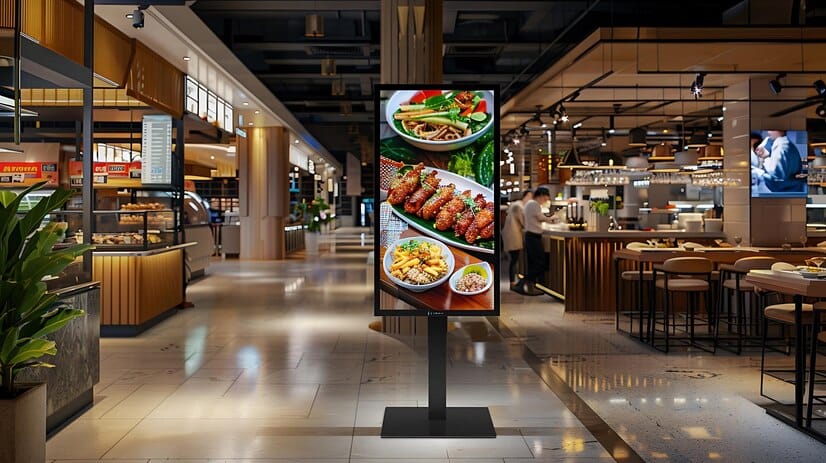
Smart displays can reduce perceived wait time by providing valuable or entertaining information to the customers while they wait. This may be menu highlights that are changed in restaurants. In clinics, it may show health tips and queue updates. In the retail sector, it might entail customized promotions based on the time of day.
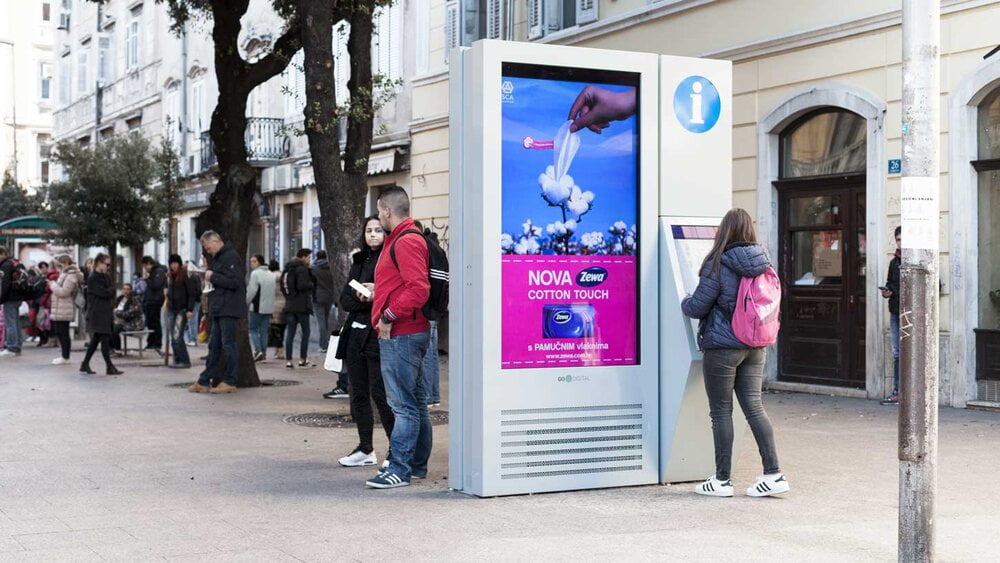
Another significant advantage is wayfinding. Smart signage can be used in malls, hospitals, hotels, and large offices to guide visitors, show directories, and to minimize confusion. An informed visitor is more likely to have a better experience.
Operational Efficiency
One of the strongest benefits is content automation for digital signage. Rather than manually changing slides, printing posters or updating each display individually, a business can have content automatically updated on a schedule, based on triggers or data feeds.
Centralized control is particularly useful for multi-location businesses. A head office can update promotions across all branches and still give the local teams the opportunity to localize some of the messages. This saves time, reduces errors and maintains brand consistency.
Increased Sales
Intelligent signage can influence purchases at the right time. Rapid action can be stimulated by impulse-buy prompts, dynamic pricing adjustments, time-sensitive deals, and context-specific messages.
As an illustration, a retail shop can promote umbrellas during rainy weather. During hot seasons, a cafe can highlight iced drinks. During dinner times, a restaurant can feature high-margin add-ons. Such small changes can contribute to measurable sales results in the long run.
The Core Technology: Choosing the Right Software
The screen matters, but the software matters more. Even a high-quality display is hard to manage with poor software. Powerful software turns the display into a smart communication tool.
Why Smart Digital Signage Software Matters
Smart digital signage software is used to schedule content, automate updates, manage integrations, control access permissions, track analytics, and update screens remotely. It is the component that makes signage flexible and scalable.
Content will become stale in case your team is not able to update the screen easily. The system will be ineffective in case it is not able to connect to live data. Without analytics, you will not know what is working.
Key Features to Look For
Content automation: The platform must be able to schedule, use playlists, and automatically change content by time, date, location or trigger.
Data integration: The system should integrate with social media feeds, RSS feeds, CRM tools, calendars, inventory systems, and weather data among other business platforms.
Remote management: A strong smart digital signage system should be remotely manageable. Whether you control a single screen or hundreds of them, but updates should not require physical access to the display.
Analytics: Companies should measure engagement, screen performance, uptime, and content performance. Analytics assists teams to enhance messaging using real data.
Hardware Compatibility
The software connects to a smart digital signage player, which plays content reliably. The best solutions can work with existing hardware where possible, which minimizes the upgrading cost, but still allows smart capabilities.
This is a flexible feature since companies are not compelled to change all the displays in order to update their communication.
Ready to stop managing static content and start automating your communication? Discover how Nento’s smart digital signage software can transform your displays today.
Enterprise vs. SMB: Which Solution Fits Your Business?
Businesses require different levels of signage control. A small cafe will not require the same structure as a national retail chain, but they all require clear communication.
Small to Medium Businesses
SMBs typically require affordable digital signage display solutions that can be deployed quickly and can be easily managed. They usually focus on fast installation, low cost, beautiful templates, and minimal technical difficulty.
In the case of a small business, intelligent signage could begin with a single display with promotions, menus, social proof, or announcements. The key is to select a system that can be expanded in the future without becoming costly or difficult to maintain.
Enterprise Digital Signage
Enterprise digital signage emphasizes scalability, security, permissions, and network control. Large organizations can have screens across multiple locations, departments, or areas. They require centralized dashboards, role-based access, compliance features, and advanced monitoring.
For enterprise teams, it is not all about publishing content. It is about staying consistent while allowing local flexibility.
The Future-Proof Factor
Investment in the latest signage technology helps businesses avoid systems that become outdated quickly. The future-ready platform must be based on automation, integrations, analytics, remote management, and flexible hardware choices.
The most complex system is not the best option. The best option is the one that suits your current needs and gives you room to grow.
Real-World Applications
Smart signage can be applied in any industry since all businesses need clearer, faster, and more relevant communication.
Retail
Smart digital signage can be used in retail window displays, that can change based on the amount of foot traffic, time of day or promotion. During morning hours, a display can highlight new arrivals in the morning, promotions in the afternoon, and social proof when traffic is high.
This brings the storefront to life and assists in catching customer attention before they enter.
Healthcare
Smart signage can be used in hospitals and clinics to guide visitors, provide patient information, provide waiting-room updates, and share health reminders. The screens may direct visitors to departments, minimize questions at the front desk, and offer relaxing information when there is a wait.
In the medical field, clarity is important. Smart signage can reduce stress by making information easier to find.
Corporate
Smart signage can be used in corporate offices to support internal communications, meeting room reservations, KPI dashboards, employee recognition, visitor welcome screens, and emergency alerts.
Businesses can post crucial updates in places employees and visitors already pass through as opposed to using email or print notices.
“The best signage strategy meets people where they already are.”
Frequently Asked Questions
What is the difference between digital signage and smart digital signage?
Conventional digital signage often displays static content or a playlist. Smart signage is software-based, sensor-aware, automated, and data-driven to change content in real-time based on broad audience behavior, environment, or business rules.
Do I need special hardware for smart digital signage?
Not always. A more powerful smart digital signage player may be needed to support certain advanced features, although many systems can work with existing TVs or displays when combined with the appropriate software.
Can smart digital signage integrate with my existing business software?
Yes. Strong smart digital signage software has API connections with CRM applications, inventory applications, social media feeds, calendars and other business applications. This enables content to be updated automatically using live data.
How do I manage content across multiple locations?
With an intelligent digital signage system, you can control all displays using a single cloud dashboard. You can maintain brand messaging and at the same time have local teams tailor selected content.
Is it expensive to upgrade to an intelligent digital signage solution?
The price will be based on the number of screens, hardware requirements, software capabilities, and automation. Nevertheless, the automation of content automation for digital signage can save labor expenses, and the better engagement and sales results can help justify the investment.
Have more questions about digital signage solutions? Book a free consultation with the experts at Nento to find the perfect system for your needs.

Conclusion
Modern visual communication is no longer optional. It shapes how customers make judgments, comprehend, and engage with a business. Static signage may still have a role, but it cannot match the speed, flexibility, and intelligence as smart displays.
Smart digital signage enables businesses to automate content, customize messages, remotely manage screens and measure performance. It enhances the customer experience, reduces manual labor, and creates new engagement and revenue opportunities.
The latest signage technology is more accessible than ever. The question is no longer whether your business should upgrade, but how quickly your screens should start working smarter.
Don’t get left behind with outdated signs. Visit Nento to explore our full range of intelligent digital signage solutions and request your demo now.