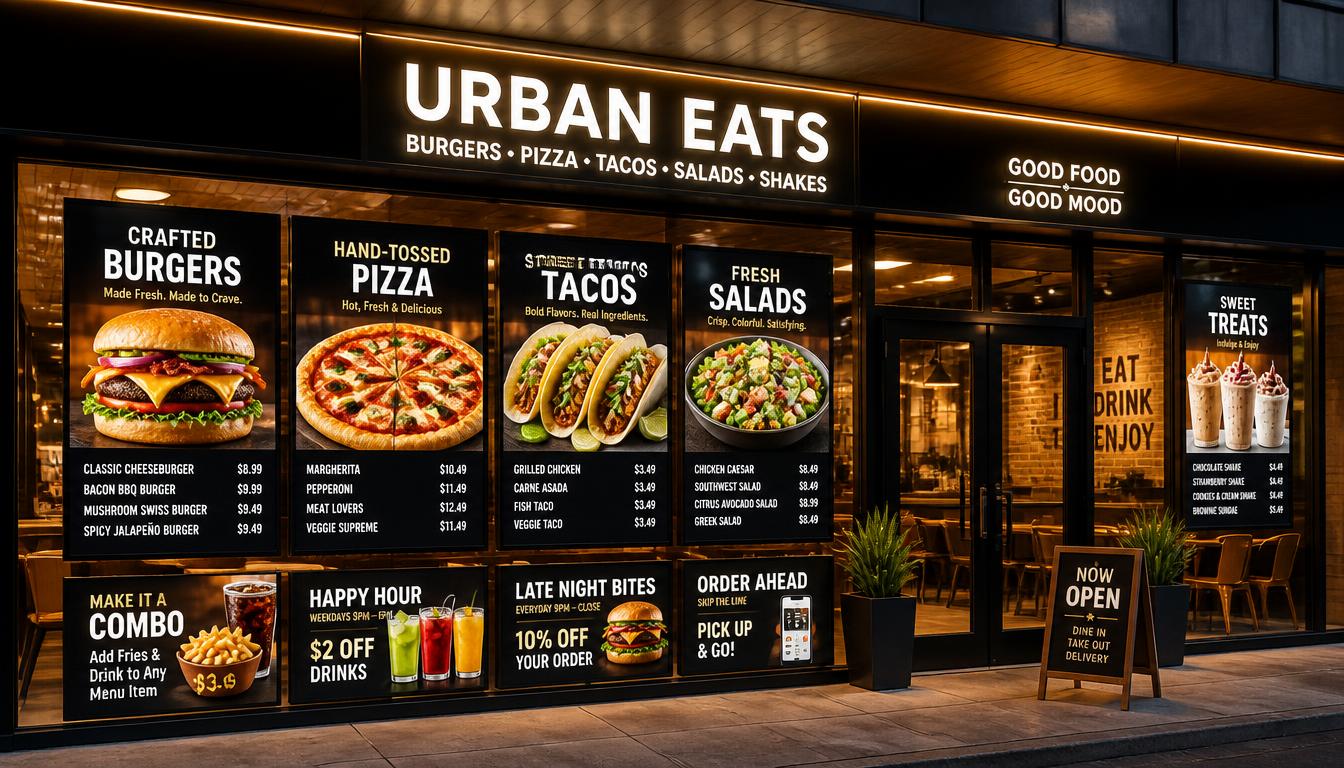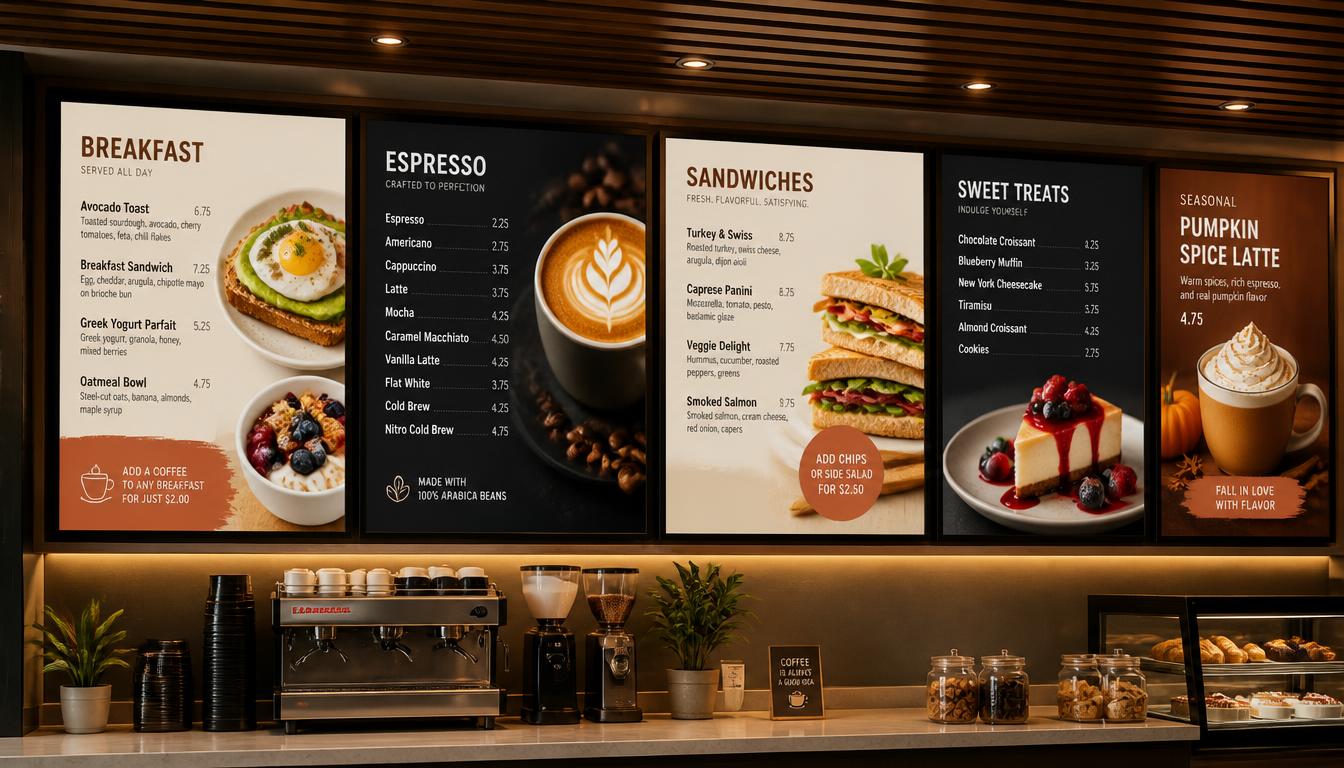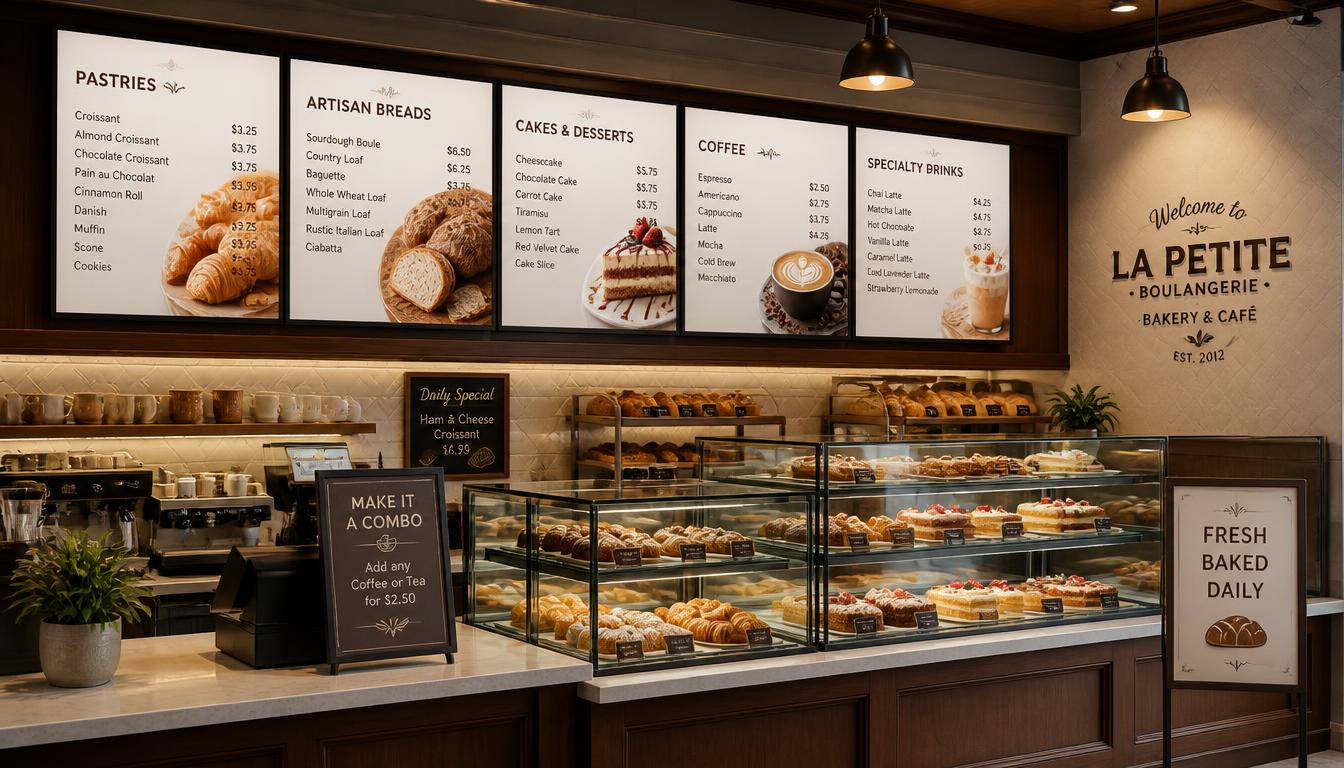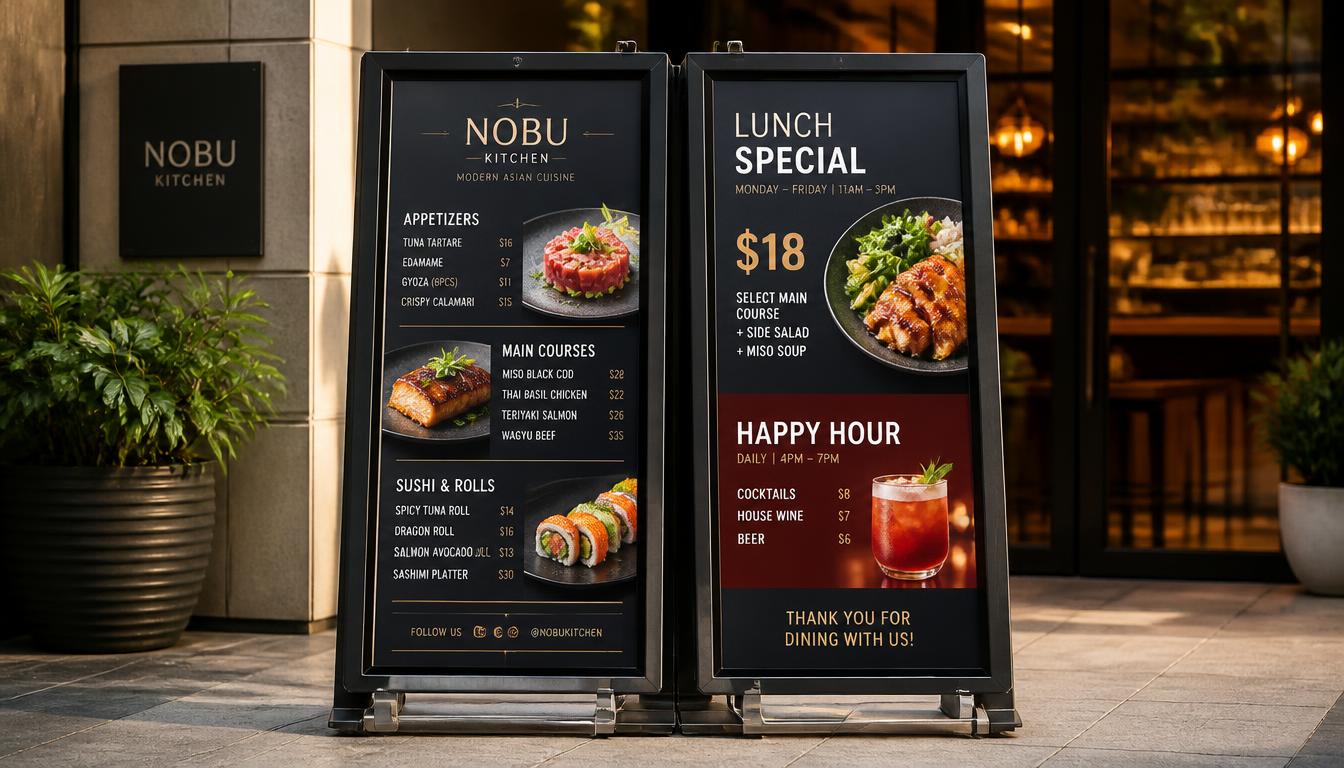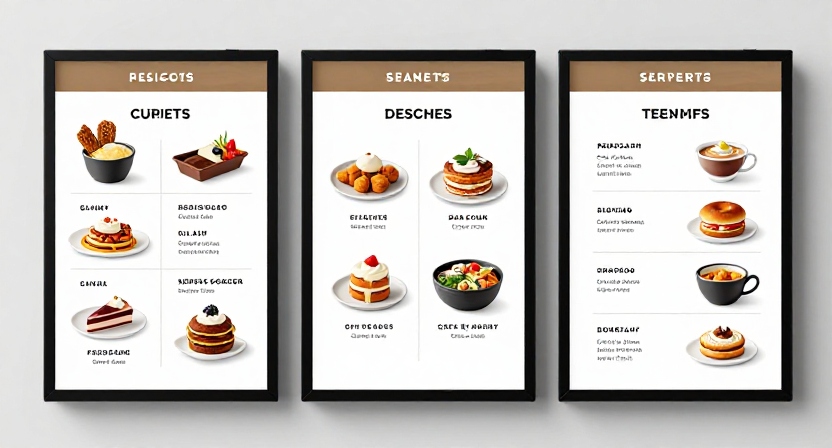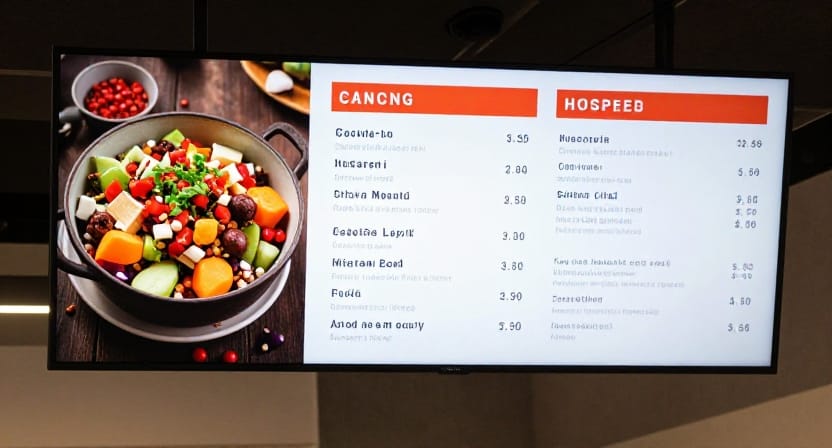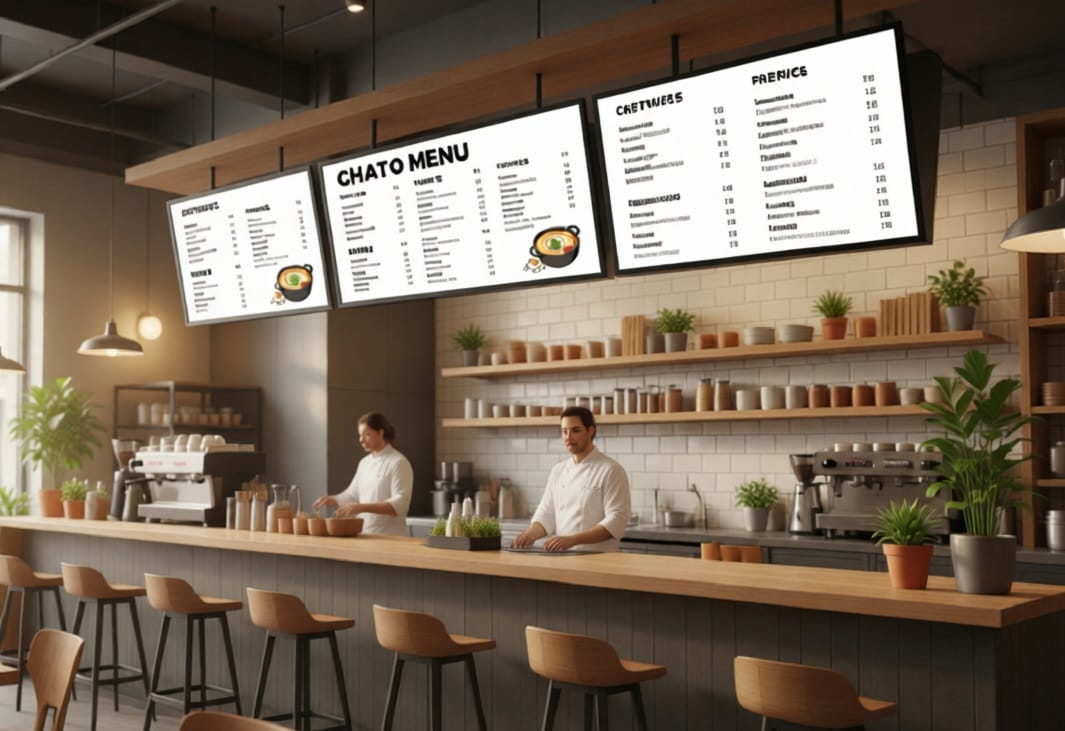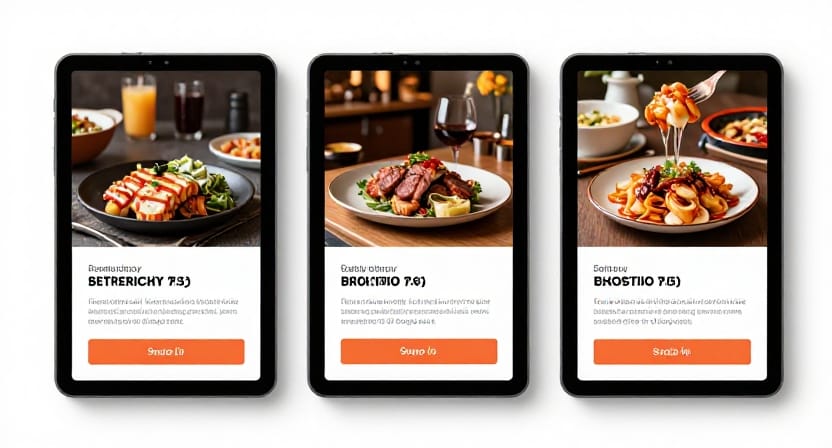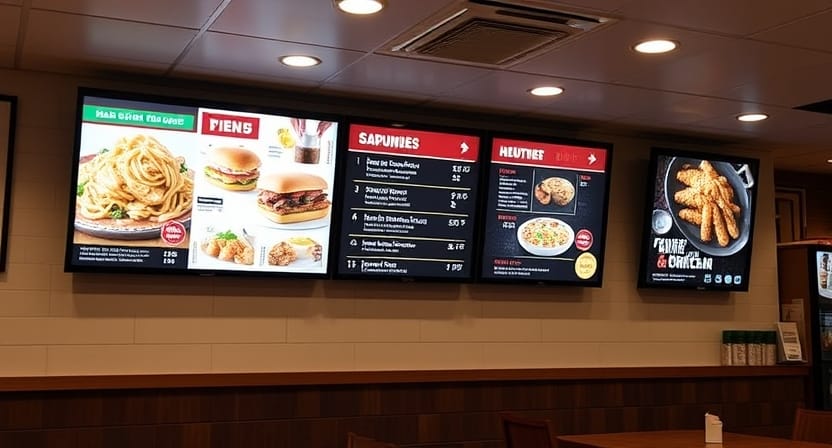
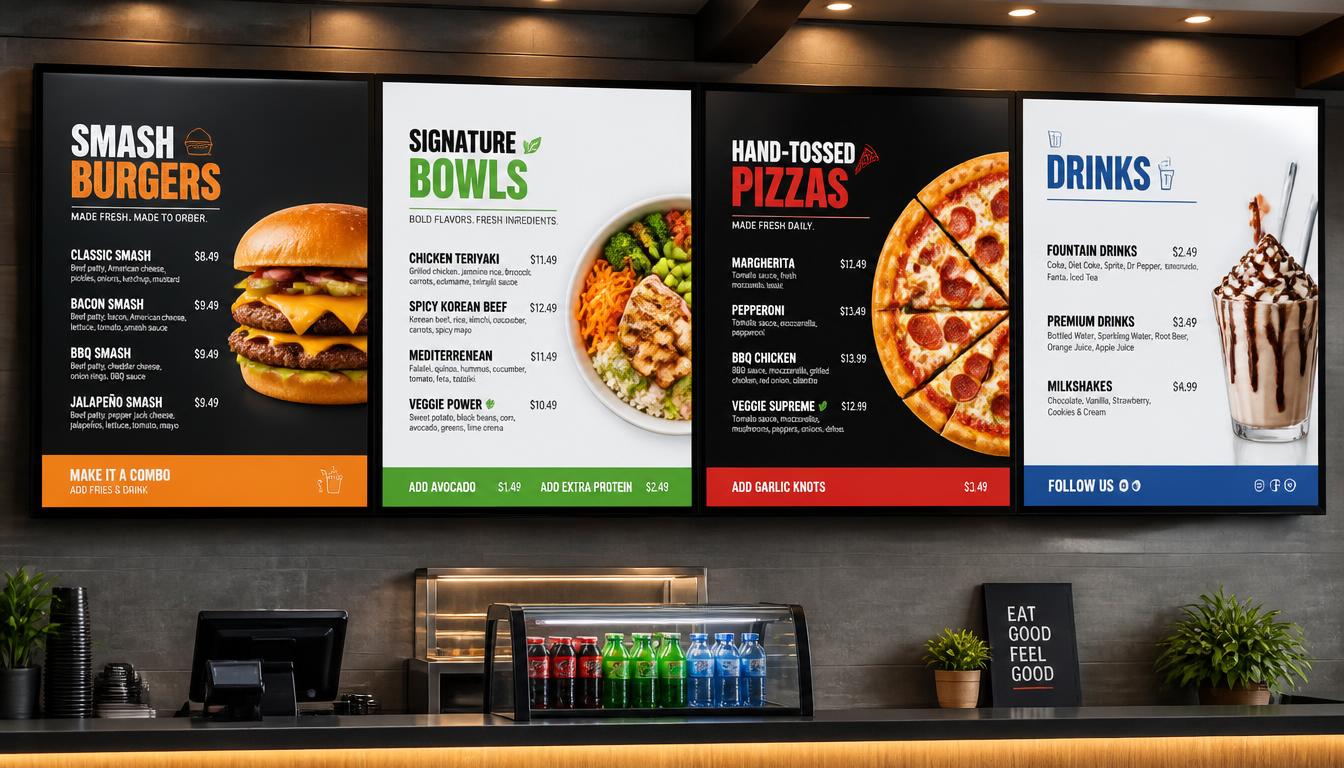
The menus of restaurants were quite simple. Print the prices, laminate the pages, and change them when there is a change. But anyone who has worked in a busy restaurant…
Go past a crowded restaurant during lunchtime, and what you will see is interesting. There are those storefronts that you notice at the first sight, and there are those that…
Introduction A cafe is a place with its own rhythm. The espresso machine is on, people are waiting in line, new orders are received through mobile phones, and a person…
Introduction Enter a bakery, and the menu is not the first thing that you see. The aroma of hot bread, fresh croissants, butter, sugar, coffee, and cakes as they come…
Introduction Street-level advertising has never been complicated: put up a sign out there, attract attention, and get people into the building. The traditional A-frame chalkboard has done that job over…
Introduction The internet is noisy. Screens are everywhere for customers in restaurants, shops, offices, hotels, workout centers, clinics and shopping malls. However, nowadays it is not sufficient to have a…
Introduction Restaurant menus have evolved. To begin with, there were chalkboards. Next came printed posters, laminated menus, backlit boards, and currently, dynamic digital displays. LED menu boards for restaurants are…
Introduction The era of printed menus is gradually disappearing. The first sight of what you can eat in a restaurant nowadays can be on a screen. Within a few seconds,…
Introduction The dining experience has evolved rapidly. Paper menus are becoming a thing of the past, cash tips are becoming quite rare, and customers are seeking quicker, cleaner, and more…
Introduction Printed menus used to be sufficient. A restaurant might create a menu, print it, and leave it on top of the counter, even for months. However, nowadays, such a…