Introduction
The digital revolution has transformed the capability of outdoor advertising. A billboard is no longer a simple print message on the side of the road. A screen in a shopping center, train station, drive-thru, or a high-traffic street can now be real-time, weather-reactive, and location-specific and help gauge the success of the campaign more directly than traditional signage.
So, what is DOOH advertising?
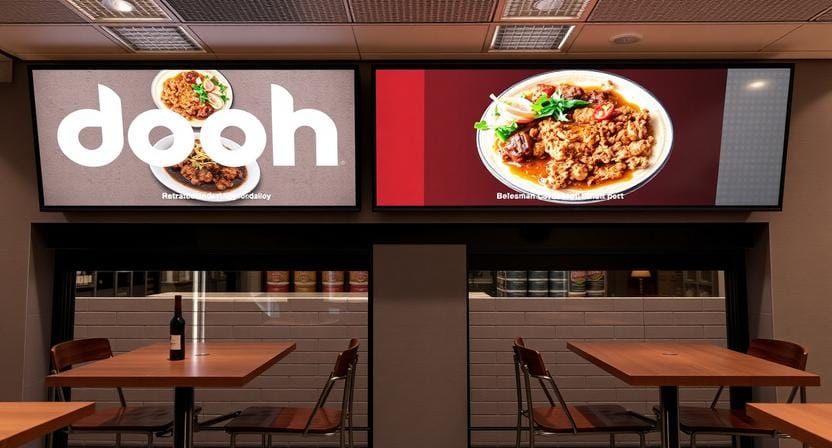
DOOH is an abbreviation that is used to mean “digital out-of-home advertising.” It is digital media that is displayed on screens beyond the home, such as digital billboards, mall displays, transit shelters, street furniture, airport screens, retail displays, and restaurant-facing signage. Unlike a static outdoor advertisement, DOOH can be instantly updated and provide content depending on the time, weather, movement of the audience, or local demand.
This is the reason why brands are shifting towards DOOH (digital out-of-home) as opposed to traditional out-of-home advertising. The previous model was not flexible. The new model is adaptable, quantifiable, and connected.
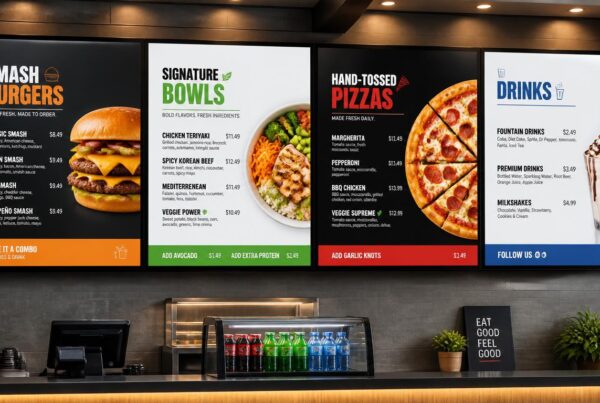
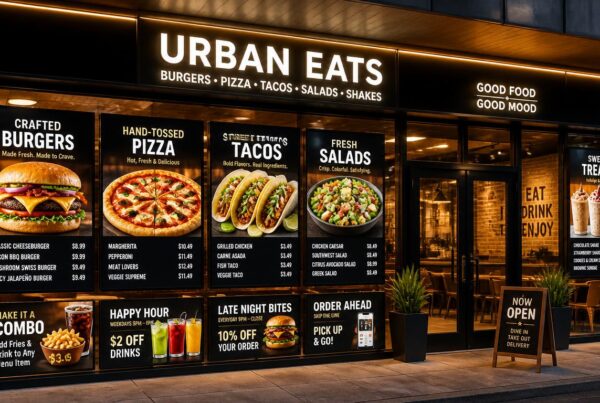
The opportunity is even greater in the case of quick-service restaurants. DOOH for QSR assists the brand to capture attention near the point of purchase, particularly at breakfast, lunch, and dinner and during the rush hours at night. Using the appropriate platform, QSRs will be able to advertise the appropriate menu item to the appropriate audience at the appropriate time.
Ready to move your brand from static to dynamic? Discover how Nento’s DOOH technology can put your message in front of the right audience at the right time.
The Mechanics of Digital Out-of-Home
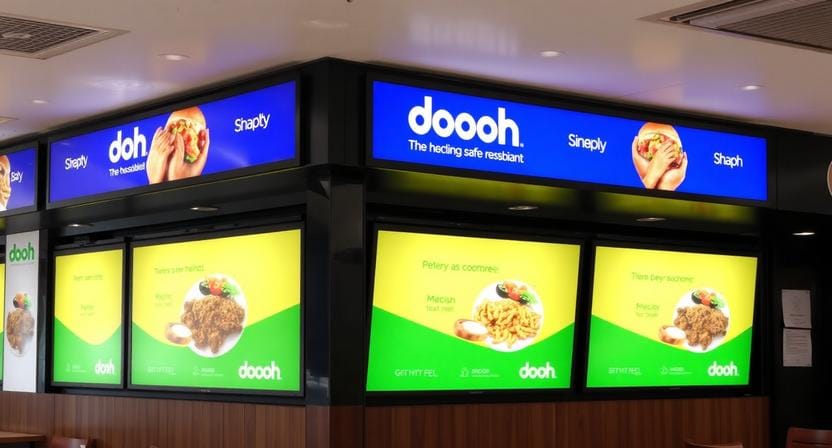
DOOH advertising is a combination of screens, software, data, and connectivity that make up a single flexible media system. Advertisers are able to post digital content and push it to chosen screens within a DOOH network instead of printing and affixing a fixed poster.
From Paper Posters to Pixel-Perfect DOOH Media
The conventional outdoor advertising takes time to plan. Creative has to be printed, shipped, installed, and removed by hand. When a campaign is in action, it becomes time-consuming and more expensive to change it.
DOOH media eliminates a lot of that friction. A brand is able to post various messages at various times, experiment with creatives, refresh promotions within a short period, and react to the varying circumstances without substituting the physical resources.
This is highly useful to QSRs. A breakfast sandwich ad can run during the morning commute. A cold beverage ad may run during a hot afternoon. A late-night combo can be advertised within entertainment areas at night.
The Core Components of DOOH
A DOOH system usually includes three major parts.
To start with, there are the screens. These can be computerized billboards, drive-through displays, mall displays, transit displays, or roadside displays.
Second is the software. This is the brainchild of the campaign. Powerful software DOOH tools handle scheduling, targeting, creative delivery, reporting, and campaign optimization.
Thirdly, there is connectivity. Networked media players, cloud computing, and IoT technology enable the advertisers to control campaigns on numerous screens via a single dashboard.
DOOH in Advertising and the Omnichannel Mix
DOOH advertising is most effective when incorporated into a larger campaign. It is able to facilitate mobile advertisements, social marketing, in-store advertising, loyalty deals, and online menu advertising.
As an illustration, a customer can view a QSR advertisement on a roadside display, get a mobile coupon in the area, and view the same offer on an in-store digital menu board. Such consistency enhances memory and increases the likelihood of taking action.
“DOOH turns outdoor advertising from a fixed message into a living media channel.”
The Technological Backbone: Programmatic DOOH
Programmatic buying is one of the largest industry transformations. A programmatic DOOH platform enables advertisers to purchase and control digital screen positions using automated mechanisms rather than using manual media purchasing.
What is a programmatic DOOH platform?
A programmatic DOOH platform is a program that automates the purchasing and selling of digital out-of-home ad space. Advertisers are able to bid on the screen time according to location, audience, time, traffic, weather, or campaign objectives instead of buying a fixed billboard over a fixed time.
This renders DOOH more versatile and effective.
Real-Time Bidding: How It Works
Automated auctions are able to be used to buy ad space in programmatic buying. Once screen inventory is available, the system can analyze whether the placement is appropriate or not according to the targeting of the advertiser.
In one of the examples, a QSR brand can opt to run advertisements only around chosen store locations, at lunchtime, at a busy time, or at the time of the day when the weather is favorable to a particular menu dish.
This is what programmatic advertising DOOH offers businesses: greater control over the time and location of their ads.
Key Benefits of Programmatic DOOH Advertising
The benefits of programmatic DOOH advertising include precision, speed, flexibility, and hyper-local targeting.
Precision implies that the advertisers will be able to target particular places and audiences. Speed implies that campaigns can be modified in a short period of time. Flexibility implies that different creatives are able to run under various conditions. Hyper-localization implies that a QSR can promote to customers that are within a short distance of a restaurant rather than spending money on extensive advertising that might not translate into sales.
The Role of Data
The current DOOH technology has the capability to utilize foot traffic, time of day, weather, mobile signals, and campaign dashboard data to enhance targeting and reporting. This will provide advertisers with a greater assurance that their screen money is tied to real-life action.
The Impact of DOOH on the QSR Industry
One of the most appropriate applications of DOOH is for quick-service restaurants since QSR purchases are often quick, local, and impulse-driven. A customer might not be looking for a meal until he or she notices a pertinent offer in their vicinity.
This is why DOOH for QSR is becoming a significant component of the dynamic menu marketing.
The Last-Mile Strategy
The final mile is the one between the time of seeing the advertisement and arriving at the restaurant. DOOH screens can be used by a QSR within a one-mile radius of a place to impact customers in the area.
An example of this is a burger chain running lunch promotions around office areas, coffee promotions around the morning commuter routes, or late evening meal promotions around entertainment areas.
The nearer the screen to the restaurant, the more action-oriented the message can be.
Menu Relevance: Dayparting
“Dayparting” refers to modifying ads according to time of the day. This is very important to QSRs, as the menu and intent of customers vary during the day.
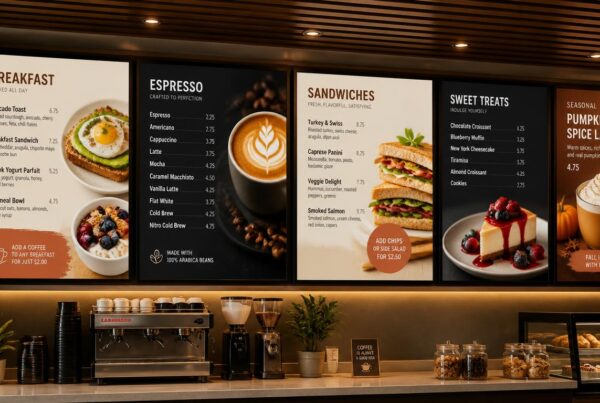
Breakfast sandwiches and coffee can be advertised using morning screens. Value meals can be brought out in afternoon advertisements. Family packages or dinner options can be presented in the evening. Late-night ads can be based on fast food or delivery services.
This maintains the relevance of the message as opposed to having one generic advertisement throughout the day.
Menu Integration and Limited-Time Offers
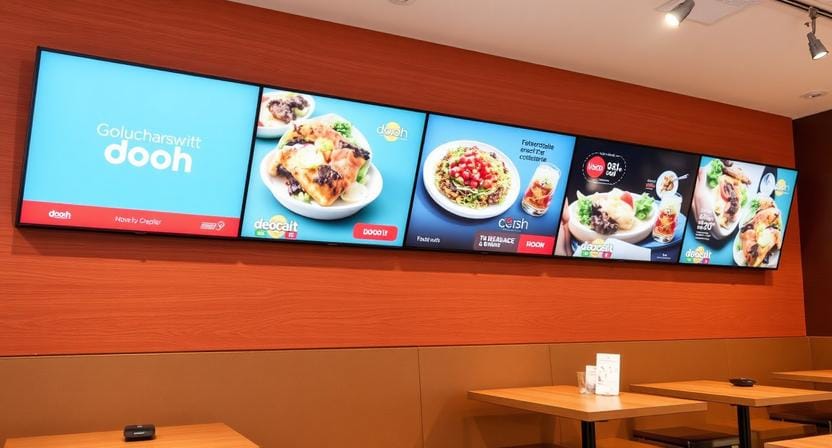
DOOH is also able to relate to menu marketing. The daily specials, seasonal products, limited-time offers, and high-margin products can be promoted by the outside screens.
When a QSR is introducing a new drink, the campaign can be displayed on adjacent screens when there is heavy traffic. When a product sells out, the creative can be stopped, or an alternative offer can be made.
Weather-Triggered Campaigns
Food and beverage brands find it particularly advantageous to use weather-based ads. Cold days can promote the use of hot coffee. Ice beverages can be promoted on hot afternoons. Comfort food may be in the form of rainy weather.
These changes can be automated with programmatic advertising DOOH, which allows them to change based on the weather data instead of having to change the campaigns manually.
Scenario Case Study: Localized Burger Campaign
Suppose a localized DOOH strategy is implemented by a burger chain around the chain’s busiest urban locations. At lunchtime, there are screens within walking distance that display a value combo. The campaign during rainy seasons is changed to delivery and pickup messaging. In the late afternoon, the creative is switched to a snack bundle.
Such a campaign can help get more visits to the stores since the message matches the location, time, and intent of the customer.
Ready to run weather-triggered, dayparted campaigns that actually drive foot traffic? Nento helps QSRs like yours turn nearby screens into your most reliable ordering engine. Let’s talk.
The Ecosystem: DOOH Companies and Networks
An effective DOOH campaign is one that has various participants. Knowledge of this ecosystem enables businesses to select the appropriate partner and not squander money.
Who Forms the DOOH Network?
A DOOH network typically comprises screen owners, advertisers, agencies, and technology providers.
Physical displays are controlled by screen owners, or publishers. The brands are the advertisers who desire to reach customers. The agencies can strategize and purchase media on behalf of advertisers. Technology vendors operate the software for targeting, reporting, and delivery of the campaigns.
These groups together form the infrastructure that enables the DOOH campaigns to occur.
DOOH Company Innovations
A strong DOOH company should provide more than just access to screens. It is supposed to offer campaign management, trustworthy software, reporting, targeting choices, innovative scheduling, and support.
In the case of QSRs, the provider ought to be knowledgeable of local targeting, dayparting, menu promotion, and speed. The needs of a restaurant campaign are not the same as those of a general brand-awareness campaign.
SSPs and DSPs
Supply-side platforms (SSPs) assist supply-side screen owners to sell ad inventory. DSPs facilitate the purchase of such inventory by advertisers.
With these systems collaborating, advertisers are able to reach numerous screens with automated purchases, and publishers are able to sell inventory more effectively.
Finding the Right Partner
The ideal partner must also provide powerful software DOOH solutions for campaign management, creative control, targeting, and performance analytics. In the case of QSR brands, Nento assists in aligning digital screen strategy with the real-world restaurant marketing requirements.
Overcoming Challenges and Maximizing ROI
measurement, DOOH is powerful; however, it should be handled with care. Good creativity, proper targeting, clean measurement, and good technology are the best route to good results.
Common Pitfalls
Viewability is one of the issues. Advertisers should be sure that the screens are operating well and are in locations where they can be viewed by audiences.
Portrait: The other obstacle is creative design. A transit station may require a different screen format than a roadside billboard, a mall display, or a restaurant screen. The square, portrait, and landscape ratios should be planned properly.
Trust can be decreased through ad fraud and poor reporting as well. The brands require precise measurements and valid checks.
Practical Solutions
Confidence can be enhanced with the help of standardized measurement, third-party verification, real-time dashboards, and powerful campaign monitoring.
Creative optimization can also be facilitated by AI, where the optimal messages are identified in particular places or at particular times. In the case of QSRs, this can include weather-based menu promotions or sales-based or store traffic promotions.
Future Trends
In keeping, DOOH is headed towards experiences that are more intertwined. AR will be able to enable customers to scan a screen and engage with it via a phone. 5G will allow even more frequent updates of content and more visuals. Mobile retargeting can assist brands in keeping the conversation going after a screen has been passed.
It is here that DOOH goes beyond awareness. It turns into a media channel that is performance-driven.
Conclusion
That DOOH advertising has transformed what outdoor media can accomplish. It is no longer only a branding tool or a digital version of a billboard. It is a flexible, data-driven, quantifiable medium that assists brands in connecting with people in the real world.
In the case of QSRs, the value is quite obvious. DOOH can help restaurants reach customers in their immediate area, advertise offers that are time-sensitive, dynamically update menus, and capture attention during high-intent times, such as lunch rush.
The conclusion is straightforward: in order to compete with other brands in the QSR industry and attract the customer, it is no longer a choice to use digital out-of-home. It is essential.
Don’t let your competitors capture the lunch rush. Contact Nento today to see how our programmatic DOOH platform can help drive foot traffic to your QSR locations and turn screens into sales.
Frequently Asked Questions
What is DOOH advertising?
DOOH, or Digital Out-of-Home advertising, is digital media content that is shown on screens in public areas, such as digital billboards, transit shelters, mall displays, and street furniture. In contrast to the traditional billboards, DOOH may be updated in real-time and utilize data to display pertinent information depending on time, weather, location, or audience trends.
How does programmatic DOOH differ from traditional OOH?
Traditional OOH is based on manual purchases and placements. Programmatic DOOH uses software to automate the buying process to enable advertisers to buy particular screens in real-time, dynamically target audiences, and more accurately gauge performance.
Is DOOH effective for QSR campaigns?
offices, yes. DOOH for QSR campaigns works well since it enables restaurants to reach consumers around their restaurants at a particular time of the day. A QSR can display breakfast menus in the morning, lunch deals near offices, and dinner deals in the evening.
What technology is required for a successful DOOH campaign?
An effective campaign typically needs a powerful DOOH technology stack, such as a DSP to buy, an SSP to sell, campaign administration, and software DOOH tools to target, schedule, and analyze. Nento is an integrated solution that is useful for targeting, creative scheduling, and performance tracking.
How do I measure the ROI of my DOOH advertising?
The measurement of ROI can be done by foot traffic lift, promotion redemptions, online searches, mobile engagement, social mentions, and estimated screen impressions. Most programmatic DOOH platforms also have a dashboard displaying views, engagement, and campaign performance measures.
For QSR brands that demand more than just screen access, Nento delivers a complete DOOH ecosystem from targeting and scheduling to real-time analytics. Partner with Nento and advertise with confidence.